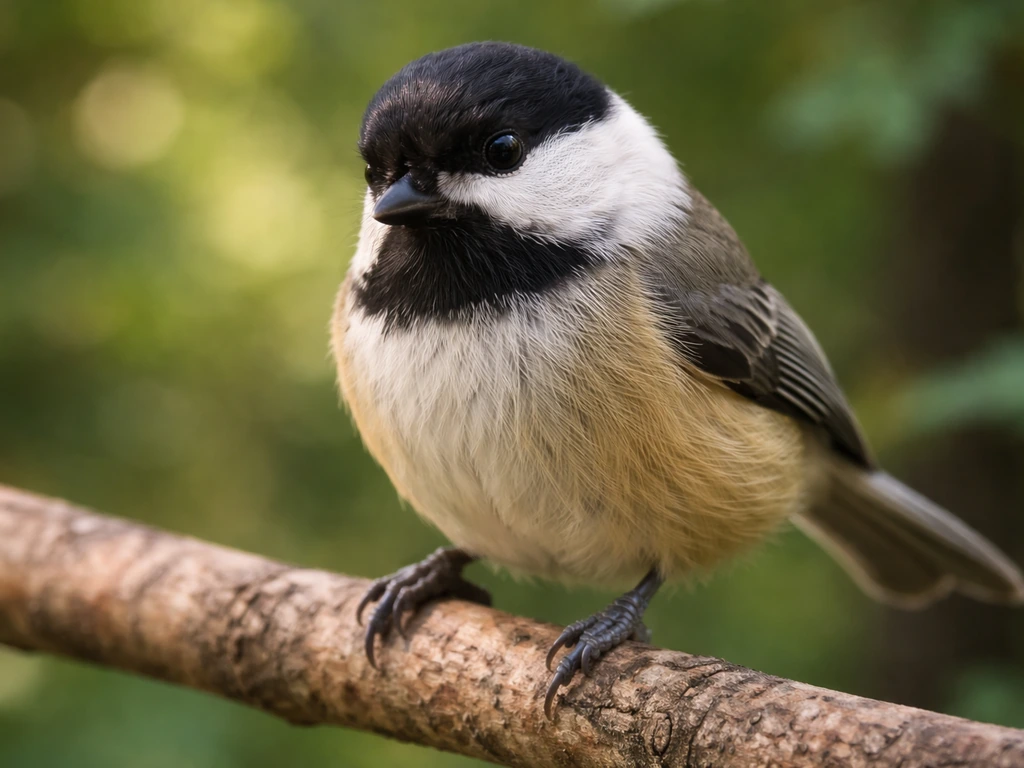
Birds belong to the class Aves, which sits inside the phylum Chordata within the animal kingdom. That makes a bird a vertebrate animal, specifically a warm-blooded, feathered, beaked vertebrate that lays hard-shelled eggs. To answer “is a bird an animal,” the short version is yes, because birds are part of the animal kingdom (Animalia) a bird a vertebrate animal. If you are wondering what type of animal is a bird, the quick answer is that it is a vertebrate animal (class Aves) a bird a vertebrate animal. If you want the quick taxonomy chain: Kingdom Animalia → Phylum Chordata → Subphylum Vertebrata → Class Aves. That's where every bird on Earth lives, from a hummingbird to an ostrich.
What Animal Category Is a Bird? Class Aves Explained

Marcus Hendricks
28 Apr 2026
Where birds sit in the animal taxonomy

The animal kingdom is organized into a series of nested ranks, and birds have a very specific address in that system. For a broader framing of whether a bird is an animal or not, see the related discussion bird is an animal or not. The phylum Chordata contains all animals with a backbone (vertebrates), including mammals, reptiles, amphibians, fish, and birds. Within that phylum, birds occupy their own class: Aves. That class is large and globally distributed, covering roughly 10,000 living species on every continent.
| Taxonomic Rank | Bird's Classification |
|---|---|
| Kingdom | Animalia |
| Phylum | Chordata |
| Subphylum | Vertebrata |
| Class | Aves |
| Examples | Eagle, penguin, ostrich, sparrow, hummingbird |
That class-level grouping is the most practical answer to the question. When people ask what 'category' a bird belongs to, they usually want to know the equivalent of 'mammal' or 'reptile' for birds. That equivalent is Aves. Think of it the same way: dogs are mammals (class Mammalia), snakes are reptiles (class Reptilia), and pigeons are birds (class Aves).
The traits that actually make an animal a bird
Classification isn't just about slapping a label on something. It's built on shared physical traits, and birds have a distinctive package that sets them apart from every other animal class. No single trait is enough on its own, but together they form a checklist that works reliably in the real world.
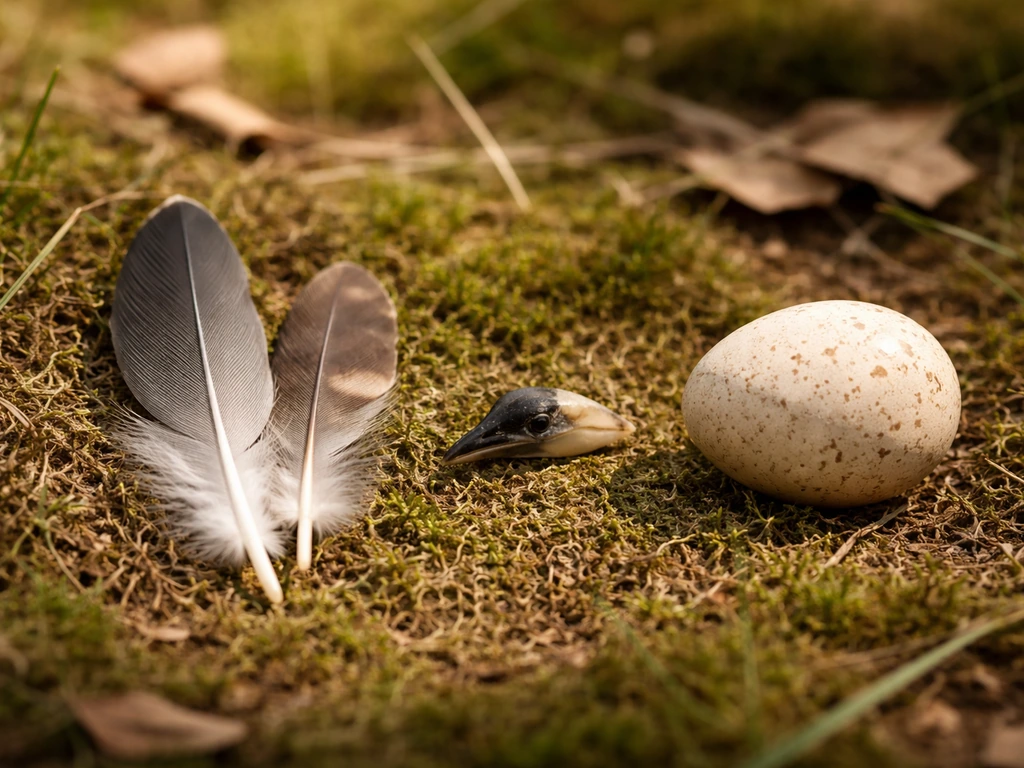
- Feathers: Feathers are unique to birds. No other living animal group has them. They're made of keratin and have a stiff central shaft with branching barbs and barbules. Down feathers provide insulation by trapping air; contour feathers shape the body and wings.
- Beak made of keratin: Birds replaced the heavy jawbones and teeth of their ancestors with a lightweight beak. That beak is entirely keratin, not bone with enamel teeth.
- Forelimbs modified into wings: Even in birds that can't fly, the forelimbs are wings structurally. Penguins use theirs for swimming, ostriches have tiny vestigial ones, but the underlying bone structure is still a wing.
- Endothermy (warm-blooded): Birds generate their own body heat internally, just like mammals. This is supported by their insulating feathers, particularly down.
- Hard-shelled eggs: Bird eggs have calcium-rich, hard and brittle shells with tiny pores for gas and water exchange. This is an amniotic egg, which also distinguishes birds from amphibians.
- Specific skeletal features: The furcula (wishbone) is a classic avian marker. Birds also have pneumatic bones connected to air sacs, which serve their unique respiratory system.
- Vertebrate backbone: Like all members of phylum Chordata, birds have an internal skeleton with a spine.
If you're trying to settle a classification question, feathers are your fastest and most reliable single indicator. No mammal, reptile, insect, or amphibian has true feathers. That one trait alone narrows you down to class Aves almost immediately.
Birds compared to other major animal classes
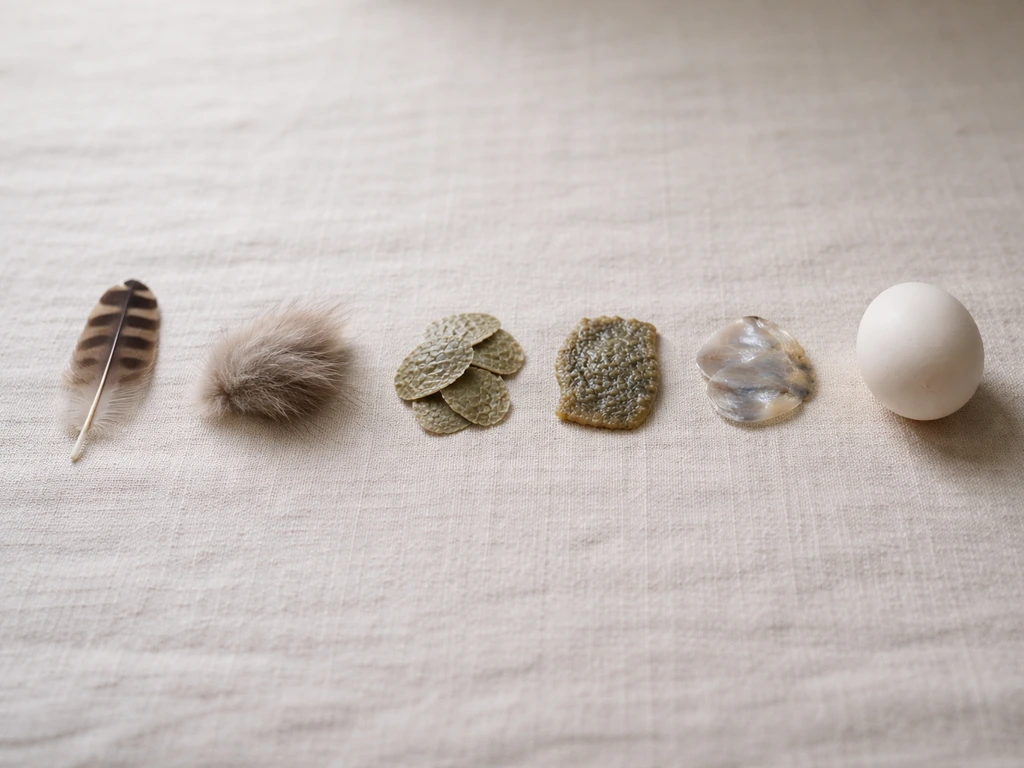
It helps to see birds alongside the other major vertebrate and invertebrate classes so you can feel the differences clearly. Here's how birds stack up against the groups people most commonly mix them up with.
| Animal Class | Backbone | Body Covering | Warm-Blooded | Egg Type | Key Distinguishing Trait |
|---|---|---|---|---|---|
| Birds (Aves) | Yes | Feathers | Yes | Hard-shelled amniotic egg | Feathers + beak + wings |
| Mammals (Mammalia) | Yes | Hair or fur | Yes | Live birth or soft egg (monotremes) | Mammary glands, hair |
| Reptiles (Reptilia) | Yes | Scales | No (ectothermic) | Leathery amniotic egg (usually) | Scales, cold-blooded |
| Amphibians (Amphibia) | Yes | Moist, scaleless skin | No (ectothermic) | Soft, jelly-coated egg in water | No amniotic egg, aquatic larvae |
| Fish (various classes) | Yes | Scales or smooth skin | Most: No | Varies widely | Gills, aquatic |
| Insects (Insecta) | No | Exoskeleton (chitin) | No | Various | Six legs, exoskeleton, invertebrate |
The mammal comparison trips people up most often because both birds and mammals are warm-blooded vertebrates. p12s0: The mammal comparison trips people up most often because both birds and mammals are warm-blooded vertebrates, so if you want the animal-category basics first, see what animal class is a bird. The key splits are the body covering (feathers vs. hair), the reproductive method (hard-shelled eggs vs. live birth or milk production), and the respiratory system. Birds have a flow-through respiratory system using air sacs that connects to their pneumatic bones, which is completely different from the mammalian lung design.
The reptile comparison is interesting because birds and reptiles are actually close relatives evolutionarily. Birds are, in the most technically accurate scientific sense, a group of dinosaurs that survived. But in practical classification, the differences are clear: birds are warm-blooded, feathered, and beak-equipped, while reptiles are ectothermic (cold-blooded), scaled, and toothed. If you're curious about what makes an animal qualify as a bird versus what makes it an animal at all, those are related questions worth exploring separately.
Edge cases that confuse people (and how to think about them)
Flightless birds are still birds
Flight is not a requirement for being a bird. Ostriches, emus, penguins, kiwis, and cassowaries cannot fly, but they are absolutely birds. They have feathers, beaks, wings (even if tiny or flipper-shaped), lay hard-shelled eggs, and are warm-blooded. The structural blueprint is still Aves. Classification is based on the full trait package and evolutionary lineage, not a single ability like flight.
Bats are not birds
Bats can fly, but they are mammals, not birds. They have hair instead of feathers, give birth to live young, nurse with milk, and have a mammalian skeletal and respiratory system. Their wings are made of a thin membrane of skin stretched over elongated finger bones, not the feathered forelimb of a bird. Flight evolved independently in bats and birds, which is a good reminder that a shared behavior doesn't mean a shared category.
Gliding animals are not birds either
Flying squirrels are really gliding squirrels. They use a furry membrane called a patagium that stretches from their wrists to their ankles to glide between trees, but they cannot generate powered, sustained flight the way birds can. They're still mammals through and through: fur, live birth, mammary glands. A gliding membrane is not a wing, and gliding is not flight in the biological sense.
Pterosaurs were not birds
Pterosaurs were flying reptiles that lived alongside the dinosaurs, and they are a genuinely separate lineage from birds. The American Museum of Natural History is direct about this: pterosaurs were not birds. They lacked true feathers (some had hair-like filaments, but not the structured feathers of birds), and their evolutionary branch diverged separately from the line that led to birds. They look bird-like to modern eyes because flight convergently shapes body plans, but they don't belong to class Aves.
Archaeopteryx and the dinosaur-to-bird connection
Archaeopteryx is one of the most famous fossils in existence because it's a feathered, bird-like dinosaur that sits right at the boundary of what we call a 'bird.' It had feathers and other avian features, and scientists at the Natural History Museum describe it as an early bird critical for understanding how dinosaurs evolved into birds. In fact, many paleontologists, including Luis Chiappe quoted in National Geographic, state flatly that birds are dinosaurs in an evolutionary sense. The Australian Museum agrees: birds are descendants of dinosaurs. But this is evolutionary history, not a contradiction of the class Aves system. Living birds are still classified as class Aves, and that classification holds.
How to classify an unknown animal as a bird right now
If you're looking at an animal and trying to decide whether it's a bird, run through this quick checklist. You don't need a lab or a textbook.
- Look for feathers first. Feathers are unique to birds. If the animal has them, you're almost certainly looking at a bird. If it has fur, scales, or smooth skin, it isn't one.
- Check the beak. Does it have a keratin beak instead of teeth and fleshy lips? That's a bird marker. (Note: some turtles and cephalopods have beak-like structures, so combine this with the feather check.)
- Look at the forelimbs. Are they wings, even vestigial ones? Birds always have forelimbs modified into wings, even if those wings look like flippers (penguins) or tiny stubs (ostriches).
- Is it warm-blooded? This is harder to check visually, but endothermy is part of the bird package. Cold-blooded animals with scales are reptiles or fish, not birds.
- What kind of eggs does it lay, if any? Hard, brittle, calcium-shelled eggs are an avian signature. Soft or jelly-coated eggs point to reptiles or amphibians respectively.
- If still unsure, look up the animal's scientific classification on a reputable source like the Animal Diversity Web (ADW), Britannica, or a national natural history museum. The taxonomic line will explicitly show whether it sits in class Aves.
The feather check alone will resolve the vast majority of questions. The full checklist handles the edge cases. And if you find yourself wondering whether a specific animal is even an animal at all before getting to the bird question, that's a separate but equally answerable question about where birds sit in the broader animal kingdom.
FAQ
If an animal has feathers, does that automatically mean it is a bird (class Aves)?
In most real-world cases, yes. Feathers plus a beak, hard-shelled eggs, and a warm-blooded vertebrate physiology strongly indicate Aves. The caveat is fossil or unusual cases, where feather-like structures may appear, so confirm with the broader trait package rather than relying on feathers alone.
Do all birds have wings, and do those wings have to be built for flying?
Birds always have wing structures as part of the bird body plan, but the function can vary widely. Some species have reduced, flipper-like, or vestigial wings, yet they still count as birds because they remain warm-blooded, feathered, and egg-laying under class Aves.
What is the key difference between a bird and a warm-blooded mammal?
Beyond temperature regulation, the decisive contrasts are body covering and reproduction. Birds have feathers and lay hard-shelled eggs, mammals have hair (or fur) and give birth to live young, feeding them with milk.
Can a feathered animal still be non-bird if it lays eggs?
Yes, because some non-bird lineages can produce bird-like traits through shared evolution or fossil conditions. To classify confidently, also check for the bird-specific combination, especially true feathers, a beak, and the typical avian respiratory system rather than eggs alone.
How should I classify an animal that can glide or parachute but does not do powered flight?
Gliding ability does not define the category. If the animal is a mammal, with fur and live birth, it is still a mammal even if it uses a patagium to glide. If it is warm-blooded with feathers and lays hard-shelled eggs, then it fits Aves even if it cannot flap for sustained flight.
Where do dinosaurs and Archaeopteryx fit relative to “bird category” (Aves)?
Archaeopteryx is treated as a transitional, early bird-like dinosaur, but living birds are still placed in class Aves. Think of it as evolutionary history that supports the lineage, not a reason to change the classification rules for modern species.
Are all birds ectothermic or cold-blooded like reptiles?
No. Birds are warm-blooded, so their metabolism behaves differently from ectothermic reptiles. The warm-blooded plus feathered plus egg-laying combination is what separates Aves from reptiles in practical classification.
If someone asks “what animal category is a bird,” should I answer with a taxonomic level or with a lay term?
A taxonomic level is usually the most precise, the correct category is class Aves. If you want a simple lay analogy, say “bird” is the equivalent of “mammal” or “reptile,” because it is a distinct class inside the vertebrates.
What should I do if I cannot tell whether something is an animal before deciding whether it is a bird?
First confirm the organism is an animal at all, meaning it belongs to Kingdom Animalia, not a plant, fungus, or protist. Only after that should you apply the bird checklist, since “bird vs. not bird” assumes you are already working within animals.
Next Article
What Animal Class Is a Bird? Aves Explained Simply
Learn what class birds belong to, key traits like feathers and beaks, and a checklist to verify real birds.