Birds belong to the class Aves. That's the official, universally recognized taxonomic class for every bird on Earth, from house sparrows to ostriches to penguins. In the standard biological classification system, 'class' is the rank that sits between phylum and order, and Aves is the class that contains all birds and only birds.
What Animal Class Is a Bird? Aves Explained Simply

Marcus Hendricks
26 Apr 2026
What 'class' actually means in animal classification

Taxonomy, the science of classifying living things, organizes life into a hierarchy of nested ranks. Think of it like a set of Russian nesting dolls, each one contained inside a larger one. The full hierarchy runs: kingdom, phylum, class, order, family, genus, species. Birds sit in the kingdom Animalia (they're animals), the phylum Chordata (they have a backbone), and then the class Aves. Every time you go up a level, you're joining a bigger, more inclusive group. Every time you go down, the group gets more specific. Class is roughly the middle of that stack, broad enough to include thousands of species but specific enough to mean something real biologically.
This hierarchy is the Linnaean system, named after Carl Linnaeus, and it's been internationally standardized so that a biologist in Brazil and a biologist in Japan are talking about exactly the same grouping when they say 'class Aves.' The NCBI Taxonomy database, Animal Diversity Web, and Britannica all explicitly list Aves at the rank of class. The NCBI Taxonomy Browser for the class Aves entry shows Rank: class for birds Aves at the rank of class. There's no ambiguity here: birds are class Aves.
Where birds fit among the major animal classes
All vertebrates (animals with backbones) are divided into several major classes. Birds are one of them, but it helps to see the full picture to understand why birds are their own class and not lumped in with mammals or reptiles.
| Class | Examples | Key distinguishing trait |
|---|---|---|
| Aves (birds) | Sparrow, eagle, penguin, ostrich | Feathers, beak, lays eggs with hard shells |
| Mammalia (mammals) | Dog, whale, bat, human | Hair or fur, live birth (mostly), nurses young with milk |
| Reptilia (reptiles) | Lizard, crocodile, snake, turtle | Scales, cold-blooded, lays leathery eggs (usually) |
| Amphibia (amphibians) | Frog, salamander, newt | Moist skin, starts life in water, no scales |
| Actinopterygii (ray-finned fish) | Salmon, tuna, goldfish | Gills, fins, lives in water |
| Chondrichthyes (cartilaginous fish) | Shark, ray, skate | Skeleton made of cartilage, not bone |
The big confusion people run into is between birds and reptiles. Evolutionarily, birds are actually deeply nested within the reptile family tree, making them, technically, a specialized group of theropod dinosaurs. But in traditional taxonomy, Aves is still treated as its own distinct class because the defining traits of birds, especially feathers and warm-bloodedness, set them apart clearly enough to warrant it. On Reddit, blank" rel="noopener noreferrer">users debate whether Aves remains a valid class concept as a real-world edge case. San Diego Zoo notes that birds are warm-blooded and that birds are the only animals with feathers, which is why feathers are a reliable marker for identifying them.
The traits that make an animal a bird
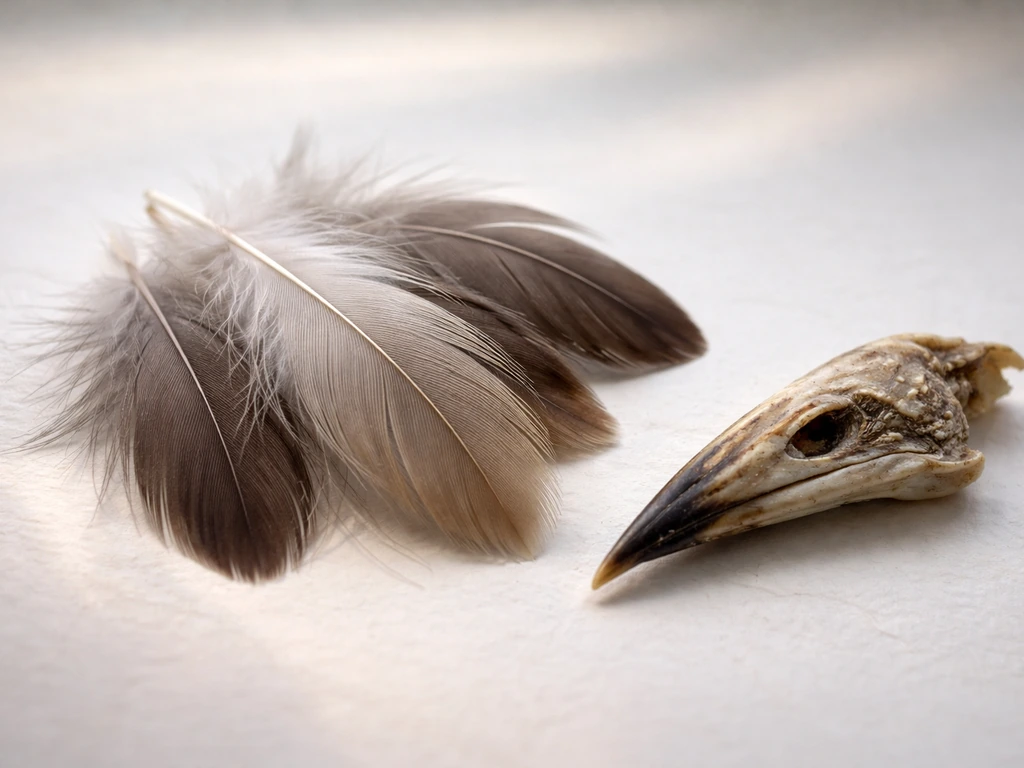
There's no single magic trait that makes an animal a bird, but there's a cluster of features that, taken together, are unique to class Aves. If an animal has all of these, it's a bird. If it's missing several of them, it isn't.
- Feathers: Every living bird has feathers. No other animal class has them. This is the single most reliable marker.
- A beak or bill: Birds have no teeth (in living species). The beak is made of keratin, the same protein as your fingernails.
- Wings: All birds have wings, even if those wings can't fly. The underlying bone structure (the forelimb modified into a wing) is present in every bird.
- Endothermy (warm-bloodedness): Birds regulate their own body temperature internally, like mammals, unlike most reptiles.
- Hard-shelled eggs: Birds lay eggs with rigid, calcified shells rather than the soft, leathery eggs of most reptiles.
- Hollow bones: Most birds have pneumatized (hollow, air-filled) bones that reduce weight, an adaptation inherited from their dinosaur ancestors.
- A furcula (wishbone): This fused collarbone is unique to birds and their closest dinosaur relatives.
- Four-chambered heart: Birds share this with mammals, giving them efficient oxygen delivery for high-energy activity.
The question of what makes something qualify as a bird connects closely to the broader question of what makes an animal a bird in the first place. It's worth noting that these traits are biological, not behavioral. Flying doesn't make something a bird. Living in a nest doesn't make something a bird. Feathers do. Birds are classified as the class Aves, meaning they are true birds based on biological traits, not just how they look or behave what type of animal is a bird.
Birds in the bigger evolutionary picture
Zoom out far enough and the taxonomy looks like this: Birds are animals (kingdom Animalia), with a backbone (phylum Chordata), more specifically with an amnion as an embryo (subphylum Vertebrata, class Aves). They share the phylum Chordata with all other vertebrates, from fish to humans. Within vertebrates, they're amniotes, meaning they lay eggs or carry embryos protected by membranes, which puts them in the same broad group as reptiles and mammals.
The evolutionary story is fascinating: birds descended from theropod dinosaurs, specifically a lineage closely related to the Velociraptor group. The oldest confirmed bird in the fossil record is Archaeopteryx, which lived about 150 million years ago and had a mix of dinosaur features (teeth, clawed wings, a long bony tail) and bird features (feathers, wishbone). Today's roughly 10,000 living bird species are the only surviving dinosaurs, which makes every chicken on Earth technically a dinosaur. That's not a joke; that's mainstream paleontology.
Animals commonly confused with birds
Several real animals get mistaken for birds or raise genuine classification questions. The confusion is usually about flight or appearance, not actual biology.
| Animal | Why people think it might be a bird | Why it isn't (or is) |
|---|---|---|
| Bat | Flies, has wings | Mammal: has fur, nurses young with milk, no feathers |
| Flying squirrel | Glides through the air | Mammal: gliding membrane is not a wing, no feathers |
| Butterfly | Flies, colorful | Insect: six legs, exoskeleton, completely different phylum |
| Pterodactyl (pterosaur) | Flew, sometimes drawn with feathers | Reptile, not a dinosaur, not a bird; featherless wings of skin |
| Flying fish | Launches into air | Fish: fins, gills, no feathers, no wings |
| Sugar glider | Glides, sometimes called 'flying' | Marsupial mammal, nurses young in a pouch |
The bat question comes up constantly. Bats fly, they're warm-blooded, and they're active in similar ecological niches as many birds. But bats are mammals. They nurse their young with milk, they have fur instead of feathers, and their wings are modified hand bones covered in a membrane of skin, not feather shafts. Zero bird traits.
Edge cases that genuinely trip people up
Flightless birds
Ostriches, emus, kiwis, penguins, cassowaries, and rheas can't fly at all. This surprises people who think 'bird' means 'flying animal.' It doesn't. Flight is not part of the definition. All of these animals still have feathers, beaks, wishbones, and the full biological package of class Aves. Their ancestors flew. Evolutionary pressure, usually the absence of ground predators on an island or the advantage of bulk and speed, led to wings that shrank and lost flight capability over millions of years. They're still completely, unambiguously birds.
Fossil species and dinosaurs
Archaeopteryx is sometimes called a 'proto-bird' and sits right at the boundary between non-avian dinosaurs and true birds. T. rex is not a bird, but it's on the same theropod branch of the family tree. Feathered dinosaurs like Microraptor had feathers but are classified as non-avian dinosaurs rather than class Aves. The line between 'dinosaur' and 'bird' in the fossil record is genuinely blurry, which is why paleontologists debate it. For living animals, though, the checklist is clean.
Mythical creatures and mascots
Phoenix, griffins, the Mockingjay from The Hunger Games, the Twitter bird (now X), the Aflac duck: none of these are real animals, so they don't belong to any biological class. That said, the phoenix is depicted with feathers, a beak, and wings, so if it were real, it would meet the criteria for class Aves. Griffins have a beak and wings on the front half but lion hindquarters, so they'd be a chimera, not a bird. The Aflac duck is a mallard, a real bird. The point is: classification applies to real biology. Fictional creatures make for fun thought experiments, but the answer always comes back to the checklist.
Animals that look like birds but aren't
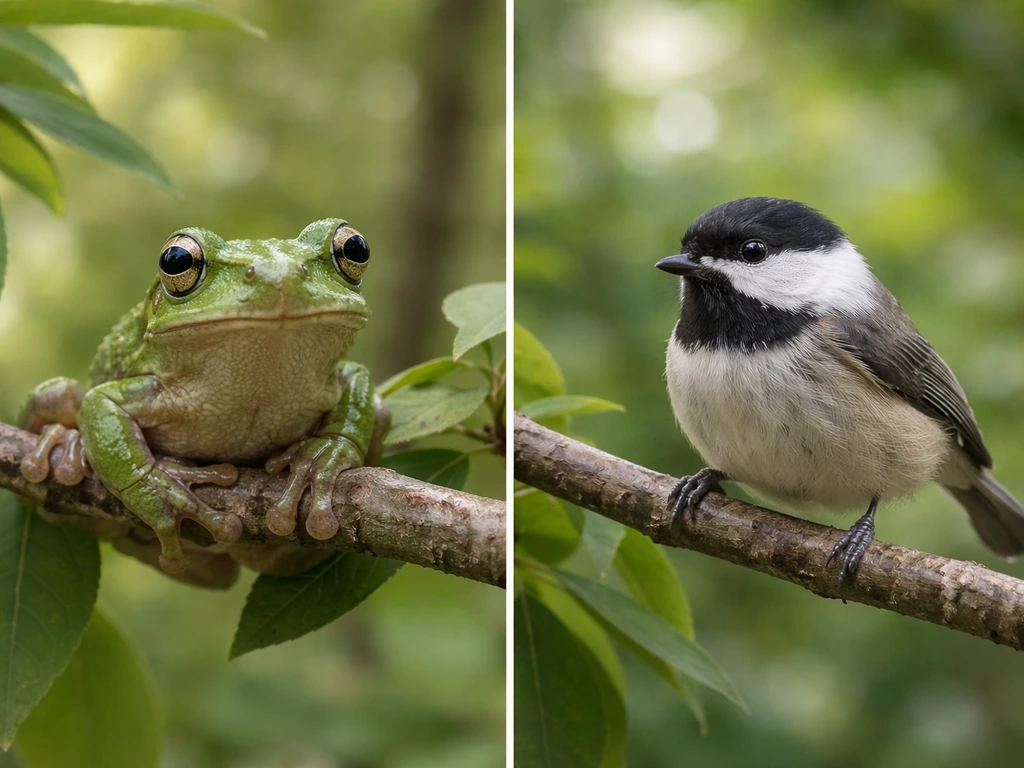
Some animals produce sounds eerily similar to birds, live in trees, or have colorful markings that look bird-like. Tree frogs, certain lizards, and even some insects can fool a casual observer. The test is always the same: does it have feathers? Does it have a beak and wings? If the answer to those is no, it's not a bird, regardless of where it lives or what sounds it makes.
How to verify whether any animal is actually a bird
If you're staring at an unfamiliar animal and want to know whether it qualifies as a bird, run through this checklist in order. The first two questions are usually enough.
- Does it have feathers? If yes, it's almost certainly a bird. Feathers are unique to class Aves. No other living animal has them.
- Does it have a beak made of keratin with no teeth? Combined with feathers, this confirms bird status.
- Does it have wings (even vestigial ones)? All birds have the underlying wing bone structure, even kiwis with tiny useless wings.
- Is it warm-blooded? Birds regulate their own body temperature. If the animal is cold-blooded, it's not a bird.
- Does it lay hard-shelled eggs? Not all animals you observe laying eggs are birds, but hard calcified shells are a bird trait.
- Does it have a wishbone (furcula)? You won't always be able to check this without an X-ray, but it's part of the full diagnostic picture.
- Look it up in a reliable taxonomy database: NCBI Taxonomy and Animal Diversity Web both show the class-level classification for any named species.
In practice, questions one and two settle the vast majority of debates. If something has feathers and a beak, it's a bird. If it has fur and nurses its young, it's a mammal. If it has scales and is cold-blooded, it's a reptile. The lines between these classes, at the level of living animals, are clear enough that the checklist works almost every time.
The deeper questions, like whether birds are technically reptiles, or whether Archaeopteryx counts, or whether a specific fictional creature 'would be' a bird, are genuinely interesting. But they don't change the core answer: birds are class Aves, and Aves is defined by a specific set of biological traits that no other living animal class shares. Start with feathers, and you're almost always done.
FAQ
Is every bird an animal class Aves, even if it cannot fly?
Yes. Flight is not what defines class Aves. Birds like penguins, ostriches, and kiwis still have multiple core bird traits (for example feathers and a bird-type skeletal plan), so they are classified in Aves even though their wings can no longer support flight.
What if an animal has feathers, but also has fur, is it still a bird?
If it truly has feathers, it is very likely a bird, but classification depends on whether the “feathers” are real feather structures and whether other bird traits match. Some animals mimic the look of feathers, so the safe approach is to verify feather type, beak presence, and overall anatomy rather than relying only on appearance.
Do birds qualify as reptiles in the normal everyday sense?
In everyday language, no. In formal evolutionary terms, birds are nested within the reptile lineage, but taxonomy still keeps birds as class Aves. So you can be both correct that birds are related to reptiles, and correct that birds are their own class.
How can I tell the difference between a bird and a feathered dinosaur-like fossil, like Archaeopteryx?
For fossils, the boundary is graded rather than like a simple on/off switch. Paleontologists look at combinations of traits, such as whether features line up with modern bird skeleton structures. Archaeopteryx is close because it shows a mix, but classification of living animals usually becomes much more straightforward.
Are all beaked, winged animals automatically class Aves?
No. Some creatures can have wing-like structures (for example, bats) or bird-like body shapes without being in Aves. The checklist matters in combination, especially whether the covering is feathers and whether the reproductive and skeletal traits align with birds rather than mammals or reptiles.
If an animal lays eggs, does that make it a bird?
No. Many animals lay eggs, and egg-laying is not unique to birds. What matters for class Aves is a cluster of biological traits, with feathers being a key starting point, not reproduction alone.
What about animals that look bird-like but have no beak, for example some kinds of “bird” lizards or frogs?
Those generally are not in Aves because class Aves is defined by a consistent set of anatomical traits. If there is no beak and no real feather structures, you should not treat the animal as a bird regardless of color, calls, or habitat.
How should I respond if someone argues that “a chicken is just a dinosaur” but not “a bird”?
Both ideas can be reconciled. Chickens are living birds in class Aves, and birds are dinosaurs in an evolutionary sense because birds descended from theropod dinosaurs. So saying “chicken is a dinosaur” does not conflict with “chicken is a bird,” it just changes whether you are talking about evolutionary relationships versus taxonomic rank.
What’s the fastest checklist to use when I’m unsure whether something is a bird?
Use the trait order from most decisive to less decisive: check for feathers first, then check for a beak, then confirm other bird-type anatomy if needed. If it has fur and nurses young with milk, it is a mammal. If it has scales and cold-blooded traits, it is likely a reptile.
Do fictional animals count as real class Aves?
Only real organisms get biological class names. Fictional creatures are not assigned a true class in taxonomy. If a fictional animal is described with real bird traits (feathers, beak, bird-type anatomy), it would resemble a class Aves animal, but it still would not be a scientifically classified organism.