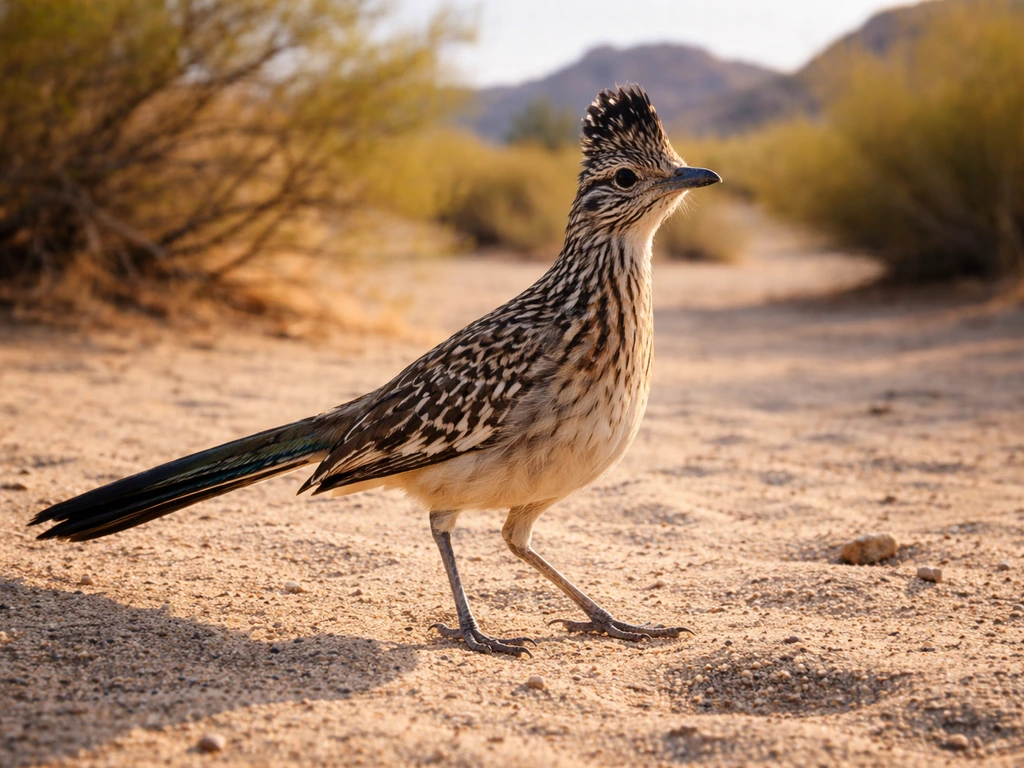
Yes, the roadrunner is absolutely a real bird. It is not a cartoon invention, a brand mascot, or a mythical creature. The greater roadrunner (Geococcyx californianus) is a living species that runs around the deserts of the southwestern United States and Mexico right now, today, doing very real bird things. Rodrunners like the greater roadrunner are real birds, not fictional characters or mascots roadrunner is absolutely a real bird.
Is the Roadrunner a Real Bird? The Science Answer

Marcus Hendricks
3 May 2026
What 'roadrunner' actually refers to
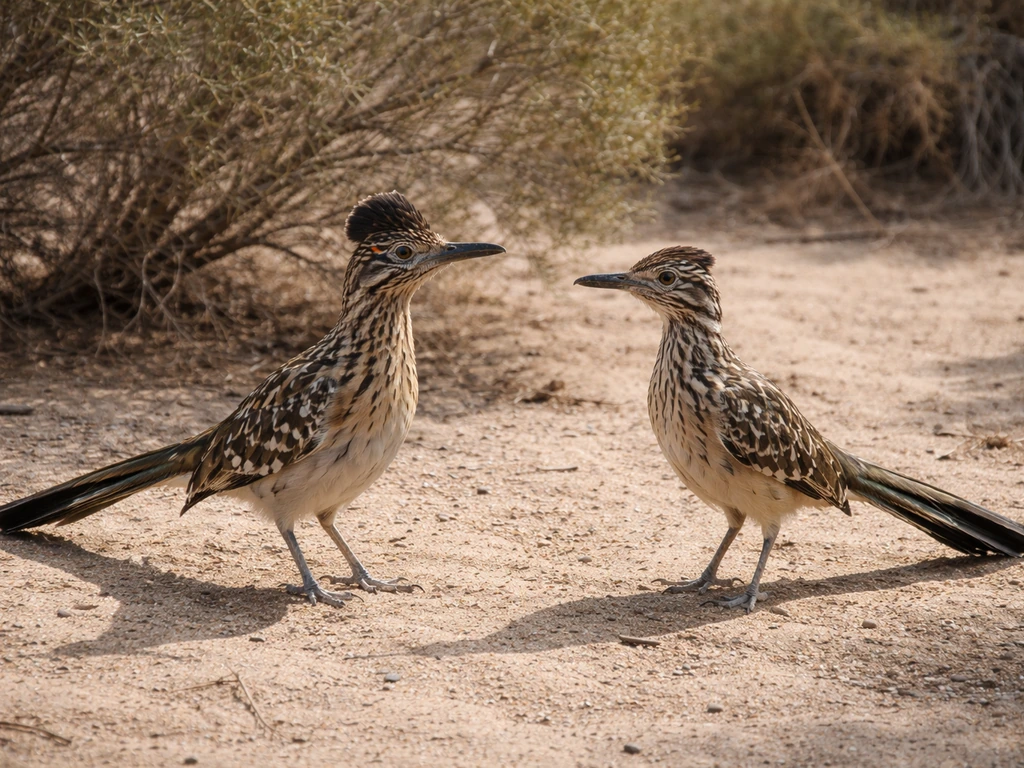
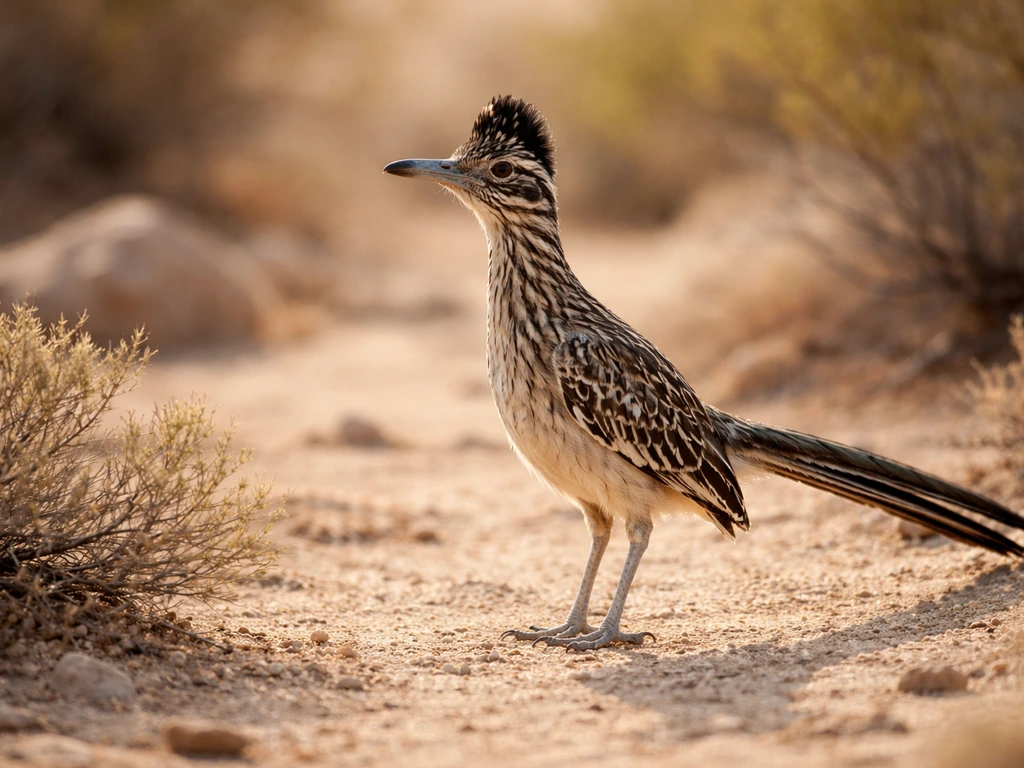
The word 'roadrunner' is a common name, and like most common names it covers more than one species. When most people say 'roadrunner,' they mean the [greater roadrunner (Geococcyx californianus)](https://home. nps. gov/pinn/planyourvisit/roadrunner.
htm), the larger of two species in the genus Geococcyx. There is also the lesser roadrunner (Geococcyx velox), found further into Central America. Britannica describes the roadrunner as one of two species of terrestrial cuckoos, including Geococcyx californianus, found in the deserts of Mexico and the southwestern United States [Geococcyx velox](https://www. britannica.
com/animal/roadrunner-bird). Both are real, living birds. The name 'road runner' (two words) refers to exactly the same animal, just written differently. So whether you searched 'is the roadrunner a real bird' or 'is road runner a real bird,' the answer is the same: yes, and it has a Latin name, a scientific classification, and a Cornell Lab field guide entry to prove it.
What actually makes something a bird
Before mapping the roadrunner onto the definition, it helps to know what biologists actually look for when they classify something as a bird. The checklist is pretty consistent across ornithology references.
- Feathers: birds are the only living animals that have them
- A beak (bill): no teeth, just a keratinous structure
- Warm-blooded (endothermic) metabolism
- Lays hard or leathery eggs
- Two wings (even if flightless or poorly adapted for flight)
- Two legs (bipedal locomotion)
- Hollow or semi-hollow bones in most species
- A four-chambered heart
- Descended from theropod dinosaurs within the evolutionary lineage Aves
An animal needs to meet all of these criteria, not just a few. That is what separates birds from, say, bats (warm-blooded, fly, but have fur and no feathers), or from fictional characters that just look bird-like.
How the roadrunner checks every box
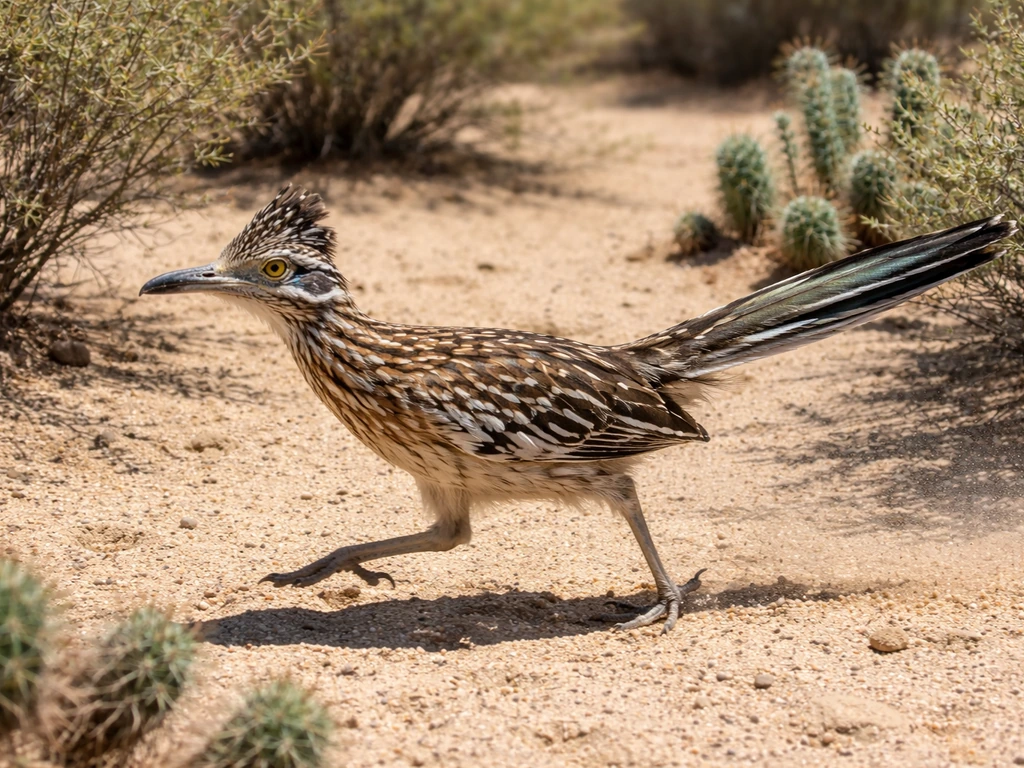
The greater roadrunner hits every point on that list without exception. It has feathers, including the streaked brown-and-white plumage that makes it look slightly disheveled, and a distinctive shaggy crest it raises when excited or alarmed. It has a long, sturdy beak it uses to catch prey, including rattlesnakes, lizards, and large insects. It is warm-blooded, and in fact has a fascinating thermoregulation trick: on cold desert mornings it exposes dark skin patches on its back to absorb solar heat before it starts moving, essentially using itself as a solar panel.
It lays eggs in stick nests, usually in a low shrub or cactus. It has two wings, though it flies reluctantly and poorly, preferring to sprint at speeds up to around 20 miles per hour. It has two strong legs built for running, zygodactyl feet (two toes pointing forward, two pointing back, shared with other cuckoos and parrots), and the internal anatomy of a textbook bird. There is nothing ambiguous here. This is an animal that every major ornithological authority, including Cornell Lab of Ornithology and Britannica, lists without hesitation as a bird.
Where roadrunners fit in the bird family tree
Roadrunners belong to the family Cuculidae, which is the cuckoo family. If that surprises you, you are not alone. Most people associate cuckoos with the small, parasitic nest-invaders of Europe, but the family is much broader. Within Cuculidae, roadrunners are classified as terrestrial cuckoos, meaning they evolved to live and hunt on the ground rather than in tree canopies. Their genus is Geococcyx, which literally means 'earth cuckoo' in Greek. So the full taxonomy looks like this: Class Aves (birds), Order Cuculiformes, Family Cuculidae, Genus Geococcyx, Species californianus (greater roadrunner) or velox (lesser roadrunner). That is a completely standard, well-established taxonomic address, not a debate or a gray area.
Why so many people think roadrunners might be fictional
This confusion has one very obvious source: the Looney Tunes cartoon. Since 1949, Warner Bros. has run a franchise built around an animated Road Runner, a stylized blue-purple bird that says 'Beep Beep' and outwits a coyote in increasingly absurd ways. That character is so culturally embedded that many people, especially those who grew up with the cartoons and never lived in the American Southwest, have mentally filed 'roadrunner' under 'cartoon things' rather than 'real animals.' The University of New Mexico and Sonoma State University both use roadrunner mascots for similar reasons: the bird has a fun, recognizable pop-culture image that translates well into sports branding.
Here is the important distinction though: the cartoon was inspired by the real bird, not the other way around. National Geographic explicitly notes that the Looney Tunes Road Runner character was based on the actual greater roadrunner species. The real bird really does run fast, really does live in desert scrubland, and really does sometimes chase snakes. A roadrunner is a desert bird, often seen sprinting through dry scrub and desert habitats.
The cartoon exaggerated those traits into slapstick comedy, but the source material was always a living, documented species. This is a pattern worth recognizing: sometimes a real animal gets so thoroughly absorbed into pop culture that people forget the animal exists, similar to how someone might wonder whether a particular rail or other unusual bird is 'made up' simply because they have never encountered one in person.
If you are wondering about a specific rail, the same idea applies: look for the scientific name and reputable bird references to confirm it is a real species.
How to verify this yourself in about five minutes
If you want to confirm you are reading about the real animal and not a mascot or fictional version, here is exactly what to do.
- Go to Cornell Lab of Ornithology's All About Birds site (allaboutbirds.org) and search 'Greater Roadrunner.' You will get a full species account with photos, range maps, audio recordings of real calls, and life history data. This is one of the most trusted ornithological databases in the world.
- Search Britannica for 'roadrunner bird.' Britannica's entry explicitly identifies Geococcyx californianus as the primary species and places it within the cuckoo family. If the page you land on has a scientific name and a taxonomy section, you are reading about the real animal.
- Check iNaturalist (inaturalist.org) and search for Geococcyx californianus. You will find thousands of real-world, citizen-science observations with photos, GPS coordinates, and dates from actual sightings across the American Southwest.
- Use eBird (ebird.org), another Cornell Lab tool, to pull up the range map and recent sightings. This confirms not only that the species exists but that people are actively observing it right now.
- If you want a quick sanity check, National Geographic's species page for the greater roadrunner includes photos of the real bird alongside the note about its cartoon inspiration, making the real-vs-fictional distinction explicit in one place.
One thing to watch for: if a search result talks about 'Road Runner' without a scientific name, a range map, or any biological detail, you might be looking at a page about the cartoon character or a sports mascot. The real bird always comes with Geococcyx californianus attached. That Latin name is your anchor. Any page that uses it is talking about the actual species.
The bottom line
The roadrunner is a real bird with a real scientific name, a real taxonomic address inside the cuckoo family, and real populations living in real deserts across the American Southwest and Mexico. The cartoon made it famous, but the cartoon did not invent it. If you have ever wondered whether other unusual-sounding birds are real or fictional, the same approach applies: look for the Latin name, find it in Cornell Lab or Britannica, and check for field observation data.
If you are also asking 'is rayman a bird,' treat it the same way and check for a real-world classification rather than relying on fiction or character design. The roadrunner passes every one of those tests without any trouble at all.
FAQ
How can I tell the difference between the real roadrunner species and a cartoon or mascot page in a quick search?
Check whether the page includes a scientific name (Geococcyx californianus or Geococcyx velox) and any biological specifics like diet, nesting, range, or bird anatomy. If it only talks about “Road Runner” as a character, without Latin names or habitat details, it is almost certainly not the animal.
Is there any case where “roadrunner” could refer to something other than the birds in the genus Geococcyx?
Rarely, yes. Common names can be reused for brands or team nicknames, so a “roadrunner” in advertising or sports might not be the bird at all. The reliable test is the scientific name and whether the content describes a living bird species’ traits.
Do roadrunners actually fly, or are they basically ground-only birds?
They do have wings and can fly, but they are often described as reluctant and not strong fliers compared with many other birds. In practice, they rely heavily on sprinting and running, especially for hunting and escaping.
What does the roadrunner’s “cuckoo” family relationship mean, since it looks nothing like a typical cuckoo?
“Cuckoo” is a broad family (Cuculidae). Roadrunners are terrestrial cuckoos, meaning their lifestyle and hunting on the ground are different from many people’s idea of cuckoos. Family name does not guarantee the same shape or behavior as every species people associate with the group.
Are greater and lesser roadrunners both real birds, or is one just a nickname?
Both are real species with different geographic ranges and scientific names. If you see only one “roadrunner” claim without mentioning Geococcyx californianus or Geococcyx velox, you might be reading a generalized summary, but the birds themselves are distinct living species.
If I hear “road runner” written two words, is that the cartoon character or still the real bird?
Writing it as “road runner” (two words) still usually refers to the same animal as the one-word common name. The giveaway is whether the text anchors the claim with the Latin genus and species, not the spelling style.
Next Article
Is Roadrunner a Bird? How to Identify the Real Animal
Yes, roadrunner is a bird. Learn its species ID traits and how it differs from Road Runner cartoons