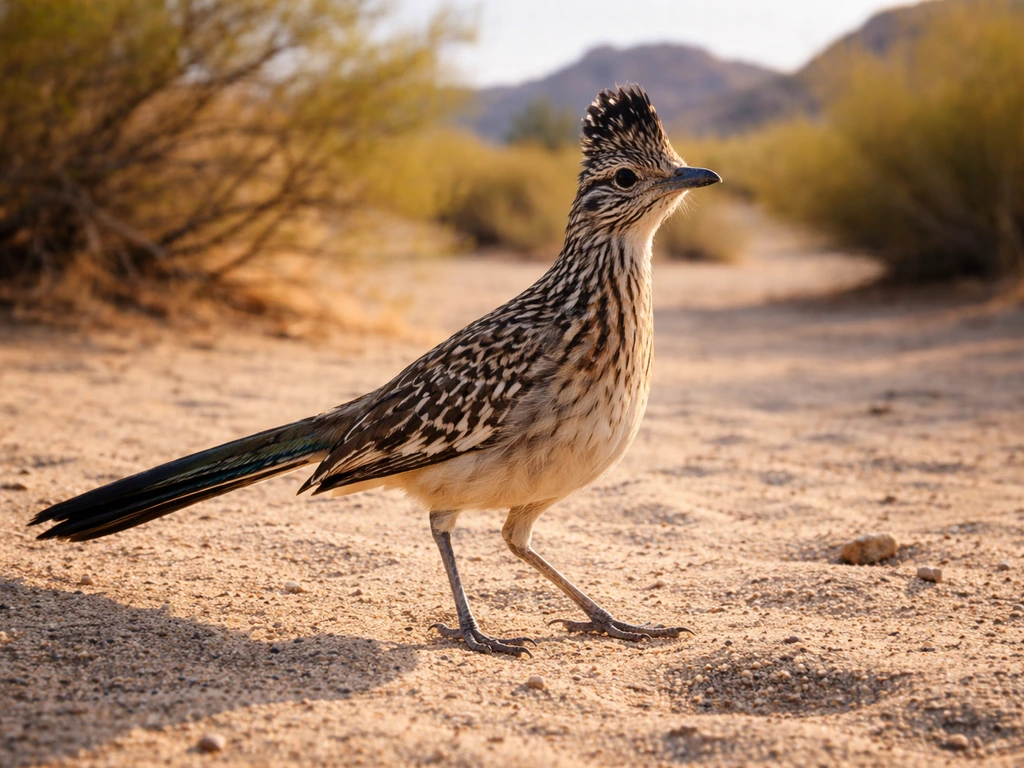
gbif. org/species/9795622), confirming it is a bird. It sits in the family Cuculidae, which makes it a cuckoo, a terrestrial one, but a cuckoo nonetheless. Britannica also describes the roadrunner as a terrestrial cuckoo species, especially Geococcyx californianus, from the deserts of Mexico and the southwestern United States [terrestrial one, but a cuckoo nonetheless](https://www.
britannica. com/animal/roadrunner-bird). The U. S.
Fish and Wildlife Service, GBIF, the Smithsonian Institution, and Cornell Lab's All About Birds all list it that way without any ambiguity. There is no debate here in the scientific community: roadrunners are birds, full stop.
The one wrinkle worth clearing up before going further: the word 'roadrunner' can refer to the real animal or to the famous Looney Tunes cartoon character (Road Runner, with a capital R and a space). They are very different things, and that distinction matters if you're trying to settle a debate or identify something in the wild. More on that in a moment.
What a roadrunner actually is
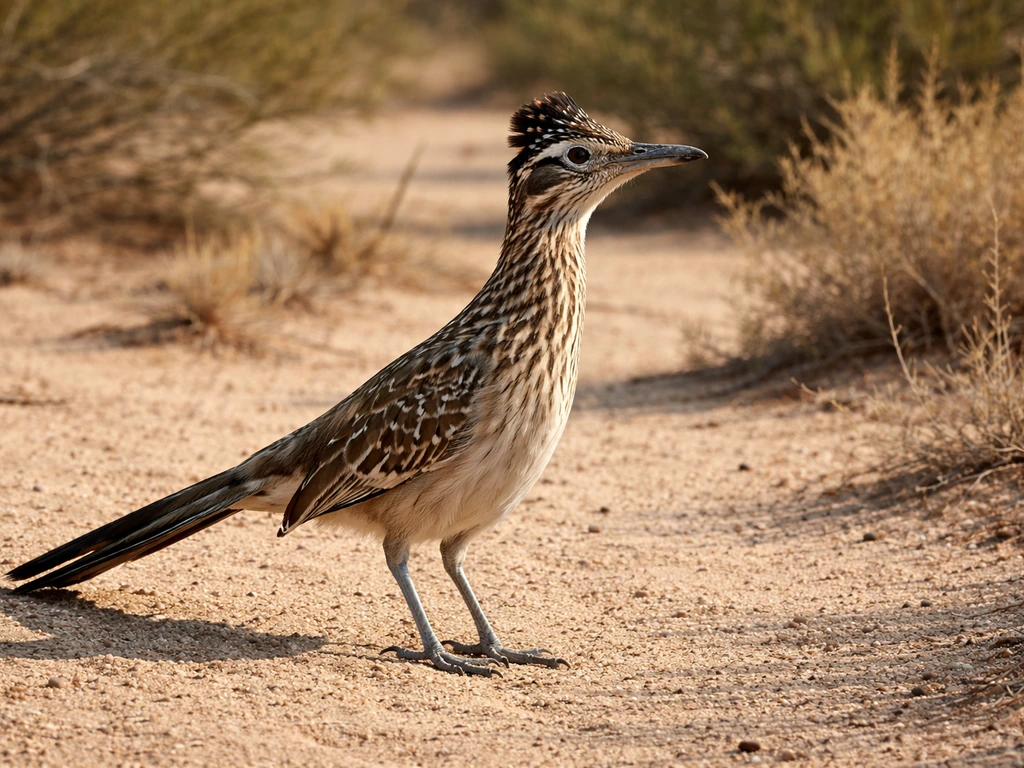
The greater roadrunner, Geococcyx californianus, is the species most people mean when they say 'roadrunner.' Its full taxonomic placement looks like this:
| Taxonomic rank | Classification |
|---|
| Kingdom | Animalia |
| Class | Aves (birds) |
| Order | Cuculiformes |
| Family | Cuculidae (cuckoos) |
| Genus | Geococcyx |
| Species | Geococcyx californianus |
There are actually two roadrunner species in the genus Geococcyx: the greater roadrunner and the lesser roadrunner (Geococcyx velox). The greater roadrunner is the one most North Americans are familiar with, living across the desert Southwest of the United States and into Mexico. Both are terrestrial cuckoos, meaning they spend nearly all their time on the ground rather than in trees, which is part of why people sometimes find them surprising when they learn what family they belong to.
Calling a roadrunner a cuckoo feels odd at first, but it makes complete sense once you understand that cuckoos are a diverse family. Not every cuckoo sneaks its eggs into other birds' nests, that's a stereotype from European species. Roadrunners build their own nests, lay their own eggs (clutch sizes of 2 to 6), and raise their own young. Perfectly respectable birds.
Why some people think roadrunners might not be 'real birds'
Roadrunners look and act pretty differently from the birds most people picture when they hear the word 'bird.' They run instead of fly (they can fly, but prefer not to). They're large, fast, and ground-dwelling. They eat rattlesnakes. Honestly, it's understandable that someone might pause and wonder. But biology doesn't care about our expectations, and roadrunners check every box on the 'is it a bird? If you are asking, is rayman a bird, the answer is no, because rayman is a video game character, not an animal in Class Aves is it a bird?. ' list:
- Feathers: roadrunners have streaked olive-brown and white plumage, a shaggy crest, and a long graduated tail with white tips — all feathers, all very bird
- Bill: a long, stout beak with no teeth, characteristic of birds
- Warm-blooded: like all birds, roadrunners regulate their own body temperature
- Egg-laying: they reproduce by laying eggs in a nest, not live birth
- Skeletal structure: hollow bones and a body plan consistent with Aves
- Two wings, two legs: the classic avian body layout
The confusion usually comes from behavior, not biology. A bird that sprints across the desert floor at up to 20 mph and wrestles rattlesnakes doesn't match the mental image of a robin at a feeder. But 'unusual behavior' has never disqualified a species from being a bird. Penguins don't fly and ostriches run faster than most cars, and nobody seriously argues they aren't birds.
Road Runner vs. roadrunner: the name mix-up you need to know
Here's where things can genuinely get confusing. 'Road Runner' (two words, often capitalized) refers to the Warner Bros. cartoon character introduced in the 1949 Looney Tunes short Fast and Furry-ous. That character was inspired by the real greater roadrunner and shares its basic look, long legs, crest, fast running, but it's a fictional mascot, not a species. The cartoon Road Runner says 'Beep beep,' outruns a coyote, and doesn't eat snakes. The real roadrunner does eat snakes and makes a soft cooing sound, not a horn-like beep.
The word 'roadrunner' (one word, lowercase) is the correct common name for the actual bird. When you see it written as 'road runner' (two words, lowercase), that's just an older or informal spelling variant for the same real animal. Neither of those refers to the cartoon. If someone asks 'is the Road Runner a real bird?' they might be asking about the cartoon character specifically, which is worth noting as a related angle, since the answer there involves both confirmation (yes, it's based on a real bird) and clarification (the cartoon itself is fictional).
The roadrunner name also shows up in other contexts: there's a Road Runner internet service brand, running events with 'roadrunner' in the name, and various sports team mascots. None of those affect the classification of the bird, but they do explain why search results can be noisy when you're just trying to find out what the animal is.
How to identify a roadrunner if you spot one
If you're in the southwestern United States or Mexico and you think you've just seen a roadrunner, here's what to look for to confirm it. Roadrunners are distinctive enough that once you know the field marks, you won't second-guess yourself again.
- Size and shape: this is a large bird by ground-bird standards, roughly 20 to 24 inches long from bill tip to tail tip, with a noticeably long neck and even longer tail
- Tail: the tail is very long, straight, and graduated (the feathers are different lengths, creating a layered look), often held horizontally or cocked upward — the white tips on the dark tail feathers are a clear marker
- Crest: a shaggy, bushy crest on top of the head that raises and lowers depending on the bird's mood — when it's alert or excited, that crest goes up
- Eye patch: look for a bare patch of skin just behind each eye that is blue at the front and red (or orange) at the back — this is unique and very diagnostic
- Plumage: streaked olive-brown and white overall, not brightly colored, which helps it blend into desert scrub
- Legs: long, stout, and bluish — built for running, not perching
- Habitat: dry desert with patches of thick brush, open scrubland, or arid grassland; sometimes perches on fence posts or low rocks
- Behavior: almost always on the ground, running with its body held roughly horizontal and its tail streaming behind it
eBird and USGS both note that the greater roadrunner is most reliably found in dry desert habitats with patches of dense vegetation, it uses the open ground to run and hunt, and the thick shrubs for cover and nesting. If you're in the Desert Southwest and you see a large, crested bird sprinting across a dirt road or a scrubby open area, there's a very good chance you're looking at a roadrunner. Its combination of long tail, shaggy crest, and distinctive eye patch leaves little room for confusion with other desert birds.
The bottom line
A roadrunner is a bird. It belongs to Class Aves and Family Cuculidae, it lays eggs, it has feathers, and it has a bill. The fact that it prefers running to flying and lives in the desert doesn't change its classification any more than a penguin's swimming habits make it a fish. Its preference for running over flying and its desert lifestyle are why some people describe it as a roadrunner in the desert, too a roadrunner is a desert bird. If someone in your life is arguing otherwise, the taxonomy is clear: Geococcyx californianus, confirmed bird, end of debate.
If the question was really about the cartoon Road Runner rather than the real animal, that character is fictional but was directly inspired by the real greater roadrunner, so even that conversation circles back to a genuine bird species. So, is rodan a bird? If you mean a roadrunner, the answer is yes, it is a real bird species.
And if you want to go deeper on related classification questions, the broader world of unusual bird identifications is full of similarly surprising answers. Rail birds, for instance, are another group of ground-dwelling birds that often catch people off guard, much like roadrunners do. Rail birds, too, are often ground-dwelling birds that can surprise people when they see them up close.