Rodan is not a real bird. The Rodan most people are searching for is a fictional kaiju from Toho's monster franchise, most famously a giant pteranodon-like creature that first appeared in the 1956 Japanese film of the same name. It is a fictional monster, not an animal species, and it does not appear in any legitimate bird taxonomy database. That said, there are a few other things people call 'Rodan,' so let's walk through all of them and confirm which one you're thinking of.
Is Rodan a Bird? How to Verify What Rodan Means

Marcus Hendricks
6 Jun 2026
What 'Rodan' actually refers to
The name 'Rodan' shows up in a handful of completely unrelated contexts, which is why people end up confused about what it even is before they can figure out whether it's a bird.
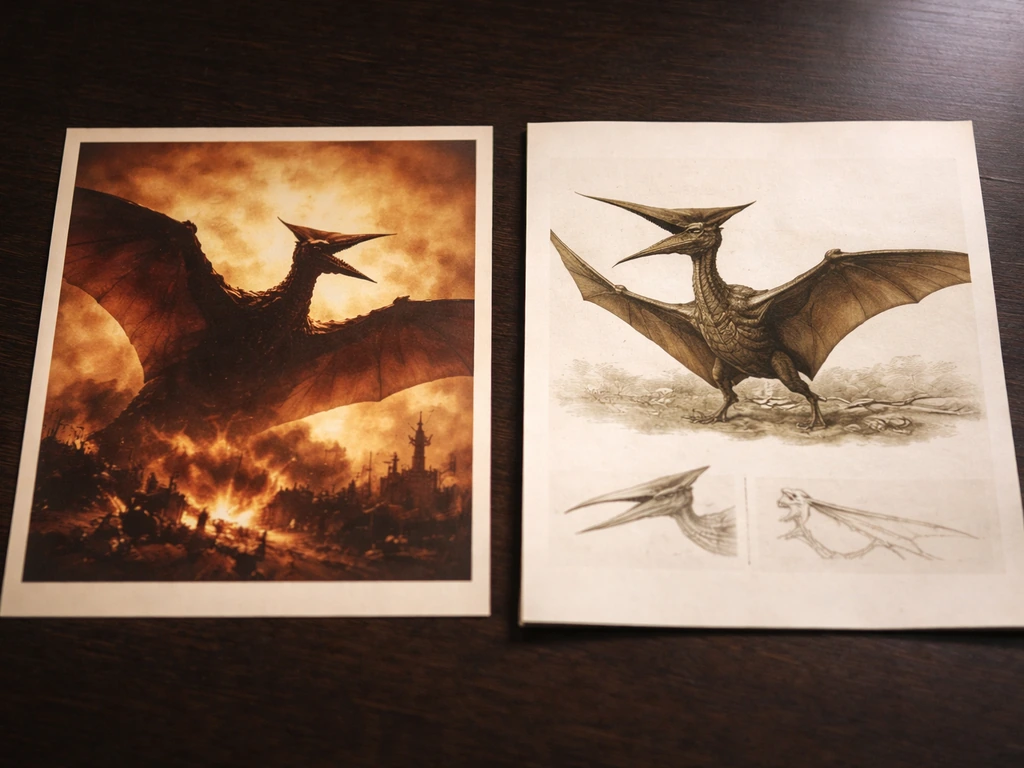
- The Toho/Godzilla franchise kaiju: a giant, pteranodon-inspired monster introduced in the 1956 Toho film 'Rodan' and later appearing in multiple Godzilla films, including the 2019 Hollywood production 'Godzilla: King of the Monsters.'
- A surname: 'Rodan' exists as a surname with multiple cultural origins. Several notable people carry it, but none of them are birds.
- A skincare brand: Rodan + Fields is an American skincare and haircare company. Definitely not a bird.
- Alternate spellings or related names: searches for 'Rodan' sometimes pull up 'Rodon' or similar strings, which can muddle results further when you're trying to find creature or biology information.
If you landed on this page from a search, you're almost certainly thinking about the kaiju. The pteranodon-style monster is by far the dominant meaning online, and the biology question makes the most sense in that context. So that's what we'll focus on.
The kaiju Rodan: bird or not?
In the Toho canon, Rodan is consistently described as a species of Pteranodon, mutated and massively enlarged through radiation. Wikizilla describes it as a 'giant Pteranodon kaiju' with a beak, horns, and enormous wings. The Showa-series framing from Toho Kingdom goes further, describing it as 'a species of pteranodon' that evolved under the influence of atomic-age conditions. So the character is clearly modeled on a real prehistoric group: pterosaurs, and specifically pteranodons.
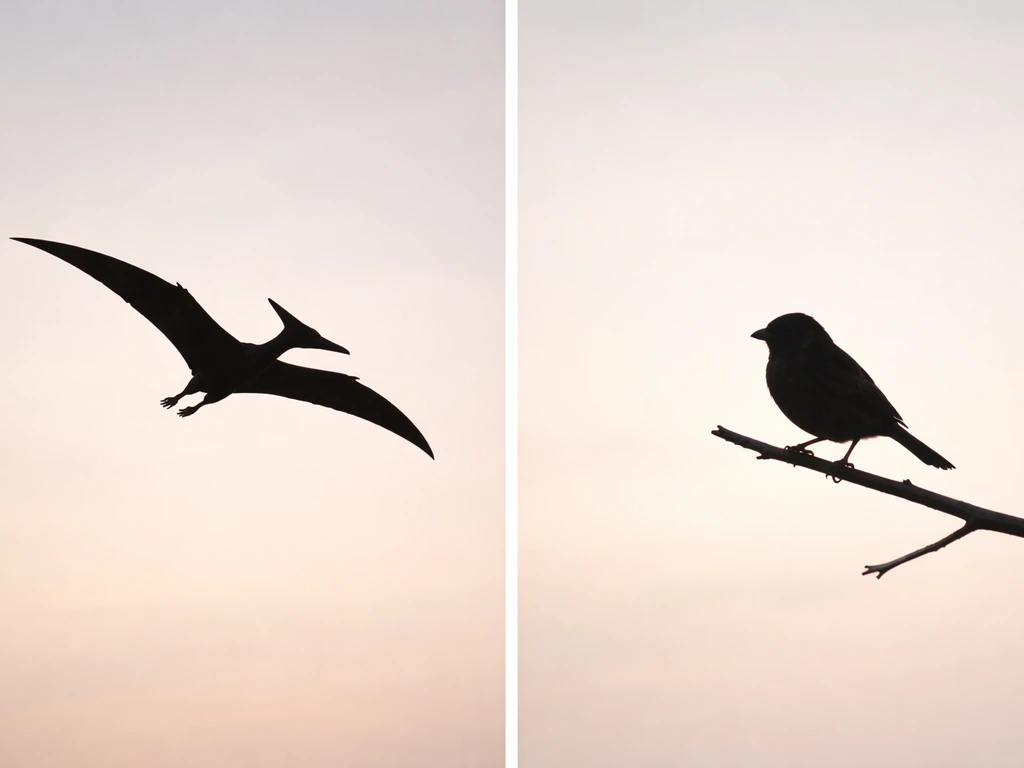
Here's where it gets interesting for bird nerds. Pterosaurs were not birds. Pterosaurs like pteranodons are not birds, so the common “is Rodan a bird?” question has a clear answer. They were flying reptiles, members of the clade Pterosauria, that lived alongside dinosaurs but belonged to a completely separate branch of the reptile family tree. They had wings formed from a membrane of skin stretched along an elongated fourth finger, not the feather-bearing forelimbs of birds. So even if Rodan were a real animal rather than a fictional monster, it would still not qualify as a bird. It would be a reptile. A roadrunner is a desert bird, so it is completely different from the Rodan kaiju.
And just to close the loop: Rodan is not a real animal of any kind. It exists only in film, television, and merchandise. You will not find it in any species database, taxonomy registry, or field guide. The fact that it's inspired by a real prehistoric group (pterosaurs) doesn't make it a real organism any more than Godzilla being inspired by nuclear-age fears makes radiation a giant lizard.
How to check if something is actually a bird
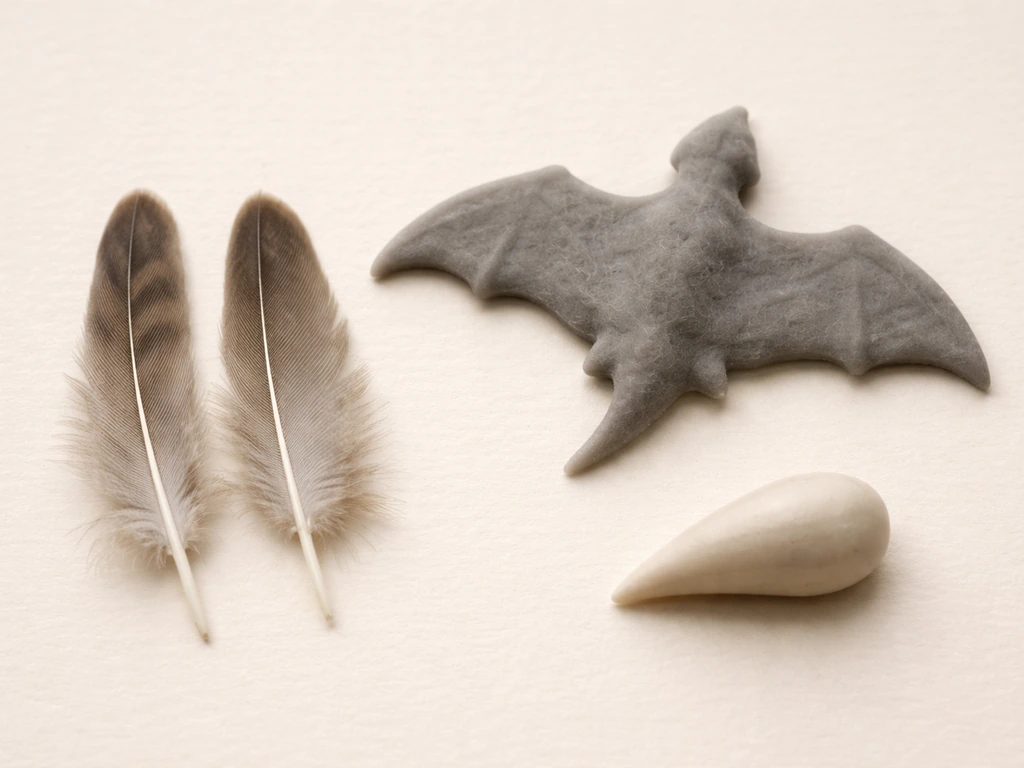
Whether you're evaluating Rodan, a roadrunner (which is a real bird, for the record), or something you just saw in a cartoon, the same core checklist applies. Birds share a very specific set of biological traits that set them apart from every other animal group.
- Feathers: all birds have feathers. No other living animal does. If it doesn't have feathers, it's not a bird.
- Beak or bill (no teeth): modern birds have beaks made of keratin. They don't have teeth.
- Forelimbs modified as wings: in birds, the arms evolved into wings, whether the animal uses them to fly or not. The bone structure is still a modified forelimb.
- Warm-blooded (endothermic): birds regulate their own body temperature internally.
- Egg-laying with hard or leathery shells: birds reproduce by laying eggs.
- Hollow bones: birds generally have lightweight, hollow bones adapted for flight.
- Descended from theropod dinosaurs: all modern birds belong to the clade Aves, which evolved from theropod dinosaurs. This is a firm evolutionary requirement, not just a characteristic.
Apply this checklist to Rodan. The kaiju has a beak-like structure and large wings, which might superficially read as 'bird-ish' to some people. But it has no feathers, it's modeled on a reptile lineage (pterosaurs), it's fictional and has no verified anatomy at all, and it certainly doesn't appear in any bird classification system. Zero out of the checklist for confirmed bird traits.
Birds vs everything else: where Rodan actually falls
It helps to be clear about the categories here, because a lot of 'is X a bird?' confusion comes from mixing up flying, feathered, beak-having, or dinosaur-adjacent things.
| Category | Examples | Why it's not a bird (if applicable) |
|---|---|---|
| Real birds (Aves) | Roadrunner, rail, eagle, penguin | These ARE birds. All check the trait list above. |
| Pterosaurs (extinct reptiles) | Pteranodon, Pterodactylus, Quetzalcoatlus | Flying reptiles, not birds. Different evolutionary lineage, membrane wings, no feathers. |
| Non-avian dinosaurs (extinct) | T. rex, Velociraptor | Not birds, though birds evolved from this group. T. rex is famously more bird-like than most people expect, but it's still not a bird. |
| Fictional monsters | Rodan, Mothra, Godzilla | Not real organisms of any kind. Can't be classified biologically. |
| Mammals | Bats, flying squirrels | Bats fly but are mammals. Warm-blooded and give birth to live young (mostly). No feathers, no beak. |
The key distinction for Rodan specifically is the pterosaur connection. People see 'big flying creature with a beak-like face' and their brain says 'bird.' But pterosaurs were a completely separate evolutionary experiment in flight. They had membrane wings, scaly or leathery skin (some had hair-like filaments called pycnofibers), and are classified firmly in Reptilia. Not Aves. If Rodan were real, it would be a reptile, not a bird.
How to verify any 'Rodan' claim with real sources

If you want to confirm whether something called 'Rodan' (or any similar name) is a legitimate bird species, here's how to check it properly rather than relying on fan wikis or general search results.
- Search GBIF (Global Biodiversity Information Facility) at gbif.org. Type the name in the species search. If there's no matching accepted taxon in class Aves, it's not a recognized bird species.
- Check the Cornell Lab of Ornithology's eBird or Birds of the World database. These cover all described bird species and are maintained by active ornithologists.
- Use the Integrated Taxonomic Information System (ITIS) at itis.gov. Search the name and check the kingdom, class, and order. A bird will always show Class: Aves.
- Look up the name on Wikipedia, but specifically check whether the page is categorized under 'fictional characters,' 'kaiju,' 'Toho films,' or 'brands.' If any of those categories appear, you're not dealing with a real species.
- If your search results mention 'Toho,' 'Godzilla,' 'pteranodon kaiju,' or 'Rodan + Fields,' you have found the disambiguation cues that tell you this is not a biology result.
- For any name you're unsure about, cross-reference with at least two of the above databases. A real bird species will have a scientific binomial name (like Geococcyx californianus for the roadrunner) and appear in multiple authoritative sources.
Running 'Rodan' through any of those databases returns nothing in Aves because there is no bird species with that name. The only hits you'll find point back to the kaiju franchise, the surname, or the skincare brand. That's your answer confirmed from the source level.
The bottom line
Rodan is not a bird. It's a fictional kaiju inspired by pterosaurs, which were themselves not birds but flying reptiles. Even setting aside its fictional status, a pteranodon-based creature would fall in Reptilia, not Aves. If you want a real flying creature that actually is a bird and might scratch a similar 'big, wild, prehistoric-looking flier' itch, the roadrunner is a surprisingly weird real bird worth looking into, and so are rail species, which have their own classification quirks. But Rodan itself belongs firmly in the monster movie category, not any ornithology field guide.
FAQ
If Rodan has a beak and wings, does that automatically mean it is a bird?
No. In biology, wings plus a beak-like shape are not enough. The defining bird traits include feathers and bird-specific skeletal and classification features, which Rodan lacks in the franchise portrayal, and it is modeled on pterosaurs, a separate flying reptile lineage.
Are pteranodons or other pterosaurs considered birds?
No. Even though pterosaurs were prehistoric and flew, they are classified in the pterosaur branch (Reptilia), not Aves. So a creature explicitly based on pteranodon biology would not qualify as a bird species.
How can I check whether a name like “Rodan” is a real bird species without getting misled by fandom pages?
Search bird-focused taxonomic sources and confirm whether the name appears as a species or subspecies within Aves. If you only see hits for a monster franchise, a surname, or a product brand, that is a strong indicator it is not a recognized bird taxon.
Could “Rodan” refer to something else that is actually a bird in some context?
Sometimes “Rodan” is used as a label for unrelated things, like surnames or products. When it does not appear in Aves listings as a species name, it is not a bird taxonomy answer. Your best safeguard is to verify it as an Aves name, not just as a search term.
What should I look for if I want to distinguish flying reptiles, bats, and birds in general?
Check the details that map to classification: feathers and bird-style forelimbs point to birds, wing membranes point away from birds, and bat wings indicate mammal flight. Also, be cautious with “bird-ish” descriptions in media, since visuals often mix traits from different animal groups.
Does Rodan being “inspired by” pterosaurs make it a real animal?
No. Inspiration does not create real biological status. A fictional kaiju can be inspired by real organisms and still not exist in any species database, which is why “based on pterosaurs” does not change the answer from fictional to real.
If I encounter a “Rodan” claim in a quiz or video, how do I verify it quickly?
Confirm two things: whether the claim points to an official species name in Aves, and whether the description matches known bird diagnostic traits like feathers. If it is only described through movie visuals or franchise lore, it is not a taxonomic claim.
Is there any real bird that matches the same “large prehistoric-looking flier” vibe?
If your goal is the aesthetic rather than the exact taxonomy, you might look at real birds with dramatic prehistoric associations, such as some large, flight-capable species (for example, certain rails and raptors). They will still be birds in Aves, but they can scratch the “big ancient flier” curiosity better than Rodan.