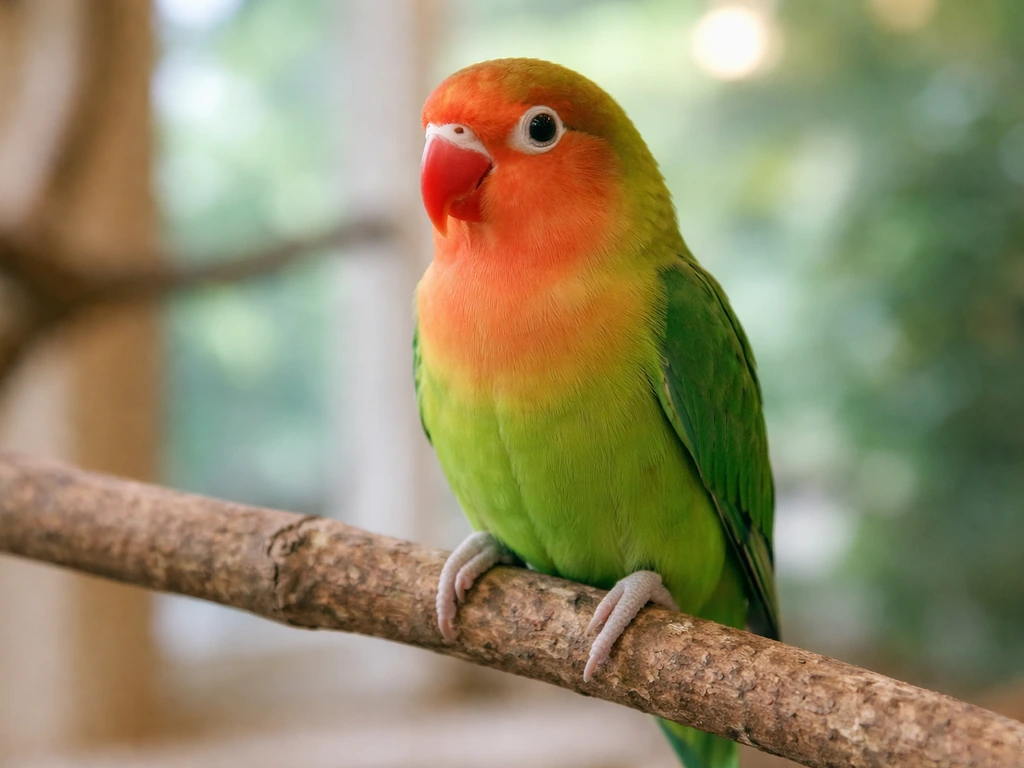
Yes, a lovebird is a parrot. Specifically, lovebirds belong to the genus Agapornis, which sits inside Order Psittaciformes, the formal scientific name for the parrot order. That classification is not a casual comparison or a pet-store simplification. It is how authoritative sources like ITIS, the IOC World Bird List, CITES, and Britannica all place lovebirds. If you have a lovebird, you have a small parrot. Full stop.
Is a Lovebird a Parrot? Plus Lovebird vs Parakeet Guide

Marcus Hendricks
5 Jun 2026
Lovebirds vs parrots: the direct answer
The confusion usually comes from how we talk about birds in everyday life. People hear "parrot" and picture a large, brightly colored bird on a pirate's shoulder. Because lovebirds are small (typically 5 to 7 inches from beak to tail), they don't fit that mental image, and so people file them under a different category in their heads. But biology doesn't care about our mental images. The word "parrot" refers to an entire evolutionary order, not just the big flashy species. Lovebirds are firmly inside that order.
Britannica describes lovebirds plainly as "small parrots" of the genus Agapornis. blank" rel="noopener noreferrer">ITIS, the authoritative taxonomy database, places Agapornis under Order Psittaciformes and Family Psittaculidae (the Old World parrots). CITES, the international wildlife trade treaty, also lists Agapornis taxa under Psittaciformes in its formal species documentation. These are not informal sources. This classification is rock solid.
What actually counts as a parrot
"Parrot" is the common name for any bird in the order Psittaciformes. The International Ornithologists' Union also treats the parrot-order (Psittaciformes) as the formal taxonomy framework for parrot resources blank" rel="noopener noreferrer">parrots are birds in the order Psittaciformes. Yes, a parrot is always a bird, since parrots belong to the avian order Psittaciformes parrot order Psittaciformes. Britannica defines this order as more than 360 species of generally brightly colored, noisy birds. The order is broad enough to include macaws, cockatoos, lorikeets, keas, kakapos, and yes, lovebirds. They are all parrots in the biological sense. When scientists and ornithologists use the word "parrot," they mean membership in this order, not a specific body size or appearance.
The IOC World Bird List, which tracks modern avian taxonomy, treats parrots (Psittaciformes) as a sister group to passerines (the perching birds) in the broader evolutionary tree. Recent taxonomic work has also reorganized some parrot families. Old World parrots, for example, are now grouped under the family Psittaculidae, which is exactly where lovebirds land. So when you see Psittaculidae on a species page, that is a parrot family, not a separate thing.
Where lovebirds sit in the parrot family tree
Here is how the classification stacks up for lovebirds, from the broadest level down to the genus:
| Taxonomic rank | Name | What it means in plain English |
|---|---|---|
| Order | Psittaciformes | The parrot order — all parrots belong here |
| Family | Psittaculidae | Old World parrots (includes lovebirds, parakeets, ringnecks, etc.) |
| Genus | Agapornis | The lovebird genus — 9 recognized species |
| Example species | Agapornis lilianae | Lilian's Lovebird (one specific lovebird species) |
PetMD notes there are nine species of lovebirds, all within Agapornis. Birds of the World and PubChem both confirm that species like Agapornis lilianae are classified under Psittaciformes and Psittaculidae. So whichever lovebird species you are looking at, it traces back to the same parrot order. There is no lovebird species that sits outside of Psittaciformes.
Why people confuse lovebirds with parakeets
"Parakeet" is not a scientific rank. It is a common name, and a pretty loose one at that. Merriam-Webster and Wikipedia both treat "parakeet" as a general label applied to a range of small, slender parrots, with "budgie" (Melopsittacus undulatus) being the most common example in everyday usage. The word has older spelling variants and has always been applied informally to various small parrots rather than any single taxonomic group.
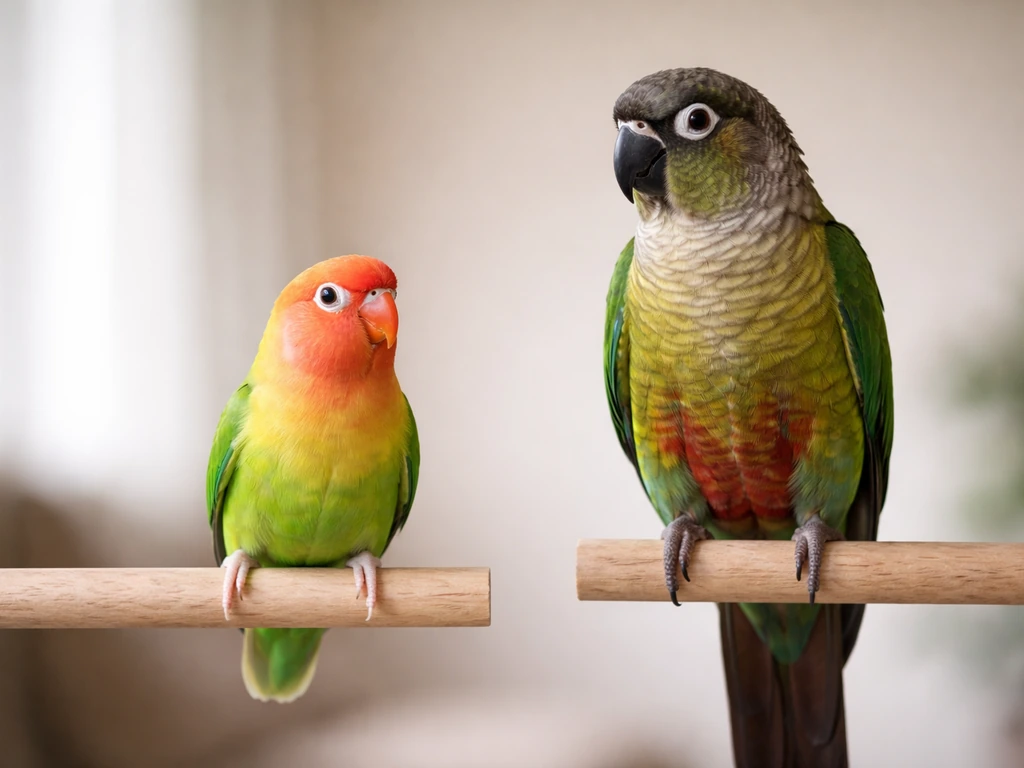
Here is where it gets messy: budgerigars are also parrots (Psittaciformes), and they are often sold in pet stores simply as "parakeets." Lovebirds are similarly small, similarly colorful, and sit in the same family (Psittaculidae). So people see a tiny parrot at a pet store and assume it must be "a parakeet" because that is the only small parrot category they know. The result is that lovebirds and budgies get conflated, even though they are distinct genera with different body shapes, behaviors, and care needs.
The short version: lovebirds can technically be described as a type of parakeet in casual speech (because parakeet just means small parrot in everyday English), but that label is imprecise and causes real confusion. It is more accurate, and far more useful, to just call them parrots or, better yet, lovebirds.
How to confirm what bird you actually have
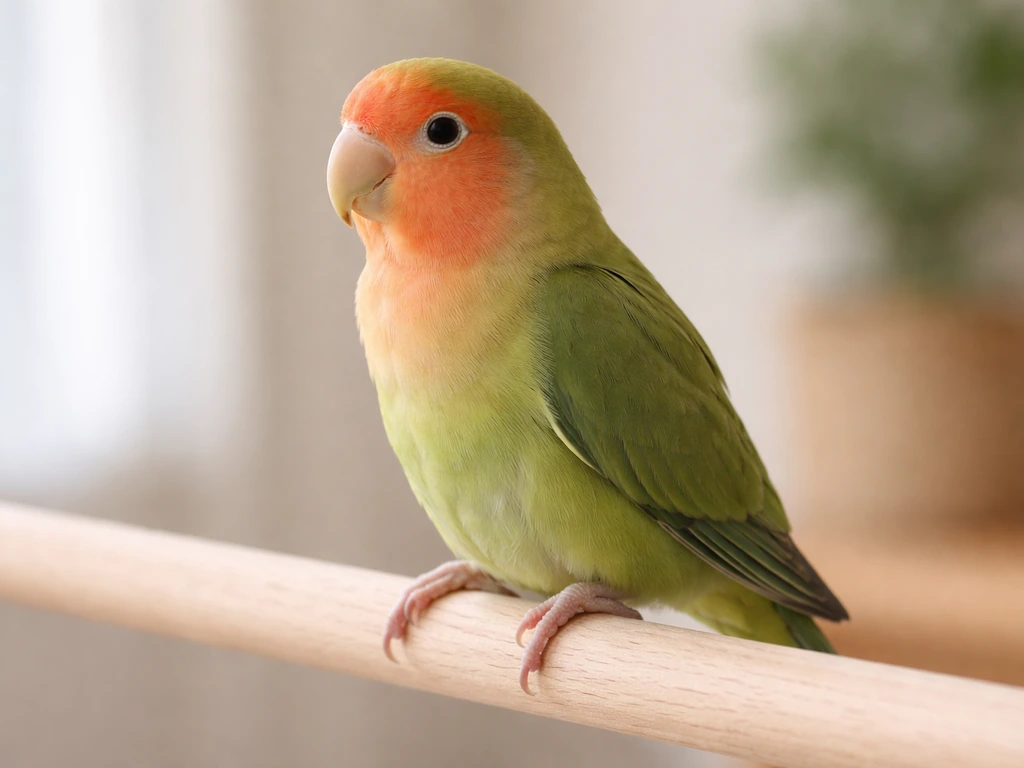
If you bought a bird labeled as a lovebird at a pet store, here are the practical identifiers to confirm you have the right bird, not a budgie or parrotlet mislabeled by a well-meaning store employee.
- Size: Lovebirds are typically 5 to 7 inches from beak to tail. That is slightly smaller than a cockatiel but larger than most budgies.
- Tail shape: Lovebirds have short, blunted tails. Budgerigars have long, tapered tails. This single visual cue resolves most lovebird-vs-budgie mix-ups immediately.
- Build: Lovebirds are stocky and compact. Budgies and many parakeets look more slender and elongated by comparison.
- Head and beak: Lovebirds have a relatively large, rounded head and a stout, hooked beak typical of parrots.
- Species name: The genus is Agapornis. If a care sheet, receipt, or breeder document lists a species name starting with Agapornis, you have a lovebird. If it says Melopsittacus undulatus, you have a budgerigar.
Lafeber, a well-regarded bird nutrition company, specifically calls out the lovebird-vs-parrotlet confusion as one of the more common pet trade mix-ups. Parrotlets (genus Forpus) are also tiny parrots that can look similar. Britannica even notes that budgerigars and parrotlets are sometimes erroneously called lovebirds. The key in all cases is to get the genus name from a reliable source rather than relying on a common name tag on a cage.
If you want to verify further, look up the genus on ITIS (itis.gov), Birds of the World, or the IOC World Bird List. Any of these will show you the full classification hierarchy and confirm the order-level placement in a few seconds. CITES also maintains species pages for Agapornis taxa that confirm their Psittaciformes status, which matters if you are ever dealing with import, export, or legal trade documentation.
Common mix-ups and how to talk about this correctly
A few persistent myths are worth clearing up directly.
- "Lovebirds aren't really parrots" — This is false. The classification is unambiguous. Lovebirds are in Order Psittaciformes. That is the definition of being a parrot.
- "Lovebirds are a type of parakeet" — This is imprecise but not entirely wrong if you use 'parakeet' loosely to mean 'small parrot.' The problem is that 'parakeet' in most people's minds means budgerigar, and lovebirds are not budgies. Avoid this framing unless you clarify what you mean.
- "My lovebird is too small to be a parrot" — Size is not the qualifier. Parrots range from the massive hyacinth macaw (around 40 inches) to the tiny pygmy parrot (around 3 inches). Lovebirds at 5 to 7 inches are comfortably in the small end of the parrot size range.
- "The pet store called it a parakeet, so it must be one" — Pet store labels are notoriously inconsistent. Common names vary by region, store, and even by individual employee. Always check the genus name if accurate identification matters to you.
- "Lovebirds and budgies are the same thing" — They are not. Both are parrots, but they are different genera with different tail shapes, temperaments, and care needs. A real-world example of this confusion went viral when a celebrity couple reportedly received budgies instead of lovebirds as a Valentine's Day gift. It is an easy mix-up, but a mix-up nonetheless.
The cleanest way to talk about this: lovebirds are small parrots in the genus Agapornis. If someone asks what kind of bird a lovebird is, "parrot" is the correct answer. If they want more precision, "small Old World parrot in the family Psittaculidae" covers it. The word parrot is not a simplification here. It is the accurate term.
Your next steps for verification
If you want to confirm the classification of a specific lovebird species you own or are researching, here is a simple workflow:
- Get the species name. Ask your breeder, vet, or look at any official documentation. The genus should be Agapornis followed by the species name (e.g., Agapornis roseicollis for the peach-faced lovebird).
- Check ITIS or Birds of the World. Search the genus name. You will see the full hierarchy confirming Order: Psittaciformes and Family: Psittaculidae.
- Use the IOC World Bird List for any recent taxonomic changes. Parrot classification has been updated in recent years, and the IOC list reflects the most current accepted names and family placements.
- For trade or legal purposes, check the CITES Species+ database. Agapornis taxa are listed there with their Psittaciformes classification and CITES appendix status.
- For everyday care and identification, use the physical cues above: short blunted tail, stocky build, 5 to 7 inch length, and large rounded head.
The broader point is that questions like this, whether a lovebird is a parrot, whether a parrot is an animal or a bird, whether familiar species belong to groups people assume they don't, almost always come down to the gap between common names and scientific classification. Common names shift by region, era, and context. Scientific classification, while it does get updated, is far more stable and specific. When the two conflict, go with the taxonomy. An “is par a bird” style question gets answered the same way: common wording versus scientific classification go with the taxonomy. In this case, the taxonomy is clear: lovebirds are parrots.
FAQ
If someone says “parrot” only means big birds, are lovebirds still parrots?
Yes. “Parrot” can refer to the bird order Psittaciformes, and lovebirds are members of that order. If someone asks only “is it a parrot,” the safest reply is simply yes, then add “it is a small parrot, genus Agapornis” if you want to be precise.
How can I confirm my “lovebird” is actually a lovebird and not a budgie or parrotlet?
You cannot reliably use the word on a cage tag. Many mix-ups in the pet trade involve budgerigars (budgies) or parrotlets. The quickest check is to find the genus name (Agapornis for lovebirds) on the product listing, paperwork, or the bird’s ID records, then compare body and beak shape to match that genus.
Is it okay to call a lovebird a parakeet?
In everyday speech, people often use “parakeet” for multiple small parrots, so it might be loosely correct. But it is not a single taxonomic group, so it is imprecise. If you want accuracy, use “parrot” (order-level) or “lovebird” (genus-level) rather than “parakeet.”
Will lovebird care be the same as care for other birds sold as parakeets?
Some care advice you see online for “parakeets” may not match lovebirds, because they are different genera with different behaviors and needs. For example, cage design, social setup, and diet planning often differ between budgies, parrotlets, and lovebirds even though all are parrots. Treat general “small parrot” tips as a starting point, then verify with lovebird-specific guidance.
Does the answer change depending on my country or local bird names?
A lovebird does not change its classification based on where it lives or what it is called locally. Taxonomy depends on lineage, not common names. If you are doing research or buying from another region, the common label may vary, but the genus Agapornis for lovebirds does not.
What should I use for paperwork or documentation, “lovebird” or “parrot”?
If you need a category for legal or trade contexts, rely on formal taxonomy rather than common names. “Parrot” as an English word is broad, but the scientific placement (Psittaciformes, with lovebirds in the family Psittaculidae) is what typically matters for documentation. Keep records that name the genus (Agapornis) and species if available.
If I have a specific lovebird species, how do I verify its classification beyond “parrot”?
For a specific species, the order is still Psittaciformes, but the exact species name matters for details like range and regulations. If you are trying to identify an unknown lovebird, look for the species or at least the genus first, then refine from there. “Agapornis” confirms you are in the lovebird group.