
Yes, a partridge is absolutely a bird. It belongs to class Aves, sits in the order Galliformes, and is a card-carrying member of the family Phasianidae alongside pheasants, quail, and turkeys. It has feathers, a beak, lays hard-shelled eggs, and is warm-blooded. Every biological checkbox that makes something a bird is ticked. And yes, it is also a game bird in the hunting and legal sense, meaning it is a species that is hunted and managed under specific seasonal regulations in both the US and UK.
Is a Partridge a Bird? Taxonomy and Game Bird Facts

Marcus Hendricks
6 May 2026
What exactly is a partridge
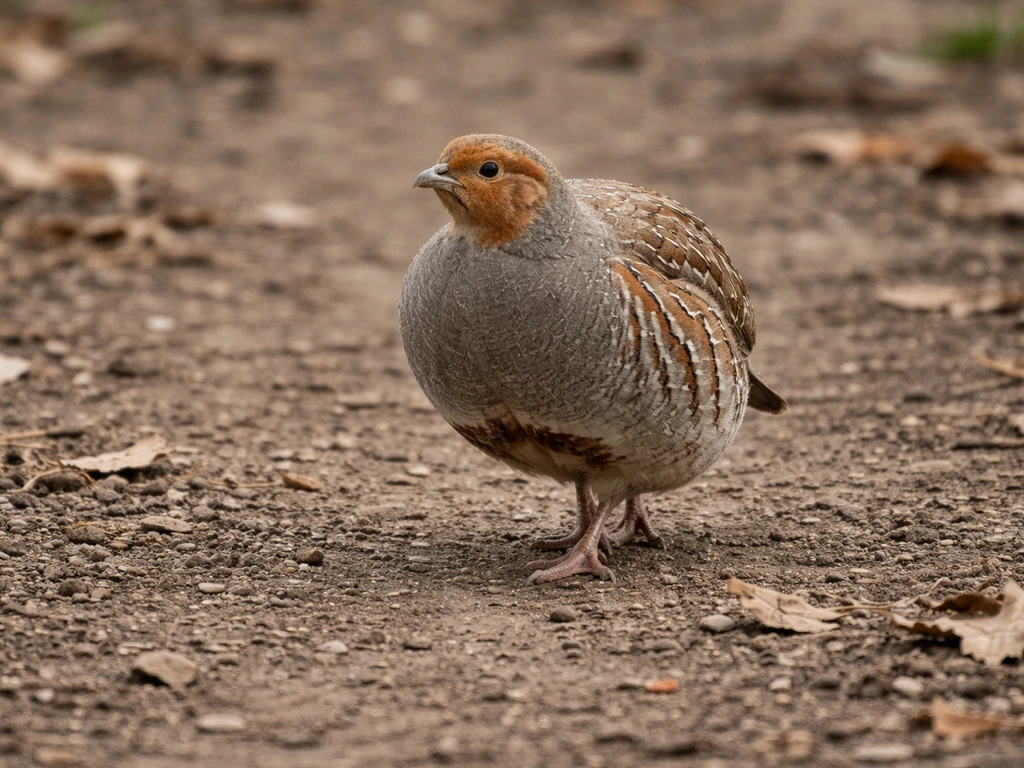
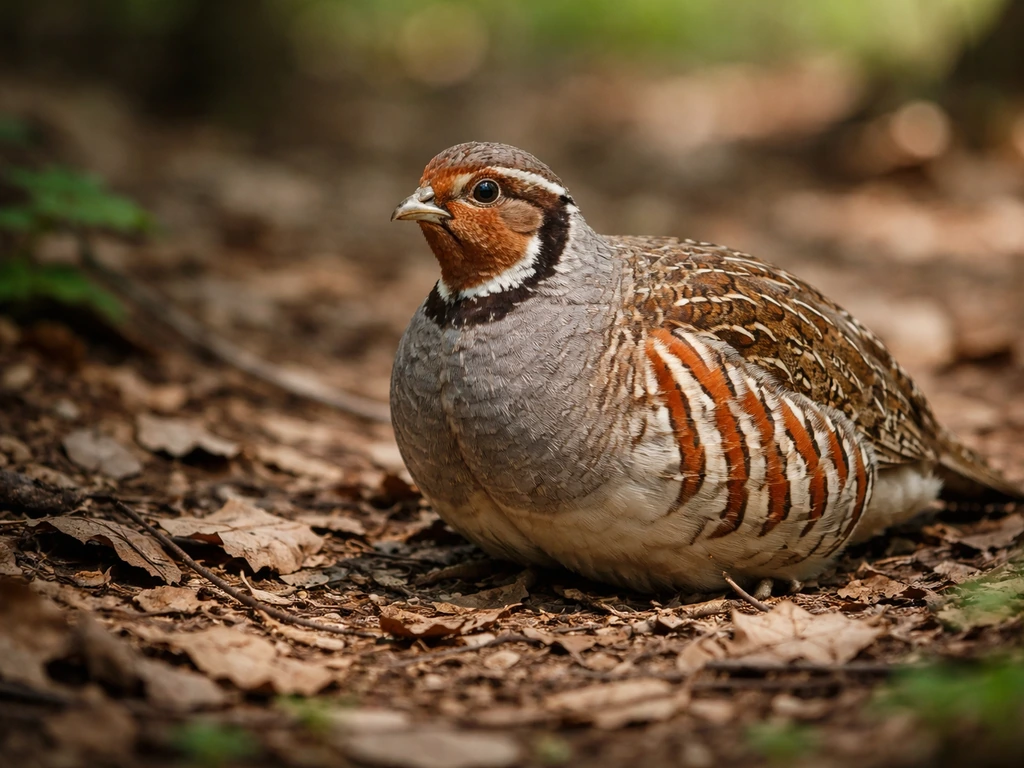
"Partridge" is a common name applied to several different small, ground-dwelling birds, which is where a lot of the confusion starts. The most well-known is the gray partridge (Perdix perdix), native to Europe and Asia. In North America, this same species is often called the Hungarian partridge, or just "hun" by hunters. Then there are the rock partridges in the genus Alectoris, which include species like the red-legged partridge (Alectoris rufa) and the chukar (Alectoris chukar). Both sexes in the Alectoris group have distinctive red legs and a red bill, and males have blunt leg spurs.
So when someone asks whether a partridge is a bird, they could be picturing any one of a dozen species. But it does not matter which one you have in mind: they are all birds. If you are wondering whether a parrot is an animal or a bird, the short answer is that a parrot is a bird too. The common name stretches across multiple genera, but every bird wearing the "partridge" label is a genuine avian species with full membership in class Aves.
What actually makes something a bird
Biologically, birds are vertebrates in class Aves. The defining traits that separate birds from every other animal group come down to a short list of features that have been consistent across scientific sources from Britannica to the Smithsonian's National Museum of Natural History. The Smithsonian National Museum of Natural History notes that birds are distinguished from other vertebrates by feathers, hollow bones, and hard-shelled eggs birds are distinguished by feathers, hollow bones, and hard-shelled eggs.
- Feathers: the single most distinctive feature of birds, found in no other living animal group
- Endothermy: birds regulate their own body temperature internally (warm-blooded)
- Hard-shelled eggs: birds lay eggs with a calcified shell, not soft or leathery like reptile eggs
- Beak or bill: no teeth, just a keratin beak used for feeding
- Hollow bones: lightweight skeleton adapted for flight (even in flightless birds)
- Two wings and two legs: the classic vertebrate body plan modified for avian life
Partridges check every single one of those boxes. They are feathered, warm-blooded, lay hard-shelled eggs, have beaks, and have the hollow-boned skeleton typical of birds. Bird feathers also come from evolutionary history, with the Natural History Museum (London) noting that blank" rel="noopener noreferrer">only dinosaurs and birds have grown feathers, making feathers a defining avian trait. There is no ambiguity here the way there sometimes is with, say, a bat (mammal) or a flying squirrel (also a mammal). A partridge is a bird in the same clean, uncontroversial way a parrot or a robin is a bird.
Is a partridge a game bird
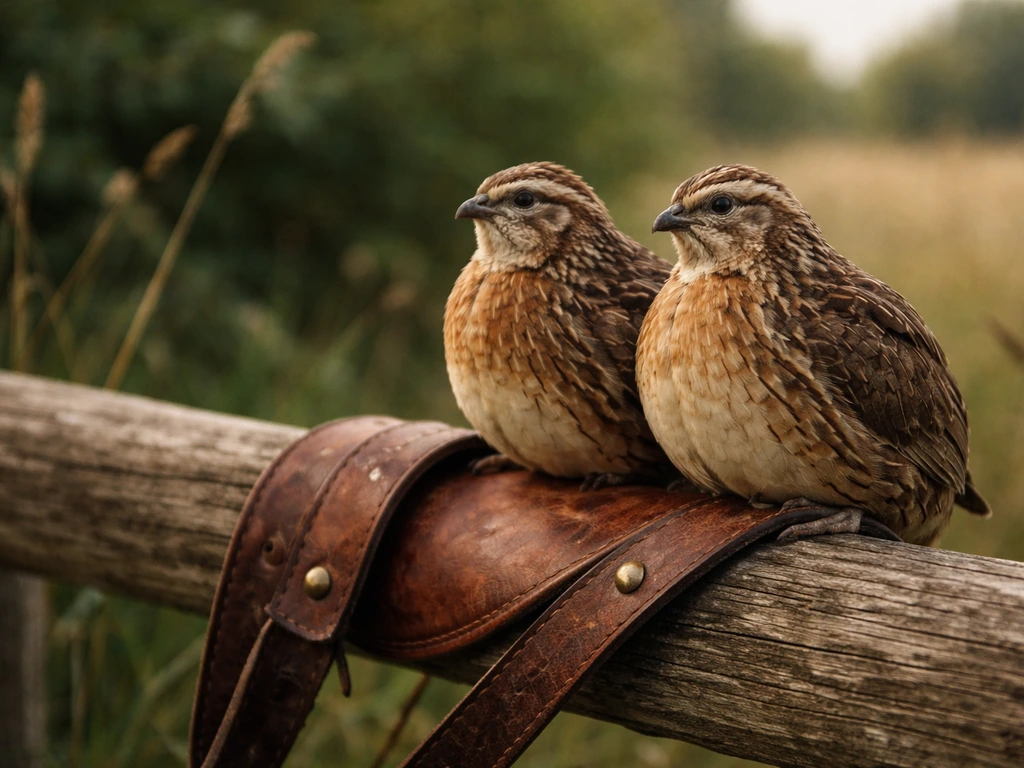
Yes, but it is worth understanding what "game bird" actually means, because it is not a biological category. It is a legal and management category used by wildlife agencies to designate species that can be legally hunted within defined seasons. The term does not change the animal's biological classification at all.
In the UK, the gray partridge and the red-legged partridge are both listed explicitly in government guidance as game birds under the Wildlife and Countryside Act framework. They have a defined close season running from February 1 to September 1, outside of which hunting is prohibited. In the US, the gray partridge is listed as an upland game bird in states like New York, and Iowa's DNR sets a specific season for gray partridge running from October 11 through January 31. The Animal Diversity Web's species account for the grey partridge also labels it directly as a game bird that is hunted in both the US and Europe.
So the answer to both parts of the question is yes: a partridge is a bird (taxonomically), and it is a game bird (legally/practically). If you are wondering about another bird type, you might also ask whether a love bird is a parrot is a love bird a parrot. Those two labels are not in conflict. One tells you where it fits in the tree of life, and the other tells you how humans regulate hunting it.
Where partridges sit in bird taxonomy
If you want the full taxonomic picture, here is where partridges land in the classification hierarchy. It is a clean, well-established lineage with no taxonomic controversy.
| Rank | Name | What it includes |
|---|---|---|
| Class | Aves | All birds |
| Order | Galliformes | Chicken-like birds: pheasants, turkeys, quail, grouse, partridges |
| Family | Phasianidae | Partridges, pheasants, quail, turkeys, peacocks, and allies |
| Genus (gray partridge) | Perdix | True partridges of Europe and Asia |
| Genus (rock partridges) | Alectoris | Red-legged partridge, chukar, and related species |
| Species (example) | Perdix perdix | Gray partridge (also called Hungarian partridge in North America) |
Both the Integrated Taxonomic Information System (ITIS) and the IOC World Bird List formally recognize Phasianidae as the family that includes partridges, and they list multiple partridge genera within it. This is not a disputed or fuzzy classification. Partridges have been firmly placed in Phasianidae for a long time, and that has not changed with modern molecular taxonomy updates.
Look-alikes and common naming confusion
One of the trickiest things about "partridge" as a name is that people use it loosely for birds that are not actually partridges. This causes real identification confusion, especially for hunters and birdwatchers.
Grouse called partridges
Britannica specifically calls this out: in New England, the ruffed grouse is commonly called a "partridge," even though it is not a true partridge. The ruffed grouse is a separate genus (Bonasa) within Phasianidae. Both are in the same family, but they are not the same bird. If someone in Vermont tells you they shot a partridge, they almost certainly mean a ruffed grouse.
Ptarmigan and "snow partridge"
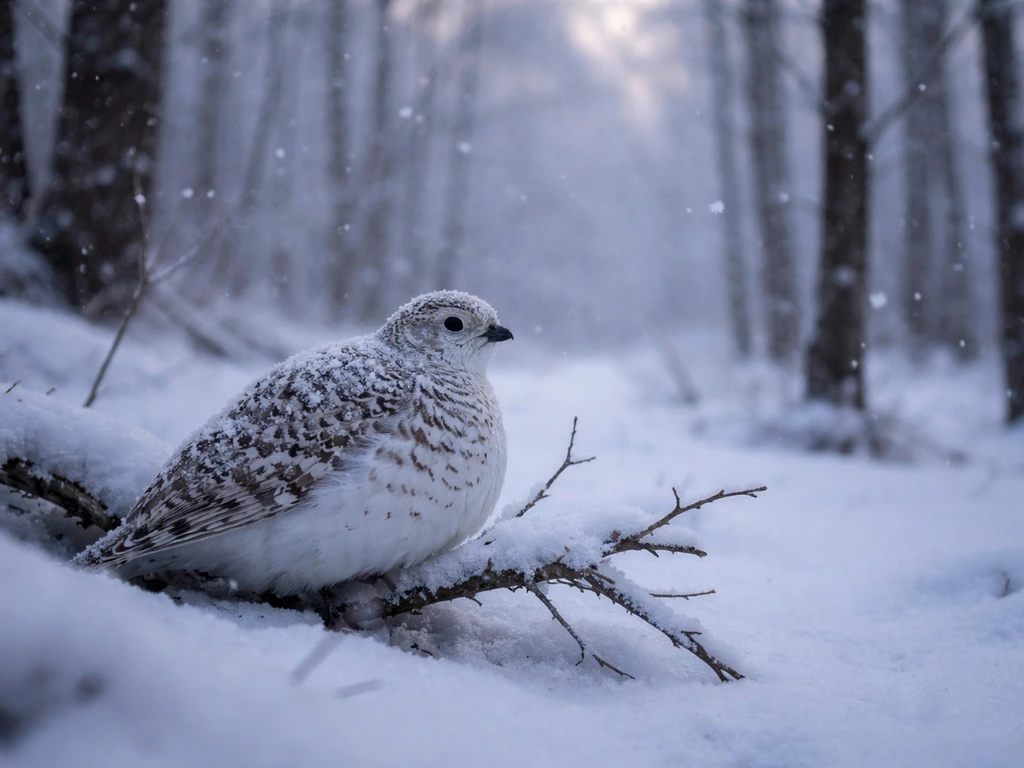
The term "snow partridge" gets used locally for some ptarmigan-like birds in Asia, which adds another layer of name confusion. Ptarmigan are famous for their seasonal plumage changes (turning white in winter), and while they are in the same family as true partridges, they belong to a different genus (Lagopus). The name "snow partridge" is better reserved for a specific Asian species rather than applied broadly to ptarmigan.
Chukar vs. red-legged partridge
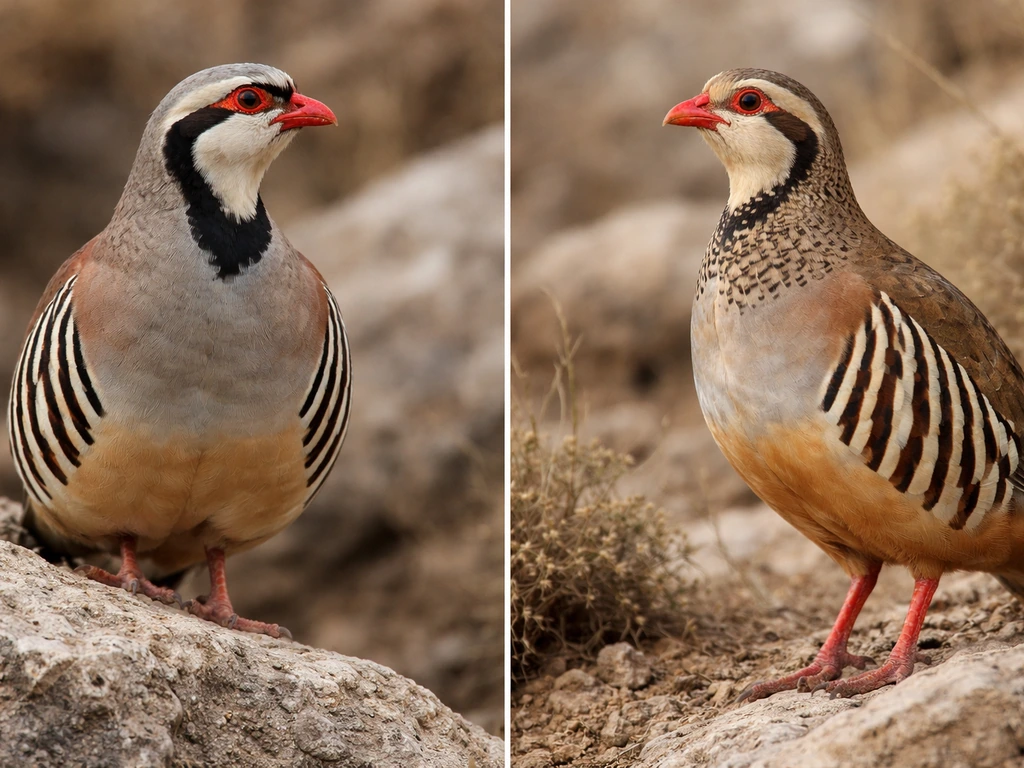
The chukar (Alectoris chukar) and the red-legged partridge (Alectoris rufa) are both in the genus Alectoris and look quite similar. The chukar has a bold black band running across the forehead, through the eyes, and down the neck forming a distinct necklace pattern, with a white or creamy-tan throat, and bright coral-red bill and legs. The red-legged partridge is similar but the black necklace breaks up into streaks on the chest. Both are legitimate partridges, just different species within the same genus.
A quick comparison of commonly confused birds
| Bird | True partridge? | Family | Key distinction |
|---|---|---|---|
| Gray partridge (Perdix perdix) | Yes | Phasianidae | Chestnut horseshoe mark on belly, gray-brown overall |
| Red-legged partridge (Alectoris rufa) | Yes | Phasianidae | Red legs, bold black necklace, streaked flanks |
| Chukar (Alectoris chukar) | Yes | Phasianidae | Clean black necklace band, coral-red bill and legs |
| Ruffed grouse (Bonasa umbellus) | No (often called partridge in New England) | Phasianidae | Ruffed neck feathers, fan-shaped tail with dark band |
| Ptarmigan (Lagopus spp.) | No | Phasianidae | Seasonal white winter plumage, feathered feet |
The key takeaway is that all of these birds are in the same family (Phasianidae) and the same order (Galliformes), so the confusion is understandable. But only the Perdix and Alectoris groups are true partridges. If you are ever in doubt about a specific bird you saw or heard about, the common name alone is not enough to go on.
How to verify this for yourself
If you want to confirm any of this independently, there are a few reliable sources that are easy to use and free or widely accessible.
- Britannica's entry on "Partridge" gives a clean overview of the species, their genera, and family placement in plain language. It is a good first stop for the basic facts.
- The Smithsonian's National Museum of Natural History Birds overview page lays out the defining traits of class Aves clearly, so you can check whether any animal (including a partridge) meets the criteria.
- ITIS (the Integrated Taxonomic Information System at itis.gov) lets you search for Perdix perdix or Alectoris rufa and see the full formal taxonomic hierarchy from kingdom down to species.
- The IOC World Bird List (worldbirdnames.org) maintains the most current global bird taxonomy and lists every recognized partridge species under Phasianidae. It is updated regularly and is free to use.
- For game bird status in the US, check your state wildlife agency's hunting regulations page. Iowa DNR and the New York DEC both list gray partridge explicitly as an upland game bird with season dates.
- For the UK, GOV.UK's "Wild birds: management and legal protection" guidance page lists gray partridge and red-legged partridge by name under the game bird close-season table.
Between ITIS, the IOC World Bird List, and your state or country's official wildlife regulations, you have everything you need to settle this question definitively. A partridge is a bird. It is a game bird. And it has been sitting in Phasianidae alongside its pheasant and quail relatives for as long as scientists have been sorting birds into families. The only thing that gets confusing is the common naming, and now you know how to cut through that too.
FAQ
If someone says “partridge” but it is in a chicken or pheasant pen, is it still a bird?
Yes. A partridge is a bird even if it is kept in captivity or raised for hunting seasons, the biological classification does not change (it remains in class Aves, typically within the Phasianidae family). What can change is the local legal status, permit requirements, and whether hunting is allowed or the birds are managed as releases.
Can every partridge be hunted anywhere, since it is a game bird?
It depends on the species and what your local rules count as “game.” A bird can be a true partridge taxonomically, but only some are legal game birds in particular jurisdictions and years. Always check your state or country’s current upland game regulations rather than relying on the common name alone.
How can I tell if a “partridge” I heard about is a true partridge or just a common-name mix-up?
No, “partridge” usually refers to a group of small ground-dwelling birds, but not every bird people call a partridge is a true partridge genus. For example, the ruffed grouse is commonly called “partridge” in parts of New England, even though it is not a Perdix or Alectoris species.
What are the quickest visual clues to identify which kind of partridge people mean?
Look for field marks that match the likely genus in your region. If you are thinking of Alectoris partridges, the forehead-to-neck black band pattern in chukar versus the different chest pattern in red-legged partridge are useful. If you are dealing with gray partridge, the location (native range and commonly stocked areas) plus overall small, ground-running behavior matters.
Does being a game bird affect the taxonomy of a partridge?
The classification is about relatedness, while “game bird” is about legal management. You can have a bird that is a true partridge but not currently legal to hunt (or legal only in limited zones or seasons), and you can also have a non-partridge species that is still regulated as game under a broader hunting category.
Is a partridge the same thing as an upland game bird?
Often, but not always. Many people use “partridge” and “upland game bird” loosely, yet “upland game bird” is a hunting category that can include multiple families. So the safer approach is: confirm “partridge” at the species level for biology, and confirm “game” at the regulation level for hunting legality.
Can “partridge” be used in bird sales, and should I verify the species?
Yes, but it can be misleading if you are only using the name. If a bird is sold or traded as a “partridge,” ask whether it is actually a Perdix or Alectoris species, because other galliforms may be marketed with that label depending on the region.