A bird of prey is any bird that hunts and kills other animals for food using specialized anatomical tools: a hooked beak for tearing flesh, sharp talons for seizing and killing prey, and eyesight sharp enough to spot a mouse from 100 feet in the air. Those three traits working together are what separate a hawk from a heron, an eagle from a stork, and a falcon from a kingfisher, even though all of them eat animals.
What Makes a Bird a Bird of Prey: Key Traits and Checklist

Marcus Hendricks
19 Jun 2026
Birds of prey vs raptors: is there actually a difference?
In casual use, "bird of prey" and "raptor" mean essentially the same thing, and you can use them interchangeably without anyone correcting you at a bird walk. Technically, though, "raptor" comes from the Latin word for "one who seizes," and it points specifically to the foot-based killing method these birds use. "Bird of prey" is the broader everyday label. Formally, the major groups covered by both terms include hawks, eagles, kites, harriers, ospreys, and falcons (diurnal, meaning daytime hunters, placed in orders Accipitriformes and Falconiformes), owls (nocturnal, order Strigiformes), and vultures (which sit in either Accipitriformes or their own order Cathartiformes, depending on which classification system you're using).
One thing that trips people up is that plenty of birds kill and eat animals without being called birds of prey. Herons spear fish. Shrikes impale prey on thorns. Gulls steal and eat smaller birds. None of those are raptors, because they lack the defining combination of anatomical tools. Ornithologists draw the line at the whole package: hooked beak, powerful grasping feet with curved talons, and acute predatory vision. Miss one of those, and you're just a bird that happens to eat meat.
The anatomy that makes a bird a bird of prey
The hooked beak
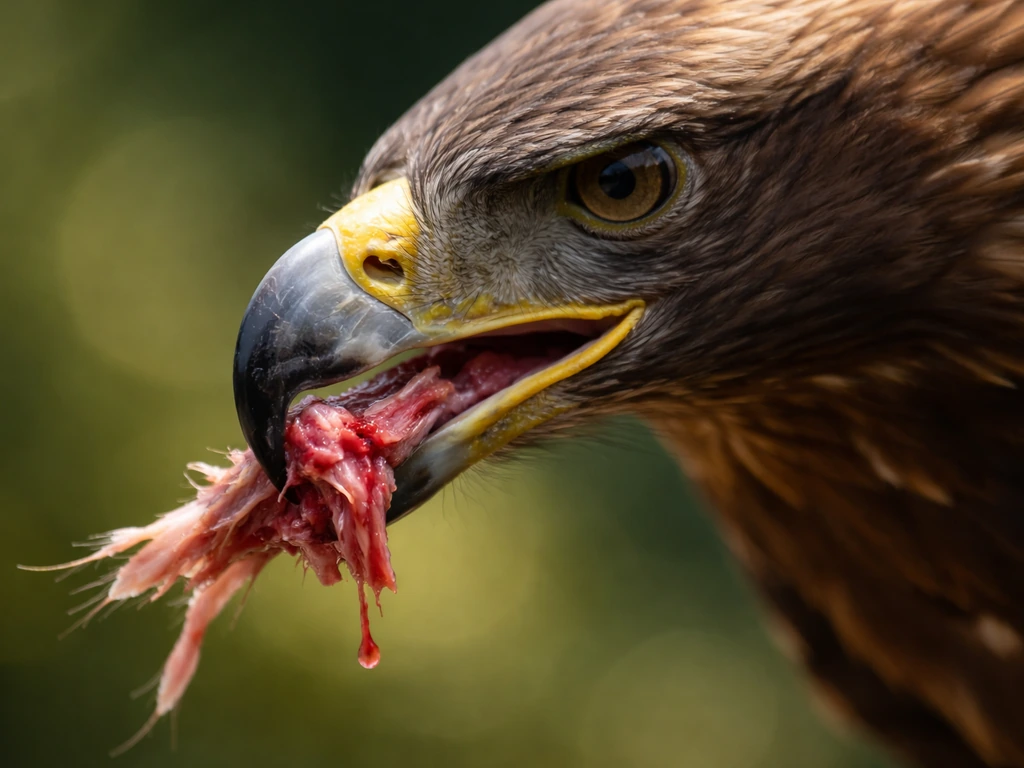
Every bird of prey has a strongly hooked or hook-tipped beak, and it's doing a specific job: tearing flesh after the prey is already caught. The beak isn't really the primary weapon in most raptors (the feet are), but it's built for shredding muscle and pulling meat away from bone. Falcons go a step further and have a small notched ridge called a tomial tooth on the upper mandible, which they use to sever the spine or crush the skull of prey. That's a falcon-specific adaptation, but any raptor beak you look at will have that distinctive downward curve.
The feet and talons
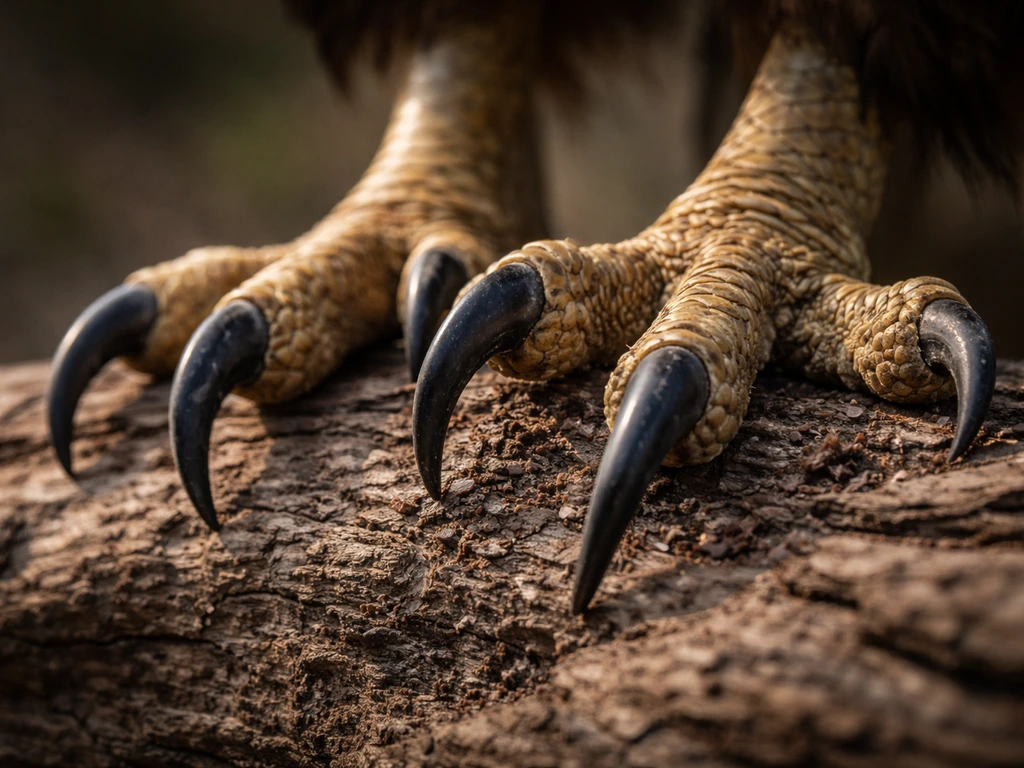
This is the real defining feature. Raptor feet are built to grab, pierce, and hold living prey. The talons (the curved claws on each toe) are sharp enough to puncture vital organs, and the foot muscles generate serious gripping force. Most hawks and eagles have an anisodactyl foot arrangement, meaning three toes point forward and one points back, creating a cage-like grip when they close around prey.
Owls often use a semi-zygodactyl arrangement where the outer toe can rotate to face either forward or backward, which increases grip spread and clamping force, especially useful for catching prey in darkness without being able to see exactly what they're grabbing. If you pick up any raptor foot and compare it to a pigeon foot or a robin foot, the difference is immediate and obvious.
Strong flight feathers and muscular build
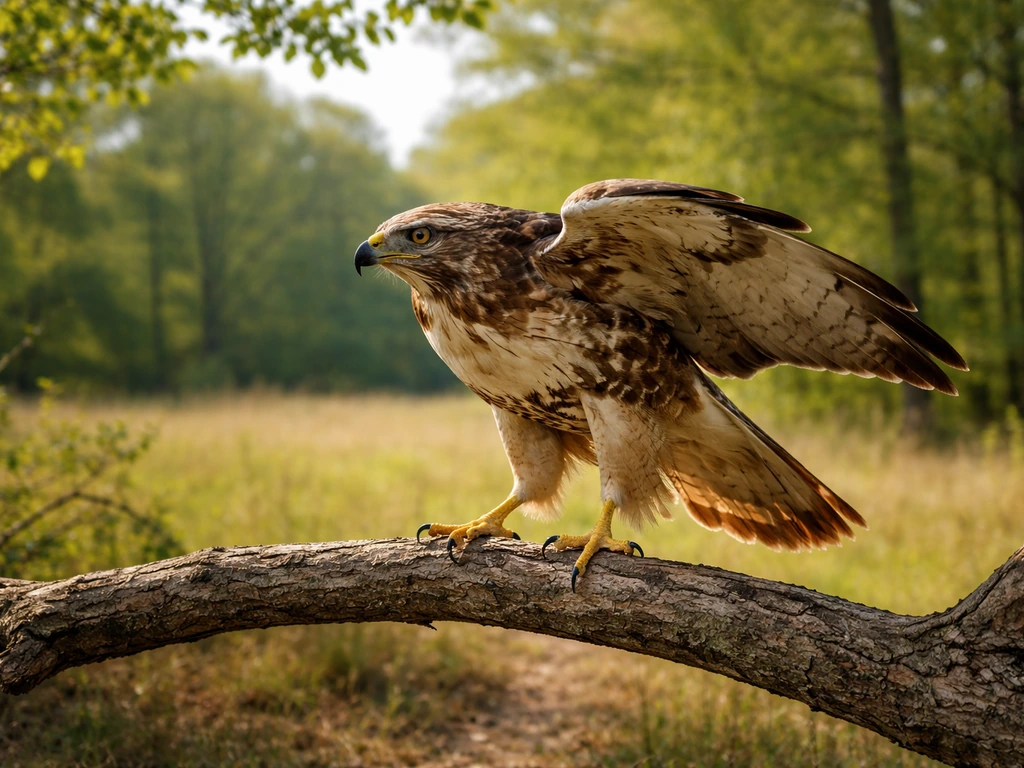
Birds of prey have broad, strong primary flight feathers and a robust chest, giving them the power needed to carry prey mid-flight or to dive at speed. A red-tailed hawk has that thick-bodied, large-headed look that you can pick out at distance even before you see the beak. The overall silhouette reads as powerful and compact compared with wading birds or shorebirds.
How birds of prey hunt and feed
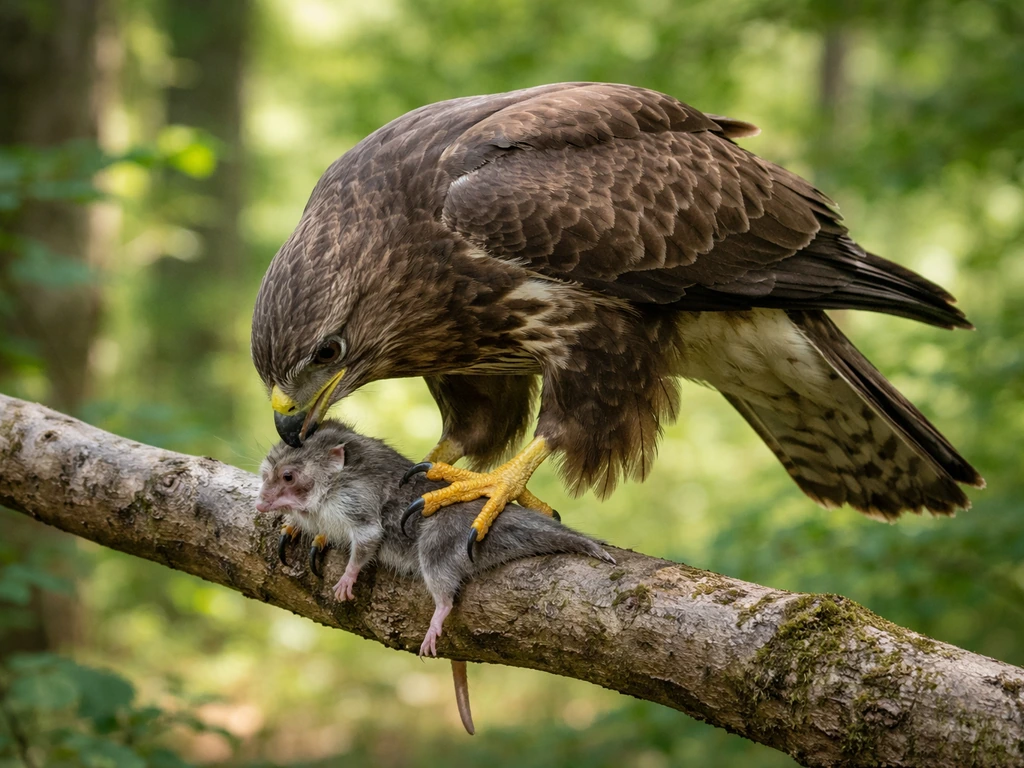
Most raptors are active hunters, meaning they locate, pursue, and kill live prey. The exact method varies a lot by species. Bald eagles snatch fish directly from the water with their talons and may also cooperate to ambush larger prey. Ospreys hover over water, spot a fish below the surface, and then plunge feet-first to grab it. Peregrine falcons climb high and then execute a stoop (a near-vertical power dive) reaching speeds over 200 mph, hitting prey with such force that the tomial tooth can sever the spine on impact. Some hawks, like the ferruginous hawk, will wait outside a burrow and ambush prey as it emerges.
Once prey is caught, raptors either swallow it whole (common in owls with small prey like mice), tear it into pieces with the beak, or use a combination of talons and beak to immobilize and then consume it. Owls that swallow prey whole can't digest fur, bones, feathers, or teeth, so they compact those materials and regurgitate them as dense oval pellets, which is actually a neat way to figure out what an owl has been eating.
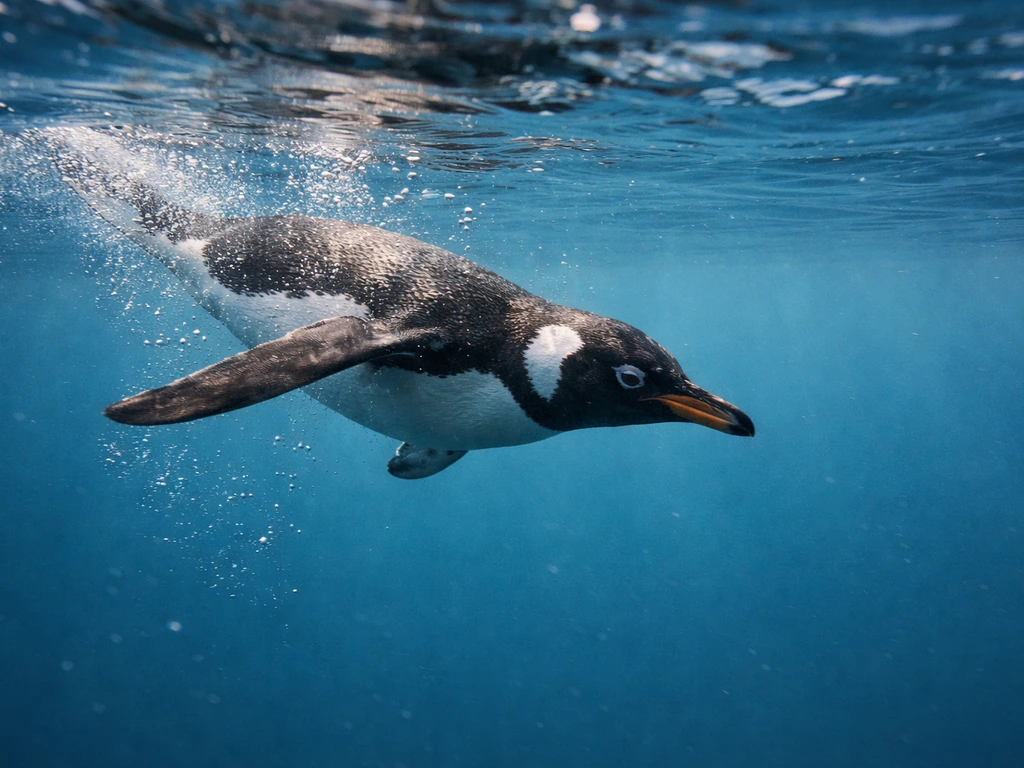
Vultures are the main exception to the "active hunter" picture. Most vultures are scavengers that locate carrion by sight or smell rather than chasing live prey. That's why the question of whether vultures truly qualify as birds of prey comes up so often. Whether a penguin is a bird of prey depends on whether it shows the defining raptor traits of hunting and killing with specialized anatomy is a penguin a bird of prey.
They have the hooked beak and they do eat meat, but their feet are much weaker than those of hawks or eagles, with blunter talons that aren't built for piercing and killing. They're typically included in the broad definition of birds of prey but sit at the edge of the group.
Vision and the senses that make raptors such effective predators
Raptor vision is genuinely extraordinary. Most hawks and eagles have visual acuity estimated at roughly four to eight times sharper than human vision, meaning a hawk can resolve detail at 100 feet that you'd need to be 15 to 25 feet away to see. A lot of that comes from the fovea, the high-resolution center of the retina. Many raptors have two foveae in each eye, one mapping to the forward binocular field and one to the lateral field, giving them both wide-field awareness and a tight zoom for tracking prey.
Binocular vision (where both eyes overlap to give depth perception) is stronger in active predatory raptors than in scavengers. That makes sense: if you're diving at 200 mph and need to hit a bird-sized target, your depth judgment has to be precise. Cooper's hawks, which chase birds through dense forest, have among the widest binocular fields of any studied raptor species.
Owls took a different evolutionary path. Their large, forward-facing eyes are fixed in their sockets (they literally cannot roll their eyes), so to look around they rotate their entire head, which is why owls can swivel roughly 270 degrees. Their visual system is optimized for low-light detection rather than pure resolution. To compensate for limited color and detail in the dark, owls also rely heavily on hearing: the flat facial disc funnels sound waves toward the ear openings, and their asymmetric ear placement (in many species) lets them triangulate the exact position of a mouse rustling under snow. That combination of wide-field night vision and directional hearing is what makes a barn owl effective in total darkness.
Body shape and flight built for hunting
Wing shape in raptors directly reflects how and where they hunt. Wing-shape principles in the Stanford Birds essay explain that tapering, low-aspect-ratio wings help support the fast, agile maneuvering that lets raptors exploit cluttered habitats while hunting [Wing shape in raptors directly reflects how and where they hunt](https://web. stanford. edu/group/stanfordbirds/text/essays/Wing_Shapes.
html). Forest-hunting hawks like the Cooper's hawk and sharp-shinned hawk have short, rounded wings and a long tail, which gives them tight turning ability to chase prey between trees. Open-country soaring birds like buteos (the red-tailed hawk family) have broad, rounded wings with high surface area, letting them ride thermals for hours while scanning below for prey. Falcons have long, pointed, swept-back wings optimized for high-speed flight in open air.
Ospreys have a reversible outer toe and specialized foot-pad spines for gripping wet, slippery fish.
The peregrine falcon's stoop is probably the most dramatic example of how body shape supports hunting strategy. During a dive, it pulls its wings into a tight cupped or M-shaped configuration that manages airflow and allows precise directional control at extreme speed. The body tucks into a streamlined teardrop, and vortex dynamics around the wing tips help the bird steer without losing speed. It's basically a feathered missile.
Many raptors also mix flapping with gliding and soaring to conserve energy. Getting airborne and gaining altitude often involves flapping, but once a hawk or eagle is aloft it can use thermal columns or ridge updrafts to stay airborne for hours with minimal effort. That low-energy cruising mode is what lets them cover large territories while looking for prey.
Quick field checklist: how to tell if a bird you're watching is a raptor
When you spot an unknown bird and want to know if it's a raptor, run through these cues in roughly this order. You don't need all of them, but the more boxes it checks, the more confident you can be. If you’re also wondering whether a particular animal like turkey fits the “bird of prey or chicken” idea, it helps to separate predatory raptors from regular farm birds more confident you can be.
- Beak shape: Is it strongly hooked downward from the tip? A straight or slightly curved beak rules out most raptors immediately.
- Foot and talon appearance: Are the talons clearly curved and sharp-looking? Do the feet look powerful and gripping rather than thin and delicate?
- Body silhouette: Is it thick-bodied and large-headed relative to the wing span? Raptors tend to look muscular and compact.
- Wing shape in flight: Broad and rounded (buteo/soaring type), short and rounded with long tail (accipiter/forest type), or long and swept-back (falcon type)?
- Behavior: Is it actively hunting, hovering, soaring while scanning below, or stooping at prey? Active pursuit or patient scanning from a high perch is a strong indicator.
- Diet and feeding: Did you see it catch, kill, or tear apart prey? Raptors don't peck at seeds or probe in mud.
- Head shape: Forward-facing eyes and a flat face with a disc means owl. A round head without a disc is typical of diurnal raptors. A completely bare, featherless head suggests vulture.
- Activity time: Daytime activity fits hawks, eagles, and falcons. Nocturnal or crepuscular activity with large forward-facing eyes suggests owl.
In the field, Audubon's practical advice applies well here: use multiple cues and refine your identification as you get a better look. Relying on a single feature leads to misidentification, especially with tricky species or poor lighting.
The common look-alikes: owls, vultures, and birds that fool people
Owls: definitely birds of prey, but differently specialized
Owls are birds of prey in both function and, for most purposes, classification. They have hooked beaks, killing talons, acute vision, and they actively hunt vertebrates. What makes them distinct is that they evolved those tools independently from diurnal raptors (hawks, eagles, falcons), which is why they sit in their own order, Strigiformes, rather than with the daytime hunters.
In practice, the easiest way to recognize an owl is the flat face, the large round eyes pointing straight forward, the facial disc, and the extremely flexible neck. They also tend to look softer and rounder in shape, partly because their feathers are specially structured for silent flight (the serrated leading edge of owl wing feathers breaks up airflow turbulence that would otherwise create noise). So yes, an owl is a bird of prey.
It just hunts by different rules, mostly at night, using hearing as much as sight.
Vultures: birds of prey by inclusion, scavengers by lifestyle
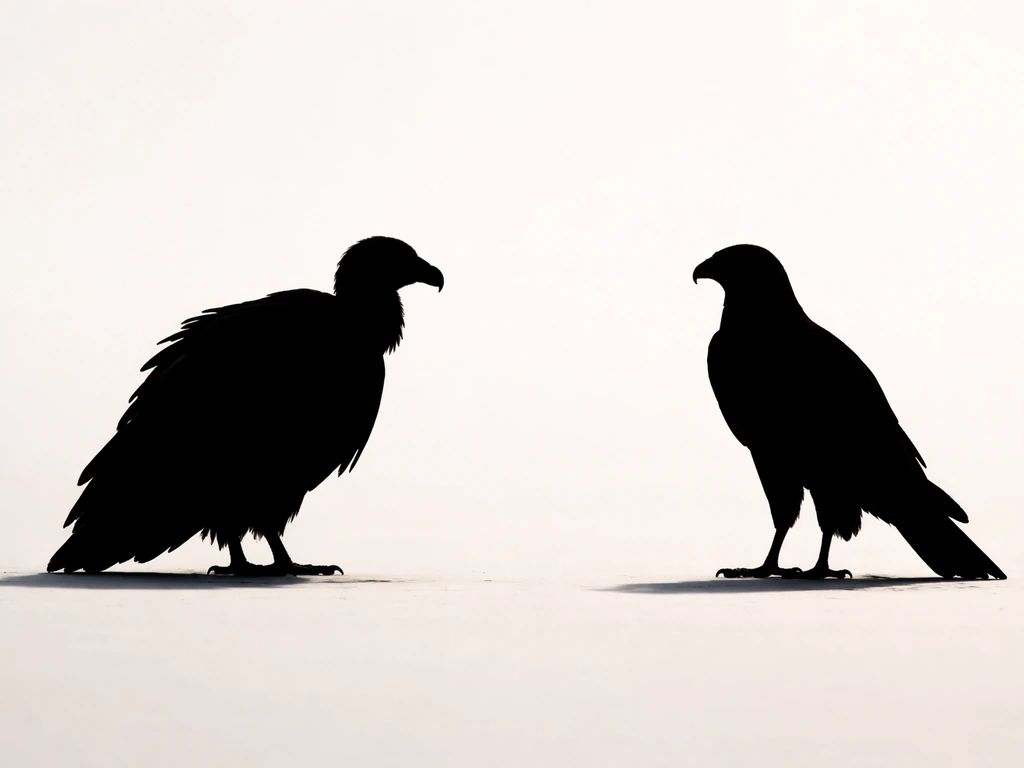
Vultures get included in the birds of prey category mostly because of their diet and their hooked beak, but they're anatomically quite different from hawks or eagles. The clearest giveaway is the feet: vultures have relatively weak legs and feet with blunter, less curved talons. They're not built to kill. Their beaks are strong enough to tear open a carcass, but weaker overall than those of true killing raptors.
New World vultures (turkey vultures, black vultures) also have completely bare, featherless heads, which is a hygienic adaptation for reaching inside carcasses without matting feathers. In flight, the turkey vulture's distinctive wobbly, tilting glide and two-toned underwing pattern make it identifiable even at long distances.
The zone-tailed hawk is a fascinating example of the reverse confusion: it mimics a turkey vulture's appearance and flight style to approach prey off-guard, so if you see what looks like a vulture but with a banded tail and smaller head, look twice. Questions about specific vultures, like whether a turkey vulture truly qualifies as a bird of prey, come down to exactly this tension between their scavenging lifestyle and their anatomical placement.
Non-raptors people often mistake for birds of prey
Several birds create genuine confusion for people who are learning. Shrikes (butcherbirds) hunt small vertebrates and impale them on thorns, which sounds raptor-like, but they lack talons built for killing and aren't classified as raptors. Great blue herons are large, fly with bowed wings, and eat fish and small mammals, but their long straight beaks, bare legs, and completely different foot structure immediately separate them from any raptor. Kingfishers dive for fish but are songbird-relatives with straight beaks. Ospreys confuse some people because they look unusual, with a distinctive bend in the wing in flight and a dive-and-grab fishing strategy, but they are genuine raptors with all the defining traits.
| Bird | Hooked beak | Killing talons | Active hunting | Bird of prey? |
|---|---|---|---|---|
| Hawk (e.g., red-tailed) | Yes | Yes, strong | Yes | Yes |
| Eagle (e.g., bald eagle) | Yes | Yes, strong | Yes (+ scavenges) | Yes |
| Falcon (e.g., peregrine) | Yes (with tomial tooth) | Yes, strong | Yes | Yes |
| Owl (e.g., barn owl) | Yes | Yes, specialized grip | Yes (nocturnal) | Yes |
| Turkey vulture | Yes | Weak/blunt | Mainly scavenges | Included by most, debated |
| Heron | No (straight spear) | No | Yes (ambush) | No |
| Shrike | Slightly hooked | No (weak feet) | Yes (small prey) | No |
| Osprey | Yes | Yes + reversible toe | Yes (fishing) | Yes |
Putting it all together
The honest answer to "what makes a bird a bird of prey" is a combination of three things working together: a hooked beak for processing meat, powerful feet with sharp curved talons for seizing and killing, and acute enough senses (especially vision) to find and target prey reliably. No single trait does it alone. A bird needs all three to genuinely belong in the raptor category.
When you're out in the field and trying to identify something, start with the beak and the feet, then look at body shape and behavior. If it's nighttime and you've got a round-faced bird that just silently dropped on something from a fence post, that's an owl and it absolutely counts.
If it's a large dark bird rocking side to side on a thermal over a highway with a naked red head and blunt feet, that's a turkey vulture, which sits at the edge of the category. So, is a turkey vulture a bird of prey? It is often included in the broad definition, but it does not match the usual hunting-and-killing pattern of classic raptors.
And if it's something blasting down out of the sky at a shorebird and snapping its neck mid-air with a notched beak, that's a falcon, and it's one of the most well-qualified birds of prey on the planet.
FAQ
Does a bird have to be actively hunting to be considered a bird of prey?
Not always. Most birds of prey hunt live animals, but vultures are commonly included in the broad category even though they mainly scavenge. The key is still whether the bird has raptor-style anatomy for tearing meat and grasping, even if its hunting method is different.
If a bird has sharp talons, does that automatically mean it is a bird of prey?
No. Some birds have strong feet for perching, climbing, or catching prey in ways that do not involve raptor killing tools. The safe rule is to check the full combination (hooked beak for processing meat, grasping killing feet with curved talons, and strong predatory senses), not just one feature.
How can I tell the difference between an owl and a non-raptor bird if I only get a quick look?
Prioritize silhouette cues: a facial disc (flat “face” shape), large forward-facing eyes, and a very flexible neck that makes head-turning obvious. Owls also tend to look rounder and softer because of silent-flight feather structure, even when their body looks compact.
What is the most useful order for checking traits when identifying a raptor in the field?
A practical sequence is: beak shape first (hooked or hook-tipped), then feet (curved, piercing talons and strong grasping stance), then overall body plan (robust chest and broad primary flight feathers). Finish with behavior, like plunging (falcons, ospreys) or low perching with ambush (some hawks).
Can a bird be called a bird of prey if it eats carrion or scraps?
It can, depending on context and classification. Vultures eat carrion, but they generally do not have the same foot strength and killing posture as hawks and eagles. If you want the “classic raptor” match, focus on whether it can kill and process prey with raptor-style feet, not just diet.
Are falcons always recognizable by the tomial tooth?
Falcons do have that notched ridge used for severing, but you usually cannot see it in typical field conditions. Treat it as a confirming detail only when you have a clear view; in most cases, recognition relies on the hooked falconine beak curve, the fast open-air hunting style, and the overall raptor anatomy and posture.
Why do herons or shrikes get mistaken for birds of prey?
Because they kill and eat animals. Herons spear prey with a straight beak and use different foot anatomy than grasping raptors. Shrikes can impale prey on thorns, which looks raptor-like, but they lack the curved, piercing talons and whole killing-tool package that defines raptors.
How can I distinguish an osprey from other large birds that dive?
Look for the raptor traits and the osprey-specific flight and wing cues. Ospreys have a distinctive wing bend in flight and a plunge-and-grab style for fish. They also have grasping adaptations for slick prey (including specialized foot-pad spines), which supports the fishing behavior.
Are all vultures birds of prey, or only some?
They are usually included in the broad “birds of prey” grouping, but they sit at the edge. Turkey vultures and black vultures are scavengers with hooked beaks but weaker, blunter talons than true killing raptors, so they often do not match the usual hunting-and-killing pattern.
Do raptors always swallow pellets if they are owls?
Most owls regurgitate pellets because they compress indigestible parts like fur and bones. The size, frequency, and contents can vary with prey type and how long since the last meal, so if you do not find pellets at a roost on a given day, it does not rule out an owl presence.
What bird traits would be least reliable for identification in bad lighting?
Color and fine facial markings are the least reliable in low light. In poor visibility, lean more on structural features (beak hook, overall silhouette, head shape) and behavior (time of activity, diving or silent drops). For owls, head posture and facial disc shape often stay easier to read than color.
Next Article
Is a Penguin a Bird of Prey? Clear Answer and Explanation
Get the clear answer: penguins are birds, but not birds of prey, since they hunt marine food not other animals like rapt