No, a penguin is not a bird of prey. Penguins are absolutely birds (class Aves, order Sphenisciformes), but they are not raptors. The confusion usually comes from the phrase 'bird of prey' itself, it sounds like it should apply to any bird that hunts and eats other animals, and penguins definitely do that. But 'bird of prey' has a much more specific biological meaning, and penguins don't fit it.
Is a Penguin a Bird of Prey? Clear Answer and Explanation

Marcus Hendricks
9 Jun 2026
What 'bird of prey' actually means
In everyday language, 'bird of prey' sounds like it just means any bird that eats prey. By that logic, a penguin chasing a fish, a pelican swallowing a mullet whole, or a flamingo filtering out shrimp would all qualify. But that's not how the term works in taxonomy or in common ornithological use.
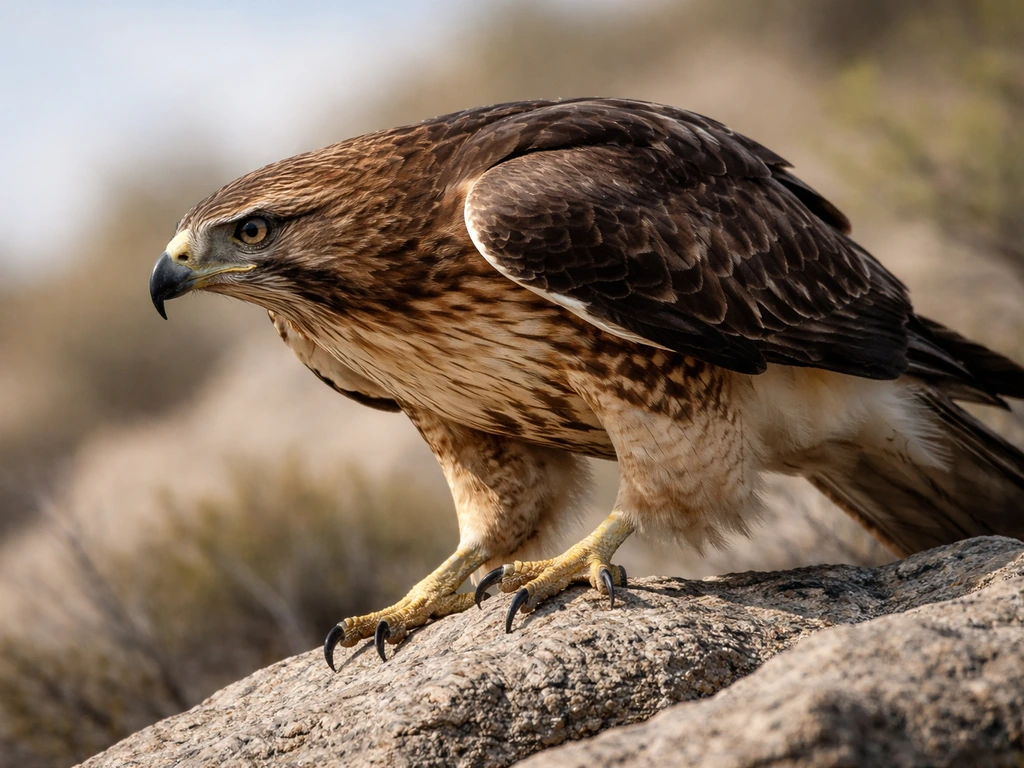
Birds of prey, also called raptors, are a specific group defined by a combination of hunting behavior, physical adaptations, and taxonomic classification. Diurnal birds of prey include hawks, eagles, vultures, and falcons (order Falconiformes and Accipitriformes). Owls (order Strigiformes) are the nocturnal side of the raptor world. What unites all of these birds is a recognizable physical toolkit: hook-tipped beaks built for tearing flesh and sharp, curved talons built for seizing and killing prey. These aren't just diet features, they're structural, evolutionary adaptations that define the raptor group. Eating another animal doesn't make a bird a raptor any more than eating meat makes a person a carnivore in the strict biological sense.
There's a separate question worth addressing here: what makes a bird a bird of prey at all? The short version is that it takes a combination of predatory hunting style, those signature physical tools (hooked beak, talons), and placement in the recognized raptor orders. No single trait alone does the job.
Where penguins actually sit in bird taxonomy
Penguins are in the order Sphenisciformes, family Spheniscidae. That puts them in a completely separate branch of the avian family tree from any raptor order. They share no taxonomic home with Falconiformes (falcons), Accipitriformes (hawks and eagles), or Strigiformes (owls). Calling a penguin a bird of prey would be like calling a dolphin a shark because they both eat fish, the surface behavior looks similar, but the biology tells a completely different story.
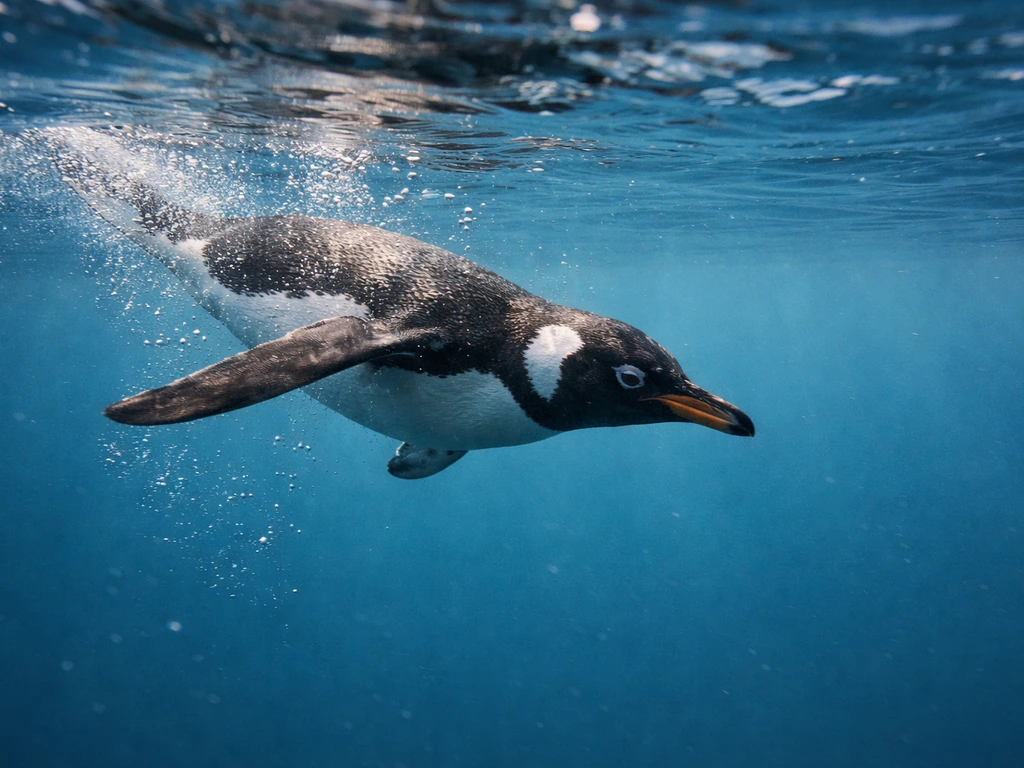
What penguins do share with all other birds is the defining package of avian features: feathers, a beak (no teeth), warm-bloodedness, and laying eggs. They're fully, unambiguously birds. They just happen to be flightless marine birds whose evolutionary path went deep into the ocean rather than into the skies. Their wings became flippers. Their bodies became torpedo-shaped for underwater speed. That's a very different evolutionary direction from a bald eagle.
How penguins hunt vs. how raptors hunt
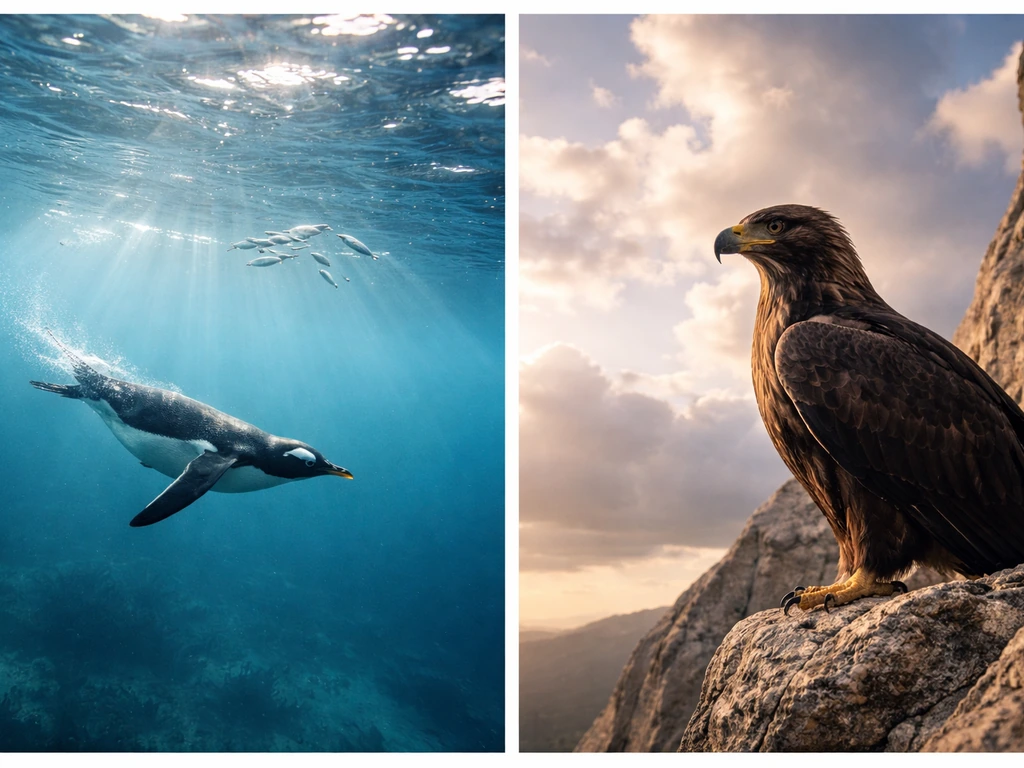
Penguins hunt underwater. They chase fish, krill, and squid through the ocean, using their flipper-wings to 'fly' through the water and their streamlined bodies to reach impressive speeds. Some species can dive to depths of over 500 meters (1,640 feet) and hold their breath for more than 20 minutes. Their beaks are narrow, pointed, and designed for gripping slippery fish, not hooked for tearing flesh like a raptor's beak.
Raptors, on the other hand, hunt aerially or from perches. An eagle spots prey from altitude, folds its wings, dives, and kills with its talons before ever using its beak. A falcon like the peregrine reaches speeds over 320 km/h (200 mph) in a stoop. The killing tools are the talons, the beak is primarily for eating what the talons already caught. Penguins have nothing remotely like talons. Their feet are webbed for swimming, not for gripping and killing prey.
| Feature | Penguin | Raptor (e.g., Eagle or Falcon) |
|---|---|---|
| Taxonomic order | Sphenisciformes | Accipitriformes / Falconiformes / Strigiformes |
| Beak shape | Pointed, narrow, fish-gripping | Hooked, sharp, flesh-tearing |
| Feet/claws | Webbed, for swimming | Taloned, for seizing and killing prey |
| Hunting environment | Underwater (marine) | Aerial or terrestrial |
| Primary prey | Fish, krill, squid | Mammals, reptiles, other birds, fish |
| Hunting mechanism | Speed-chasing through water | Aerial pursuit, dive, talon strike |
| Flight capable? | No | Yes |
Why the 'prey' confusion trips people up
The word 'prey' is the culprit here. In plain English, 'prey' just means something an animal eats. By that definition, nearly every bird on the planet eats prey of some kind, insects, worms, seeds technically don't count, but fish, frogs, mice, and other birds absolutely do. If eating prey made you a bird of prey, sparrows catching insects and herons spearing frogs would qualify. They don't. The term 'bird of prey' is a named classification, not a literal description of eating habits.
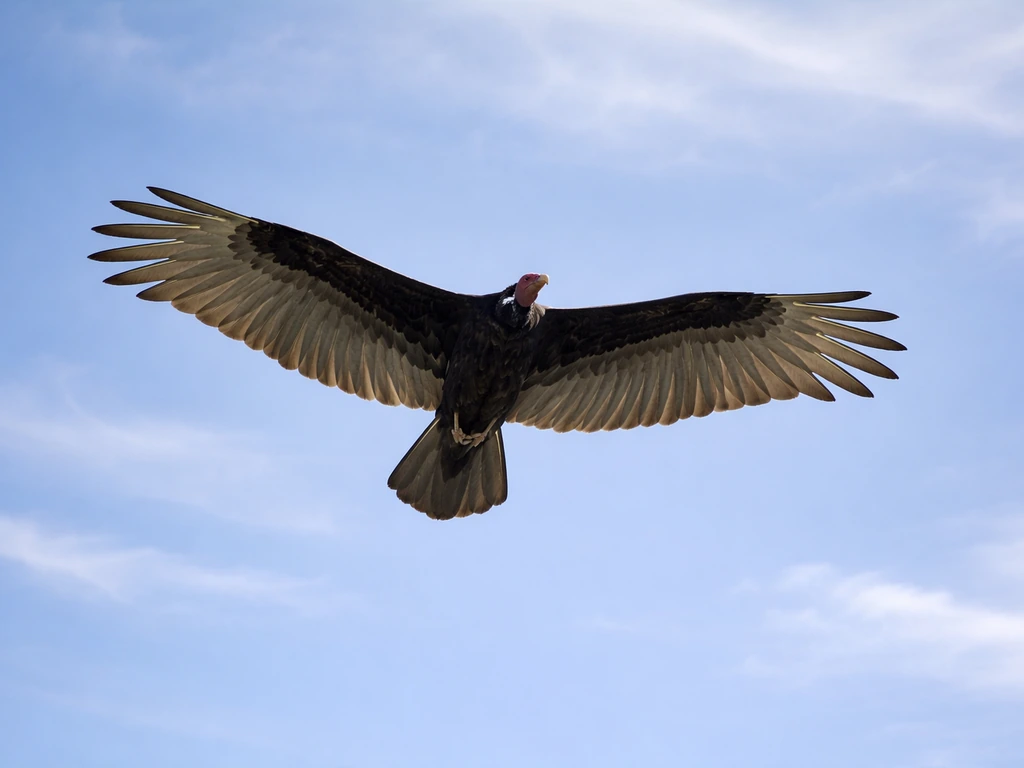
This is the same kind of confusion that comes up when people ask whether a turkey vulture is a bird of prey (it is, technically, though it's mostly a scavenger), or whether a turkey is a predator because it eats insects. And that same confusion can happen with “turkey is a bird,” because being a bird is broad, while being a raptor is a specific classification turkey vulture. The everyday meaning of a word and its scientific use often diverge, and bird classification is full of these gaps. The fix is always to look at taxonomy and physical traits, not just what's on the menu.
How to confidently identify raptors vs. other bird groups
When you're trying to figure out whether a bird counts as a bird of prey, run through this checklist. It works for penguins, turkeys, pelicans, or any other bird someone tries to classify as a raptor in an internet argument.
- Check the beak: Raptors have a strongly hooked, curved beak designed for tearing. If the beak is straight, pointed, flat, or wide, it's a clue you're not looking at a raptor.
- Check the feet: Talons are the single biggest giveaway. Raptors have long, curved, sharp claws built for gripping and killing. Webbed feet, flat feet, or small blunt claws point elsewhere.
- Check the taxonomy: Look up the order. Raptors live in Accipitriformes, Falconiformes, and Strigiformes. If the bird is in a different order (like Sphenisciformes for penguins), it's not a raptor, full stop.
- Check the hunting method: Raptors hunt by catching prey with their feet, usually through aerial pursuit or a diving strike. Underwater pursuit, filter feeding, or ground-based foraging are not raptor hunting styles.
- Ask whether it can fly: This isn't a rule (osprey fish from dives, not all raptors soar), but flightless birds almost never land in the raptor category. No known flightless bird is a raptor.
Running a penguin through that list makes the answer obvious in about 30 seconds. No hooked beak. No talons. Wrong taxonomic order. Hunts underwater. Can't fly. The penguin fails every raptor checkpoint, not because it's a lesser bird, but because it evolved into something completely different and genuinely impressive in its own right.
The bottom line on penguins and birds of prey
Penguins are birds, full stop. They're warm-blooded, feathered, egg-laying members of class Aves that have been doing their own extraordinary evolutionary thing for roughly 60 million years. ITIS classifies penguins in the order Sphenisciformes (family Spheniscidae) within the blank" rel="noopener noreferrer">class Aves (birds). But they are not birds of prey. So even though people may wonder, is turkey a bird or chicken, the answer is that turkey is definitely a bird, and it is not a bird of prey either not birds of prey. They don't have the beak, the talons, the hunting style, or the taxonomic address that puts a bird in the raptor category. If you're ever stuck on a similar question, is a turkey vulture a raptor? is a pelican a bird of prey?, use the checklist above and go straight to the taxonomy. The order name alone will usually settle the debate before you have to dig any deeper.
FAQ
If a penguin hunts animals, why isn’t it still a “bird of prey”?
“Bird of prey” is usually shorthand for raptors, a taxonomic and anatomical group. If you mean “does it eat other animals,” then a penguin can be called a predator in an everyday sense, but it still is not a raptor because it lacks the hooked beak and talon-based killing toolkit and does not belong to the raptor orders.
What’s the fastest way to tell whether someone is using “bird of prey” correctly?
Contributors to the mistake are diet-based wording and examples like “eats fish.” A better test is structure first: raptors have hook-tipped beaks and grasping talons. Penguins have flipper-like wings, webbed feet, and fish-gripping beaks that are narrow rather than hooked.
Do nocturnal birds that hunt count as birds of prey automatically?
Not by default. Owls and other raptors are defined by raptor taxonomy and their predatory anatomy, not by being carnivorous or nocturnal. A bird can be night-active and still not be a raptor, and a bird can eat prey and still not have raptor body parts.
Could a bird that cannot fly ever be a bird of prey?
No, being “flightless” does not automatically rule out raptors in principle, but it usually does in practice because raptors have characteristic hunting adaptations tied to how they capture prey. Penguins are an entirely separate branch (Sphenisciformes), and their hunting is marine, not aerial or perching-based.
Is the “bird of prey” label accurate for scavengers like vultures?
Yes, if you use the term loosely. People sometimes call turkey vultures “birds of prey” in conversation even though they function more as scavengers. The stricter point remains that a raptor label depends on raptor classification and traits, not just whether the bird eats meat.
Why do some websites call penguins raptors or “birds of prey” anyway?
Different database styles can confuse this. Some sites categorize broadly as “predatory birds,” while others use “bird of prey” for raptors only. For certainty, check the bird’s order and whether it is placed in the recognized raptor groups, not just whether it is described as carnivorous.
Does taxonomy alone settle the question for similar cases?
Using taxonomic placement helps. Penguins are Sphenisciformes, while raptors fall into separate orders such as Accipitriformes, Falconiformes, and Strigiformes. If a candidate bird’s order is not in the raptor side of the tree, it will not be a raptor even if it hunts.
What checklist should I use when I wonder if another bird is a raptor?
Ask a two-part question: (1) How does it capture and kill prey, aerial strike, perch strike, underwater chase, etc. (2) Does it have the signature raptor anatomy, hooked beak plus grasping talons. Penguins fail both, because they chase underwater and their feet and beaks are built for swimming and gripping fish, not killing with talons.
If “prey” just means something you eat, does that make every meat-eating bird a bird of prey?
Generally, no. “Prey” in everyday speech just means food, so nearly any bird that eats animals could be called “prey-eating.” The raptor term is a specific classification, so you will get better results by ignoring the menu and focusing on raptor orders and anatomy.
Next Article
Is a Turkey Vulture a Bird of Prey? Facts and Traits
Learn if turkey vultures are true birds of prey, with taxonomy, scavenging habits, traits, and quick ID checklist.