Yes, a turkey vulture is generally considered a bird of prey, but with an important asterisk: it is a scavenging bird of prey, not a predatory one. It has the hooked bill, it soars on thermals, and it appears in raptor field guides and raptor-watch fact sheets right alongside hawks and eagles. But unlike a red-tailed hawk or a peregrine falcon, it does not actively hunt and kill. That distinction matters when you dig into what 'bird of prey' actually means, and it explains why turkey vultures occupy a slightly awkward spot in the classification.
Is a Turkey Vulture a Bird of Prey? Facts and Traits

Marcus Hendricks
28 May 2026
What 'bird of prey' actually means
The phrase 'bird of prey' gets used loosely, so let's nail it down. In everyday birding and most scientific writing, it refers to birds that eat meat and have a specific set of physical tools for doing so: a hooked, sharp bill for tearing flesh, powerful feet with curved talons for gripping and killing, and unusually sharp eyesight. The word 'raptor' is often used interchangeably, though technically raptor comes from the Latin rapere, meaning to seize, which hints at the active predation most people picture.
PBS describes raptors as 'birds adapted for hunting and/or scavenging,' and that 'and/or scavenging' part is doing a lot of work. Britannica's definition focuses on the hooked beak and sharp talons, but also notes that in 'nonpredatory vultures the talons are present but atrophied,' meaning reduced in sharpness and gripping power. The University of Minnesota Raptor Center defines a raptor simply as 'a carnivorous (meat-eating) bird' and highlights the hooked beak as the main identifier. So the definition is not just about killing, it is about anatomy and diet. That opens the door for vultures.
Where it gets complicated is the strict behavioral reading. Some ornithologists use a narrower definition that ties 'bird of prey' specifically to active hunting and killing, which would push vultures into their own category. The Journal of Raptor Research has even published commentary on how tricky it is to draw a clean line using just talons, beak shape, and vision. So whether a turkey vulture counts can genuinely depend on who you ask and which definition they are using. Understanding what makes a bird a bird of prey generally helps settle any specific case like this one.
Turkey vulture basics: what kind of bird is it?
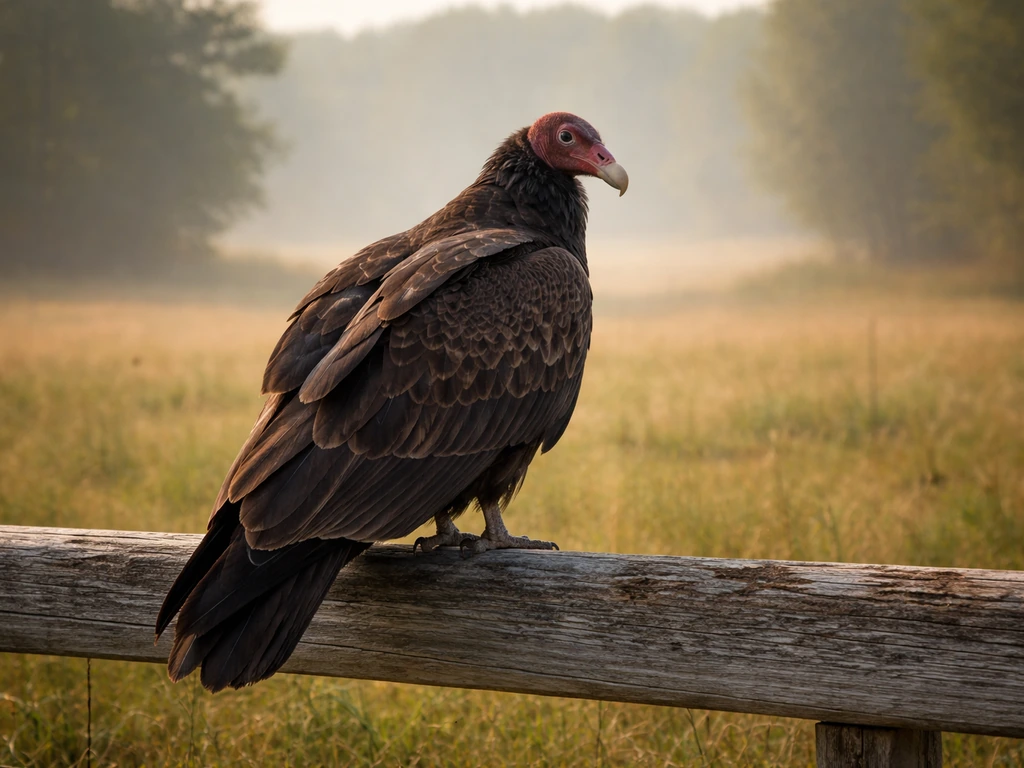
The turkey vulture (Cathartes aura) belongs to the order Cathartiformes and the family Cathartidae, which is the New World vulture family. Britannica identifies the turkey vulture as Cathartes aura, placing it in the family Cathartidae (the New World vulture family). That family includes condors and all the vulture species found in the Americas. This is different from the Accipitridae family, which contains hawks, eagles, and Old World vultures. So taxonomically, the turkey vulture is not a hawk or eagle, and it is not even in the same family as the vultures you would find in Africa. It is its own distinct lineage.
The family name Cathartidae comes from the Greek word for purifier, which is a fitting description given how the bird earns its living. All members of Cathartidae feed on carrion, meaning dead animal carcasses. That is not a side habit or occasional behavior, it is the defining characteristic of the entire family. The turkey vulture is one of the most widespread and commonly sighted members of this group across North and South America.
How turkey vultures actually find and eat food
Turkey vultures are what Cornell Lab calls 'a consummate scavenger,' and that is not a casual observation. They feed strictly on carrion, and they have a genuinely remarkable adaptation for finding it: a well-developed sense of smell. Most birds have a poor sense of smell, but the turkey vulture is a standout exception. It can locate carcasses hidden under thick tree cover, in brush, or tucked away where no visual scan would reveal them. National Geographic notes they find carrion by smell as well as sight, which is unique among New World vultures.
Once they find a carcass, they use that sharply hooked bill to tear off pieces of flesh. But notice what they are not doing: they are not diving on live prey, gripping it with powerful talons, and dispatching it the way a hawk or falcon would. There is no chase, no kill strike, no prey subdued by foot pressure. The whole hunting-and-killing sequence that defines a predatory raptor simply does not happen with a turkey vulture. HawkWatch International describes them as feeding 'strictly on carrion' and soaring in loose groups while sniffing out their next meal.
The bald red head, iconic as it is, is actually a hygiene adaptation. Feathers would trap bacteria and gore when a vulture pushes its head into a carcass. The lack of feathers there keeps the bird cleaner during feeding, which is a clever evolutionary solution to a genuinely unpleasant problem.
Raptor traits: what turkey vultures have and what they lack
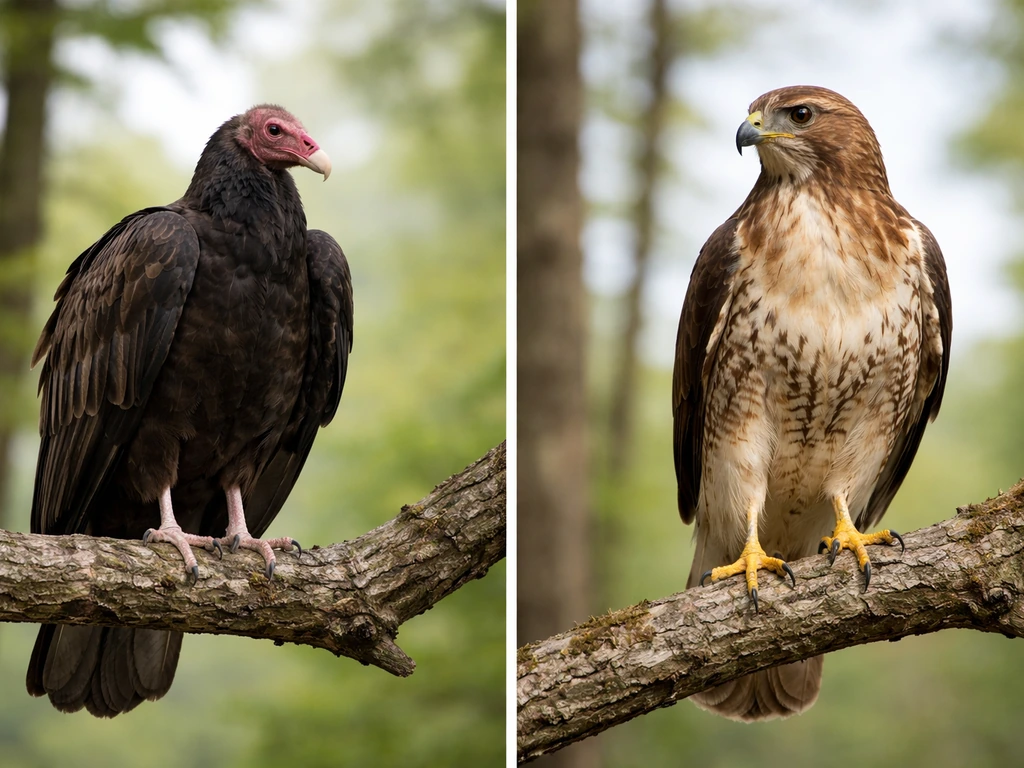
This is where the comparison gets most interesting. Turkey vultures share some classic raptor traits but are missing or weakened on others. Here is how they stack up against the standard raptor checklist.
| Trait | True Predatory Raptors (Hawks, Eagles, Falcons) | Turkey Vulture |
|---|---|---|
| Hooked beak | Yes, for tearing prey | Yes, for tearing carrion |
| Talons | Sharp, powerful, used to grasp and kill | Present but atrophied, not used for killing |
| Eyesight | Extremely acute, adapted for spotting moving prey | Good vision, but locates food heavily by smell |
| Hunting behavior | Active pursuit and killing of live prey | None, feeds only on already-dead animals |
| Diet | Live prey (mammals, birds, fish, reptiles) | Strictly carrion |
| Foot strength | High, key weapon for dispatching prey | Relatively weak, not raptorial in function |
| Taxonomy | Accipitridae, Falconidae, etc. | Cathartidae (New World vultures) |
The talons issue is the clearest dividing line. A USACE birds of prey study guide puts it plainly: 'Of all the birds of prey, the vulture's toes least meet the criteria for raptorial.' Britannica echoes this by noting that in nonpredatory vultures, the talons are atrophied. The turkey vulture has feet better suited to walking and perching than to the grip-and-kill function that defines a hunting raptor. Those flat-ish feet are one of the easiest things to spot in the field or in a photo when you are trying to tell a vulture from a true raptor.
So is a turkey vulture a bird of prey? Here is the clear answer
Yes, with the scavenger caveat clearly understood. Under the broad definition used by most birding organizations, wildlife agencies, and resources like PBS and Britannica, turkey vultures are included in the birds of prey group. Britannica explicitly lists vultures among diurnal birds of prey alongside hawks, eagles, and falcons. HawkWatch International, a dedicated raptor monitoring organization, publishes turkey vulture identification fact sheets right alongside their hawk and eagle materials. They are treated as raptors in the practical birding world.
But under a stricter behavioral definition, where 'bird of prey' means a bird that actively hunts and kills live animals, the turkey vulture does not fully qualify. It does not kill. It cleans up after things that have already died. That is a meaningful biological difference, not just a semantic one. If someone asks you whether a turkey vulture is 'like a hawk,' the honest answer is: it shares some anatomy and airspace with hawks, but it fills a very different ecological role.
The cleanest answer you can give is this: a turkey vulture is a bird of prey by anatomy and classification, but a scavenger by behavior. Both parts of that sentence are important. It is not wrong to call it a bird of prey, but leaving out the scavenging part gives an incomplete picture.
This question has a sibling debate worth noting: people often ask the same question about turkeys themselves, and about other vulture-adjacent birds like penguins, but those are very different cases with very different answers. If you are wondering the same thing about domestic turkeys, the answer depends on whether you mean their biology or their behavior turkeys themselves.
You might also wonder, is a penguin a bird of prey, and the short answer is no for the hunting-killing definition penguins. That same “hunting and killing” definition is what makes penguins fall outside the bird of prey category.
Telling vultures from true raptors when you are out in the field
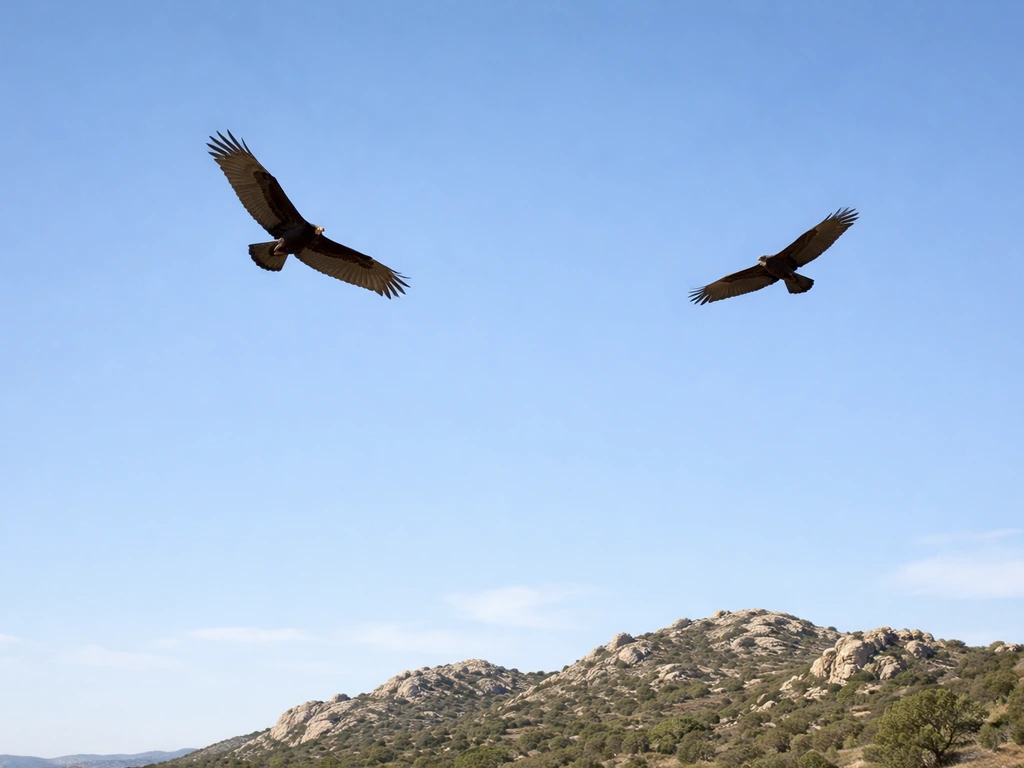
If you spot a large dark bird soaring overhead and want to know whether you are looking at a turkey vulture or a true predatory raptor like an eagle or hawk, a few quick cues will sort it out almost every time.
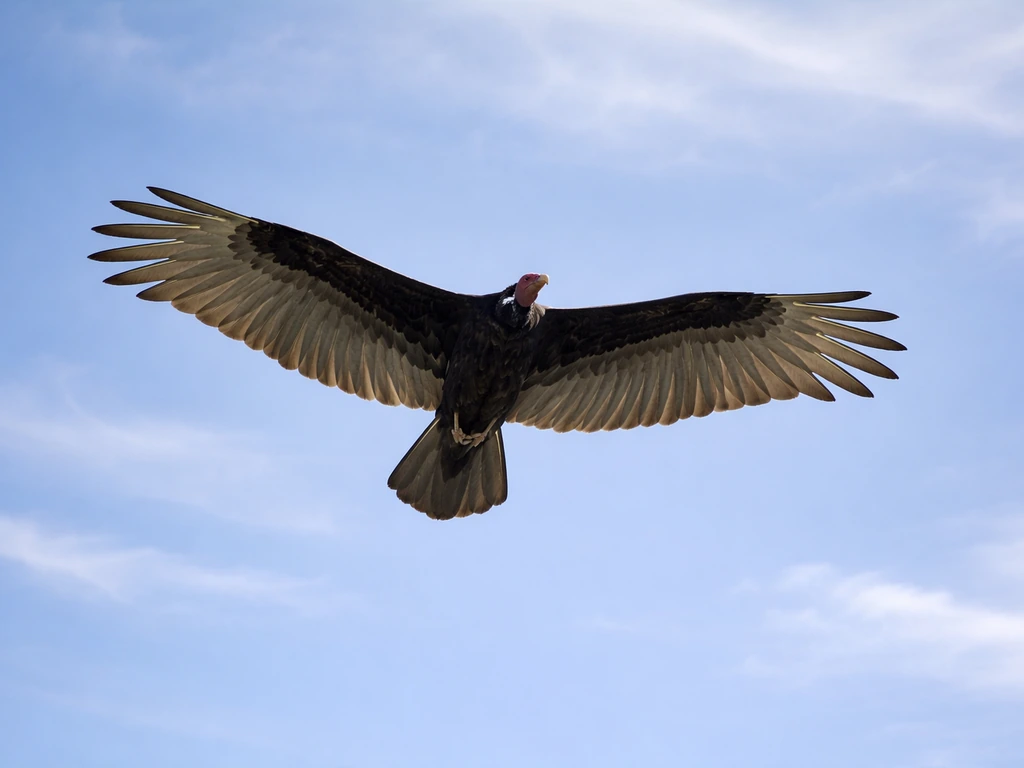
- Wing angle while soaring: Turkey vultures hold their wings in a shallow V shape (called a dihedral) and rock side to side, almost wobbling, while they ride thermals. Hawks and eagles typically hold their wings flat or only slightly raised.
- Head size relative to body: Turkey vultures have a noticeably small, bare red head that barely seems to exist from a distance. Eagles and large hawks have proportionally much larger, feathered heads that are visible even in flight.
- Flight steadiness: That wobbly, teetering soar is a turkey vulture giveaway. True raptors tend to soar more stably and with more confident directional control.
- Foot profile when perched: If you can see the bird perched up close, turkey vultures have relatively flat, weak-looking feet. Eagles and hawks have thick, powerful legs with visibly curved talons.
- Color pattern: Turkey vultures show silvery-gray flight feathers on the underside of the wing trailing edge, contrasting with darker body and leading-edge feathers. This two-tone pattern underneath is distinctive.
- Behavior near a carcass: If you see a large bird descending toward or feeding on roadkill, it is almost certainly a turkey vulture, not a hawk or eagle. True predatory raptors are not drawn to carrion the way vultures are.
For the broader 'is X a bird of prey?' question, the checklist is short. Ask: Does it have a hooked beak? Does it have functional talons used for killing? Does it eat meat? Does it hunt live prey or at least scavenge animal carcasses? If most of those are yes, you are probably looking at a bird of prey in the broad sense. If the answer to the hunting-and-killing question is a firm no, you might be in turkey vulture territory, where the bird is a meat-eater by anatomy but a janitor by profession.
FAQ
If I see a turkey vulture on a carcass, can I call it a “raptor” for sure?
Yes, in most birding and wildlife contexts it is treated as a raptor, but the safest phrasing is “scavenging raptor” since its talons are not used for killing like hawks and eagles.
How do I tell a turkey vulture from a true predatory raptor when I cannot see the bird feeding?
Focus on behavior plus feet. Turkey vultures often glide or soar and then use smell to locate food, and their feet look more suited to walking and perching than strong grasping. True hunters are more likely to show active hunting behavior and tighter, more functional talon posture.
Does a turkey vulture hunt live prey at all?
Not in the typical “kill-and-carry” sense that defines most birds of prey. They rely on carrion as their defining food source, so if you are observing repeated pursuit or capture of live animals, you are likely watching a different species.
Are turkey vultures nocturnal or diurnal, and does that affect whether they count as birds of prey?
Turkey vultures are mainly day-active, and that aligns with many bird-of-prey listings. The key factor is still diet and feeding behavior, not whether the bird is awake at night.
Why does the hooked beak make people think “bird of prey,” even though turkey vultures scavenge?
The hooked bill is good for tearing flesh, and vultures need that tool for carcasses. However, the “seize, kill, subdue” sequence is missing, so the anatomy supports a carnivorous role while the behavior supports scavenging.
Do turkey vultures have the same kind of vision “raptors” are known for?
They do use sight, but their standout locating ability is smell. If you see a vulture repeatedly circling or moving toward an area without obvious hunting, that smell-driven locating behavior is a useful clue.
Can I use the term “vulture” and “bird of prey” interchangeably when writing or reporting?
Often yes if you are using the broad definition (meat-eating birds with raptor-like anatomy), but for accuracy add the role, for example “vulture, a scavenging bird of prey,” especially if your audience might expect active predation.
What is the quickest checklist test to avoid mislabeling a turkey vulture as a hawk or eagle?
Ask four things: is it meat-eating (yes), is it tearing flesh with a hooked bill (yes), is it using talons for killing (usually no), and is its main food carrion (yes). If talon-based killing is the expectation, a turkey vulture is the common “exception” case.