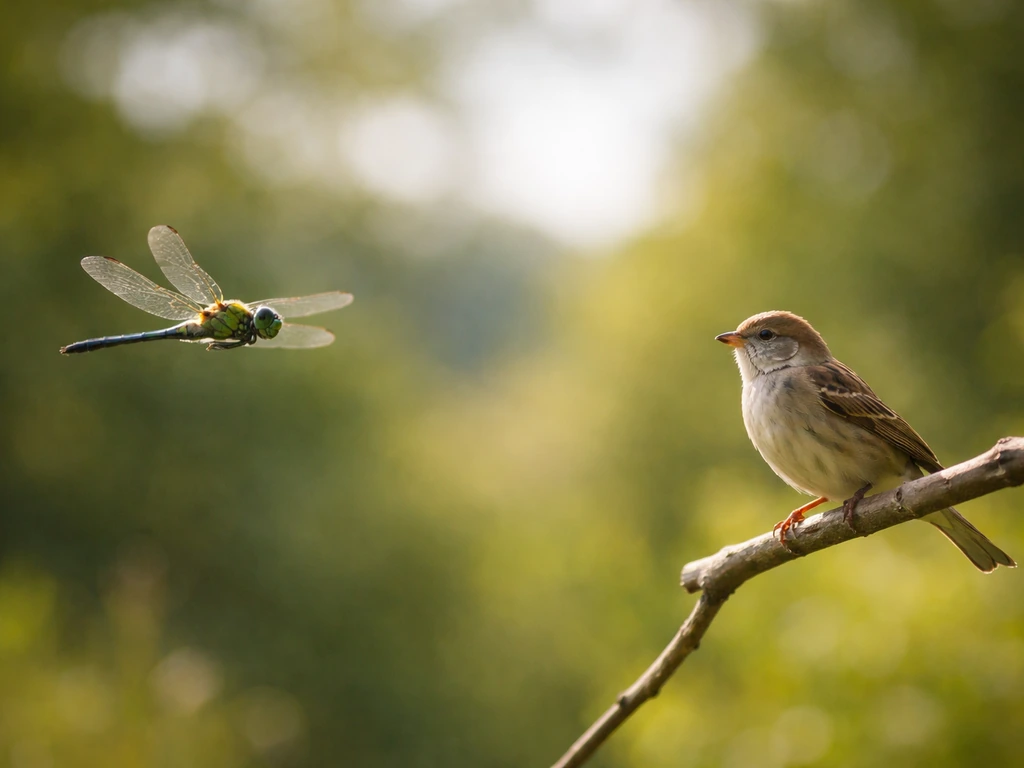
Archaeopteryx is widely considered the first bird, but whether that's technically true depends entirely on what you mean by 'bird.' If you mean the first known fossil creature that sits at the base of the bird family tree (technically called Avialae), then yes, Archaeopteryx is the oldest well-documented example, dating to roughly 150 million years ago. If you mean the first fully modern bird with a pygostyle tail, no teeth, and all the anatomy of a living sparrow or crow, then no, Archaeopteryx doesn't qualify. The honest answer is: it's the first bird in several meaningful senses, but not in every sense, and the distinction matters.
Was Archaeopteryx the First Bird? What Science Says

Marcus Hendricks
20 Jun 2026

What 'first bird' can actually mean
This question trips people up because 'bird' is used in at least three different ways in paleontology and everyday conversation. Getting them straight makes the whole Archaeopteryx debate much easier to follow.
- Crown-group bird (crown Aves): The last common ancestor of all living birds and everything descended from it. This is the strictest, most technical definition. Crown birds likely diversified mostly in the Paleogene (after the asteroid impact 66 million years ago), though molecular clocks push some lineage splits back into the Cretaceous.
- Stem-group bird (stem Aves or Avialae): Everything closer to modern birds than to their nearest non-bird relatives (like deinonychosaurs), going all the way back to the origin of the lineage. Archaeopteryx sits here, at the base. Stem birds are real birds in an evolutionary sense, just not crown birds.
- First birdlike creature: Any feathered, winged, or flight-capable paravian dinosaur, including animals like Anchiornis (about 161 million years ago) that had feathers and a birdlike body plan but may sit outside Avialae depending on the analysis.
- First famous fossil bird: This is basically Archaeopteryx by default, since it was described in 1861 and became the textbook example of a transitional fossil for over 160 years.
The crown vs. stem distinction is the one that causes the most confusion. Think of it like the difference between a founding ancestor of a royal family and the current living members of that family. Archaeopteryx is very much in the family tree, but it predates the branch that leads exclusively to living birds. That makes it a stem bird, not a crown bird, and those are meaningfully different categories in modern taxonomy.
Archaeopteryx basics: when it lived, where it was found, and what it looked like
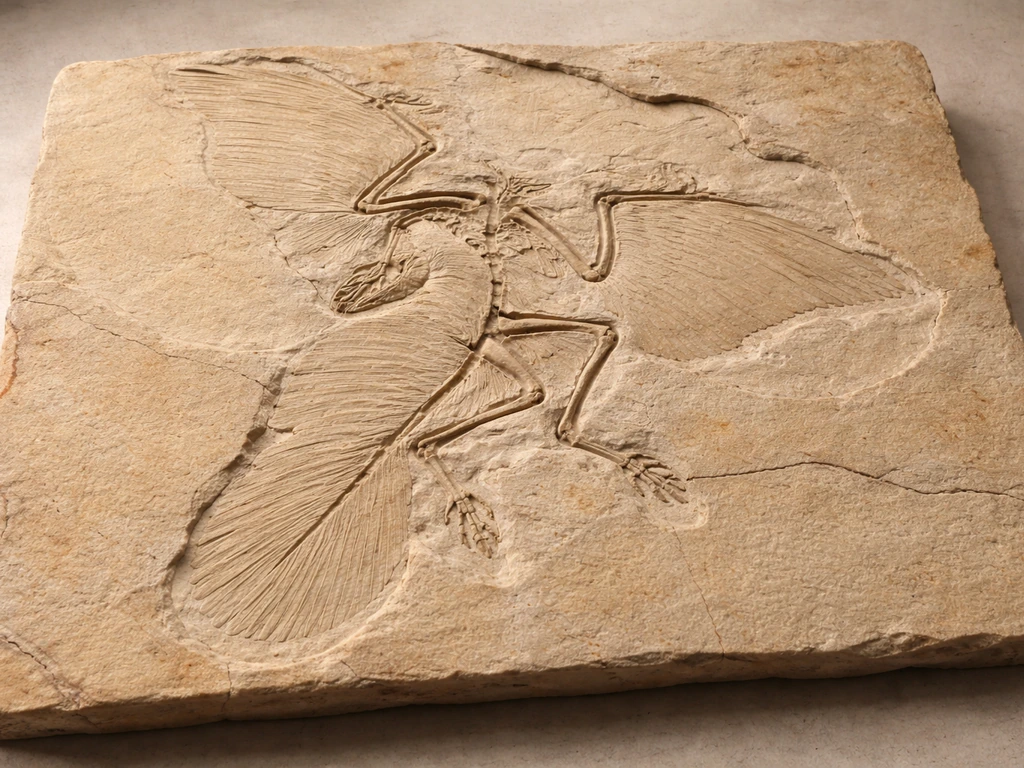
Archaeopteryx fossils come almost entirely from the Solnhofen Limestone of Bavaria, Germany, a Lagerstätte (an exceptionally well-preserved fossil deposit) spanning roughly 150.8 to 148.5 million years ago in the early Tithonian stage of the Late Jurassic. The oldest known specimen, from Schamhaupten, may actually date to the Kimmeridgian/Tithonian boundary, pushing the earliest confirmed Archaeopteryx back slightly. Altogether, about a dozen specimens have been identified, including the famous Berlin, London, Eichstätt, Munich, and Thermopolis specimens.
Physically, Archaeopteryx looked like something caught mid-transformation. It had true feathers, including asymmetric flight feathers on its wings with aerodynamic vane proportions comparable to modern flying birds. Wing bone geometry from 3D studies supports active, flapping flight rather than just gliding. But it also had a long bony tail with many caudal vertebrae (unlike the short fused pygostyle of modern birds), clawed fingers on its wings, and a full set of teeth in its jaws. Its wing feather arrangement was also more primitive than modern birds, organized in multiple layers rather than the cleaner modern pattern. Basically, it looked like a small feathered theropod dinosaur that could fly.
Why Archaeopteryx counts as a bird
The strongest case for Archaeopteryx being 'the first bird' rests on its position in phylogenetic analyses. Most studies, including likelihood-based methods that explicitly tested this, recover Archaeopteryx as the most basal (earliest-branching) member of Avialae, the clade that includes all birds. The Field Museum calls it outright 'the oldest-known fossil bird,' and that reflects the consensus position in most published analyses.
The key traits that support its bird status include: true pennaceous flight feathers with asymmetric vanes (the same aerodynamic asymmetry pattern seen in modern flying birds), a wishbone (furcula), a general body plan consistent with the theropod-to-bird transition, and evidence from feather sheaths suggesting a sequential molting strategy related to flight-feather replacement. These are not just superficially birdlike features. They are the functional and structural markers that define the bird lineage in evolutionary terms.
The 'not quite' arguments: why Archaeopteryx isn't the 'first bird' in every sense

There are a few legitimate reasons to push back on a simple 'yes, first bird' answer, and they're worth knowing.
It's a stem bird, not a crown bird
The most important caveat is the crown vs. stem distinction. Crown-group Aves, meaning the clade that includes all living birds and their last common ancestor, diverged much later. Archaeopteryx is a stem bird: it's on the bird side of the split with deinonychosaurs, but it's not a direct ancestor of living pigeons or penguins. If someone asks 'was Archaeopteryx a modern bird,' the answer is clearly no. It had teeth, a bony tail, and a primitive wing feather arrangement that no living bird shares.
Some analyses move it out of birds entirely
Parsimony-based phylogenetic analyses have, in some cases, shifted Archaeopteryx out of Avialae and into Deinonychosauria (the group that includes raptors like Velociraptor). A 2011 study describing a Chinese paravian caused waves by temporarily repositioning Archaeopteryx this way. Likelihood-based methods tend to restore it to basal avialan status, but the fact that its placement can flip depending on methodology is a real reason to be cautious about calling it definitively 'the first bird' as if that's settled beyond any doubt. National Geographic’s reporting uses current research framing while emphasizing that even iconic Archaeopteryx assignments are actively evaluated and sometimes contested blank" rel="noopener noreferrer">even iconic Archaeopteryx features are actively evaluated. A quantitative numerical cladistic analysis reported in Paleobiology (Cambridge Core, 2016) confirms Archaeopteryx as the sister-group of the remaining avian taxa in that analysis blank" rel="noopener noreferrer">a quantitative numerical cladistic analysis confirms Archaeopteryx as the sister-group of the remaining avian taxa.
Other feathered paravians predate or complicate the picture
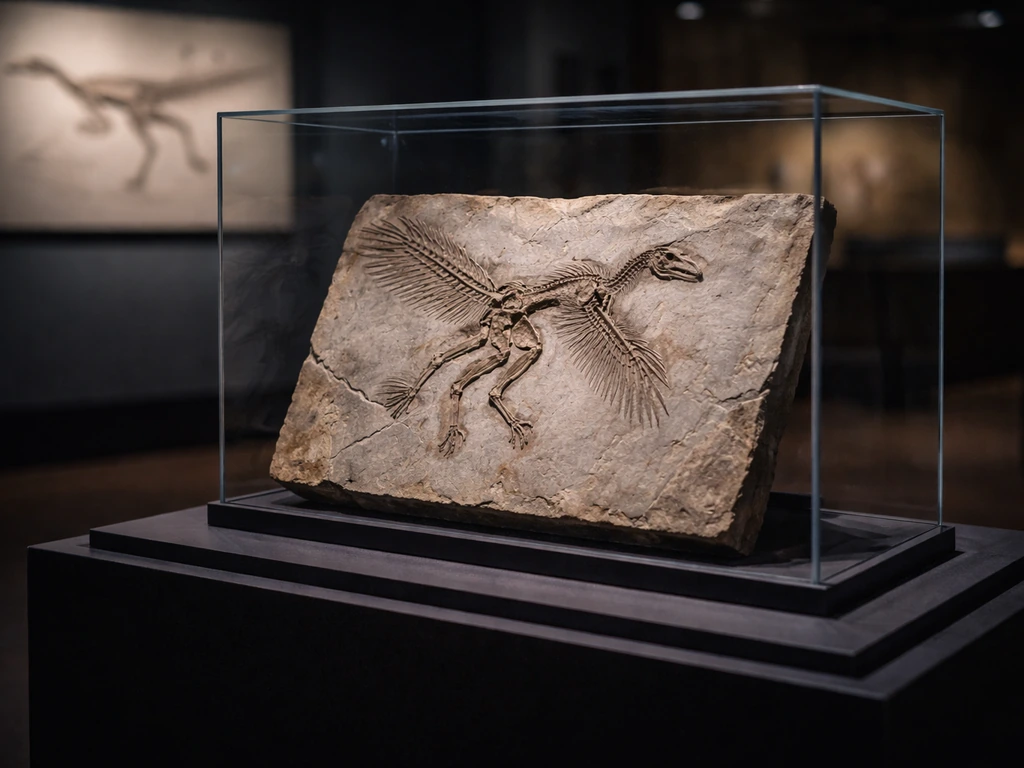
Anchiornis huxleyi, from the Tiaojishan Formation of China, dates to about 161 million years ago, making it older than Archaeopteryx by roughly 10 million years. Some analyses recover Anchiornithinae as the earliest diverging bird lineage, which would technically push 'first bird' back before Archaeopteryx. Anchiornis had long feathers on its legs and wings and a very birdlike body plan, though whether it qualifies as a true bird or a birdlike dinosaur just outside Avialae remains actively debated. The Guinness World Records lists it as the oldest-dated 'bird-like dinosaur' precisely because of that definitional tension. Similarly, other feathered paravians like the four-winged Microraptor had well-developed flight feathers but sit outside Avialae in most analyses, showing that feathers alone don't make something a bird.
How paleontologists actually classify early birds vs. birdlike dinosaurs
Modern paleontologists use a group called Paraves as the broad umbrella. Paraves includes birds (Avialae) and their closest non-bird relatives: deinonychosaurs (which include dromaeosaurids like Velociraptor and troodontids). That same kind of classification question comes up when people ask is austroraptor a bird, since raptors sit close to the bird lineage but are not crown birds in the usual taxonomy. Within Paraves, Avialae is defined as the lineage more closely related to living birds than to deinonychosaurs. Archaeopteryx sits at or very near the base of Avialae in most analyses, which is why it gets called the earliest known avialan.
The next major node crownward from Archaeopteryx, in many analyses, is Jeholornis, an Early Cretaceous bird from China. After that, the tree branches into confuciusornithiforms, enantiornithines (the dominant Cretaceous birds), and eventually ornithurans, which are the lineage leading to modern crown birds. Archaeopteryx is genuinely at the base of this whole sequence in most reconstructions, which is precisely why calling it the 'first bird' in the stem-group sense is well-supported.
| Category | Archaeopteryx | Anchiornis | Jeholornis | Crown Birds (Neornithes) |
|---|---|---|---|---|
| Age (approx.) | ~150 million years ago | ~161 million years ago | ~120 million years ago | Post-66 Ma / some Cretaceous lineages |
| Placement in most analyses | Basal Avialae (stem bird) | Anchiornithinae (disputed: stem bird or close relative) | Early stem bird, crownward of Archaeopteryx | Crown Aves |
| True flight feathers | Yes (asymmetric vanes) | Yes (but more primitive) | Yes | Yes |
| Teeth | Yes | Yes | Reduced / partially toothless | No |
| Bony tail | Yes (long, reptilian) | Yes | Yes (long tail) | No (pygostyle) |
| Clawed wing fingers | Yes | Yes | Yes | Generally no |
This kind of comparison makes it clear why the 'first bird' title is complicated. Anchiornis is older but its placement is disputed. Archaeopteryx is firmly in the bird lineage (in most analyses) but is a stem bird, not a crown bird. And crown birds, the ones we'd all agree are unambiguously birds, show up much later in the record.
The bottom line: how to actually think about this
Here's the most practical way to handle the question depending on your context. If you're talking to a general audience or writing for a school project, saying 'Archaeopteryx is the first bird' is accurate enough, backed by most scientific institutions including the Field Museum, and captures its genuine position at the base of the bird family tree. If you're in a paleontology class or having a serious taxonomy discussion, sharpen it to: 'Archaeopteryx is the earliest well-established stem bird (basal avialan), dating to about 150 million years ago.' That version is both technically correct and respects the crown vs. stem distinction.
If someone brings up Anchiornis as an older candidate, they're not wrong to flag it, but Anchiornis's classification is genuinely more contested than Archaeopteryx's. Its placement in or outside Avialae flips more readily across different analyses, which is why Archaeopteryx retains the 'first known bird' designation in most professional and educational contexts. The Natural History Museum in London describes Archaeopteryx as 'arguably one of the oldest truly bird-like dinosaurs,' which captures the appropriate degree of caution without throwing the whole designation out.
The one thing to resist is the idea that 'first bird' means Archaeopteryx was the ancestor of all modern birds in a direct line. Evolution doesn't work like a relay race where each fossil hands a baton to the next. Archaeopteryx represents an early branch of the bird lineage, not necessarily the exact stock that later produced sparrows and eagles. It's a window into what early birds looked like and how they lived, not necessarily a great-great-grandmother of your backyard chickadee. That framing, stem bird rather than direct ancestor, is the most scientifically honest and practically useful way to teach or talk about it.
If you're exploring related classification questions, the same crown-vs-stem logic applies to other early candidates like Anchiornis, and even extends to debates about more obscure prehistoric paravians. Getting comfortable with that framework makes the whole 'is this a bird?' question much easier to navigate, whether you're looking at a 150-million-year-old fossil or trying to settle a modern taxonomy debate.
FAQ
If Archaeopteryx is the first bird, does that mean it is the ancestor of all modern birds?
Not necessarily. Even when a fossil is basal within Avialae, that means it sits near the base of the bird lineage, not that it is a direct ancestor of every living bird. Later branches can diverge, go extinct, and leave living species from different offshoots.
How does the answer change depending on whether I’m counting “oldest” versus “most bird-like”?
“First bird” should be timed relative to the definitions you use. If you mean earliest known avialan material, Archaeopteryx is around 150 million years old and is among the oldest well-documented examples. If you mean earliest feathered paravian or bird-like dinosaur overall, older candidates like Anchiornis can shift the timeline, but their bird-definition placement is more contested.
Could Archaeopteryx be called a “modern bird” in everyday terms?
No. Archaeopteryx has the core bird markers used in many phylogenetic studies, including true pennaceous flight feathers and an aerodynamic feather asymmetry. However, it also keeps dinosaur-like traits such as teeth and a long bony tail, so it does not match the diagnostic package used to define crown birds.
What if a different fossil has more feathers or better flight feathers than Archaeopteryx?
Feathers alone are not enough. Many non-avialan paravians evolved feathers, including some with strong flight-related anatomy, but most classifications place the “true bird” threshold at membership in Avialae (or very near its base). That is why animals like Microraptor can have flight feathers yet still be outside the bird clade.
Is the uncertainty about Archaeopteryx mostly about its age, or mostly about where it sits on the family tree?
Both, but they apply to different claims. Stratigraphic age gives you the dating of the rock layer and therefore the specimen. Phylogenetic uncertainty is about where the animal fits on the family tree. A specimen can be old and still be debated in classification, or be younger but more firmly placed.
Why don’t scientists always reach identical conclusions even with multiple Archaeopteryx specimens?
Archaeopteryx fossils are unusually informative because several specimens preserve feather impressions and skeletal details. Still, no single specimen has every trait, and different specimens can preserve anatomy or feathers differently, which can affect how confidently some features are scored in analyses.
What does “crown group” versus “stem group” mean for real fossil questions?
It depends on the “bird” definition used. In crown-group discussions, the question is whether a fossil is on the lineage leading directly to living birds, and Archaeopteryx does not qualify. In stem-group discussions focused on Avialae, it is commonly recovered as the most basal or near-basal avialan, which is why it is called the earliest well-established stem bird.
What is a technically safe one-sentence answer I can use for homework or a presentation?
A good rule of thumb is to phrase it with both taxonomy and time. For example: “Archaeopteryx is the earliest well-established avialan (stem bird) from about 150 million years ago.” This avoids implying it is a crown bird or that it is the single ancestor of modern birds.
If Paraves includes more than birds, does Archaeopteryx automatically become the “first” Paraves member?
Yes, but in a narrow way. If you are using Paraves to mean the broader umbrella that includes birds and their closest non-bird relatives, then Archaeopteryx is definitely within that broader group. The key distinction is whether you mean Avialae specifically (birds) or Paraves more broadly (birds plus close non-bird relatives).
Is Archaeopteryx the first bird in a way that is 100 percent settled by evidence?
Not conclusively. Some researchers have found placements that temporarily move Archaeopteryx outside Avialae under particular methods, which is why the consensus is “strongly supported” rather than “settled beyond debate.” In practice, most likelihood-based analyses tend to bring it back toward basal Avialae, but it is reasonable to acknowledge this methodological sensitivity.
Next Article
Is a Dragonfly a Bird? How to Tell the Difference
Dragonflies are insects, not birds. Learn key bird traits vs dragonfly anatomy to tell them apart fast.