No, a cootie is not a bird. Every major dictionary, from Britannica to Cambridge to Merriam-Webster, defines 'cootie' (usually plural: 'cooties') as a small insect that lives in people's hair, basically a louse. If you searched 'cootie meaning bird' hoping to identify a feathered creature, you've landed in the right place, because this is a surprisingly common mix-up worth sorting out quickly. If you meant a different bird phrase like “is hen a bird,” the quickest check is still the same: confirm the exact word and meaning in the context you saw it.
Is Cootie a Bird? Meaning, Usage, and How to Check

Marcus Hendricks
22 Mar 2026
What 'cootie' actually means

The word has two main lives: a fairly literal one and a playful slang one. In both cases, it has nothing to do with birds.
The literal meaning: lice and body parasites

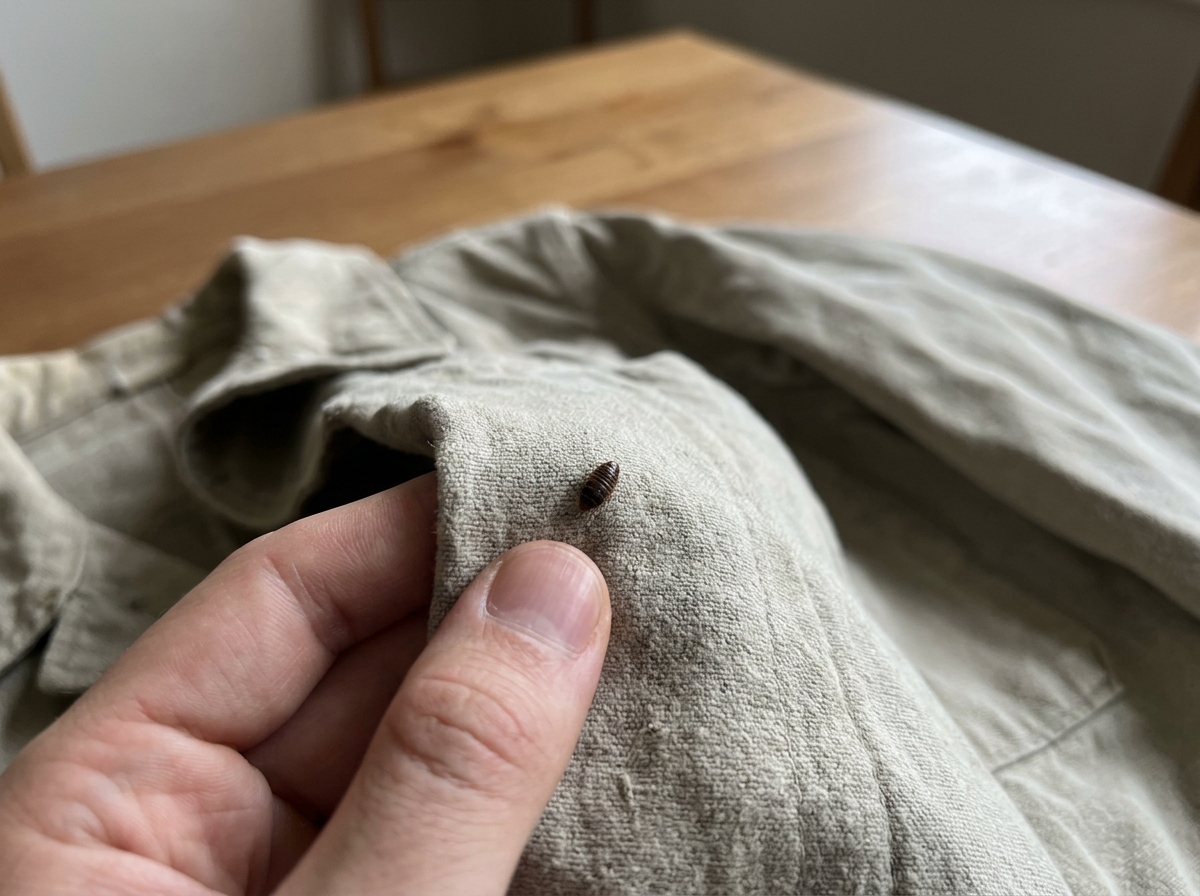
Etymologically, 'cootie' traces back to 1917 WWI slang. American soldiers borrowed it (likely from British or Malay slang) to describe body lice, the itchy parasites that infested clothing, hair, skin, and blankets in the trenches. The National WWI Museum even documents the term, noting that 'cooties' was the nickname soldiers gave to body lice. Britannica and Cambridge both define it today as 'a type of small insect that lives in people's hair.' Collins English Dictionary adds that cooties are parasitic insects that live on people or animals and bite to feed on blood.
The slang/colloquial meaning: childhood contagion talk

In modern everyday use, especially among children in the United States, 'cooties' shifted into something more abstract: an imaginary contagious condition you could 'catch' from someone else. Think of the playground taunt 'Don't touch him or you'll get cooties!' There's even a childhood ritual called a 'cootie shot,' a pretend immunization that kids give each other. Merriam-Webster's usage examples reference exactly this kind of playful, pretend-contagion framing. There's also a tabletop game called 'Cooties' that leans into this cultural association. None of this involves birds.
Why 'cootie meaning bird' shows up in searches
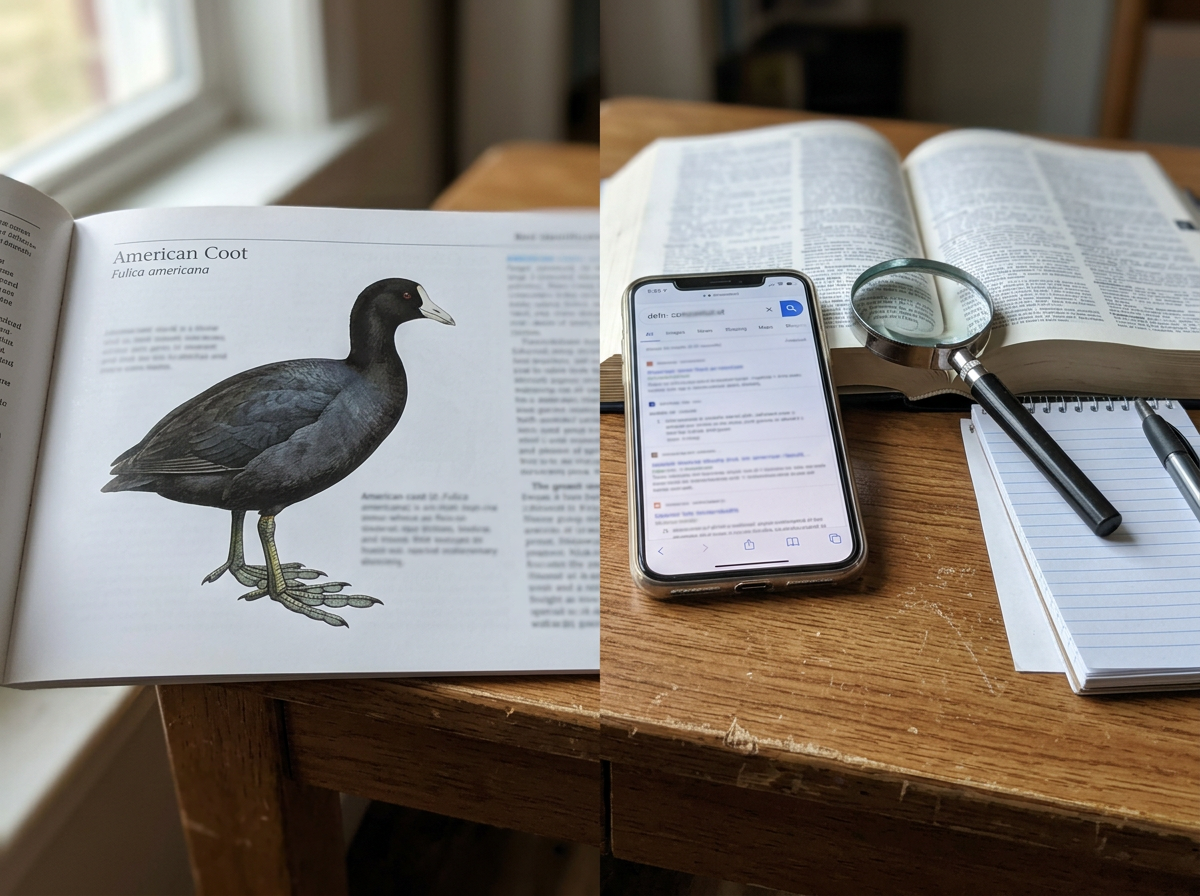
There's a reasonable path that leads people to wonder about this. The word 'coot' is a real bird name: the American coot is a marsh bird documented in Merriam-Webster and recognized by birding organizations. This mix-up is similar to other cases where people assume a phrase like “is cock a bird” based on how the words sound rather than their actual meaning. If you run into a similar-sounding question like "is a french hen a bird," treat it the same way: verify the exact phrase and meaning in context rather than assuming it matches the bird name. It's a slate-grey waterbird with a distinctive white bill, common across North America. The problem is the jump from 'coot' to 'cootie.' They look similar on the page and sound similar out loud, so someone who half-hears or half-reads 'cootie' might reasonably wonder if it's a nickname or diminutive for the coot bird.
Etymology discussions sometimes make this murkier. Some sources note the old British expression 'as lousy as a coot,' which ties the coot bird to the concept of lice (lousy = infested with lice). That linguistic thread between the bird 'coot' and the insect word 'cootie' exists historically, but modern dictionaries treat them as entirely separate entries. 'Cootie' is not listed as a bird common name in any major dictionary or standard birding field guide.
How to verify the meaning yourself, right now
If you're still unsure, here are the fastest ways to confirm which meaning is intended in a specific context:
- Search 'cootie site: merriam-webster.com' or 'cootie site:dictionary.cambridge.org' and read the first definition. Both will say lice or insects in hair, not a bird species.
- Search 'American coot' (not cootie) if you're trying to identify a marsh bird with a white bill and dark body. That's the correct spelling for the actual bird.
- Search the exact phrase "cootie" "bird" in quotes and check whether your results come from dictionaries and etymology sources (which will say insect) or from casual social media and game humor (which may conflate the terms loosely).
- Check any birding database, such as the Cornell Lab of Ornithology's eBird, for 'cootie.' You won't find a species entry, because it's not a recognized bird common name.
- If you spotted a real bird and someone called it a 'cootie,' ask them to clarify whether they meant 'coot.' It's almost certainly a pronunciation shortcut or regional nickname rather than a documented bird name.
If it's not a bird, what are you probably dealing with?
In the vast majority of cases, you're dealing with one of these:
- Head lice or body lice, especially if someone is talking about hair, infestation, or a school nurse situation
- The children's slang concept of imaginary germs or a 'gross' social contagion (think playground teasing)
- The tabletop game 'Cooties,' a kids' game involving plastic bug-shaped pieces
- A casual mispronunciation or informal shortening of 'coot,' the actual marsh bird, in a regional or conversational context
That last point is worth pausing on. If you're in a birding conversation or near a wetland and someone says 'look at that cootie,' they're almost certainly referring to an American coot and dropping the final consonant casually. The American coot (Fulica americana) is a real, well-documented species. But the word 'cootie' itself is not in the birding taxonomy. This is similar to questions people have about other birds with colloquial names: knowing the difference between a common name and a formal or informal nickname is useful context across the board.
Coot vs. cootie: a quick side-by-side
| Term | Is it a bird? | What it actually refers to | Found in major dictionaries as a bird? |
|---|---|---|---|
| Coot | Yes | The American coot, a marsh waterbird (Fulica americana) with a white bill and dark plumage | Yes, under 'American coot' |
| Cootie / Cooties | No | A louse or body parasite (literal); imaginary childhood 'germs' (slang); a kids' tabletop game | No, defined as an insect/louse |
Regional and usage differences that might trip you up
In most of the United States, 'cooties' means the childhood slang concept, full stop. Younger generations may not even connect it to lice at all; it's just a vague synonym for imaginary grossness. Older speakers, especially those familiar with WWI history or older slang, may use it more literally to mean body lice or parasites.
In some rural or regional communities near wetlands, you might genuinely hear 'cootie' used informally for the coot bird. This is not standard, not documented in field guides, and not something you'd find on a bird checklist. Treat it the way you'd treat any local nickname: understand that the person means the actual coot bird, then use the correct term if you need to look it up or report a sighting.
If you search online and get conflicting results, the best sanity check is simple: is the source a dictionary, an etymology reference, or a birding database? Dictionaries and etymology sources will consistently define 'cootie' as a louse or insect. Birding databases will list 'coot' as a bird but won't have 'cootie' as a species. If a result says 'cootie is a bird,' look closely at whether they're actually talking about the coot, making a joke, or running with a loose informal usage.
The bottom line
Cootie is not a bird. It's a word for lice (historically) and imaginary childhood germs (in modern slang). The confusion exists because 'coot,' spelled and pronounced slightly differently, is a real marsh bird. If you're trying to identify a bird, look up 'American coot.' If someone is using 'cootie' in conversation, they almost certainly mean the slang/insect sense unless you're standing next to a wetland and they're clearly pointing at a waterbird. Either way, you now have the quick checks to confirm the meaning for any context you encounter.
FAQ
If someone says “cootie” at a birdwatching event, what should I do to avoid misunderstanding?
Treat it as a likely slip or shorthand for “coot.” Ask a quick clarifying question like, “Do you mean the American coot?” and confirm by location and behavior (a marsh waterbird) before using “cootie” in any log or checklist.
Can “cootie” be used to mean a different animal besides the American coot or lice?
In standard usage, no. Major dictionaries consistently define cootie/cooties as an insect or lice, or as the pretend childhood “contagion” idea. If a source claims another animal meaning, double-check whether it is a local nickname, joke, or mis-tagged content.
How can I tell from spelling whether someone is talking about “cootie” versus “cooties”?
“Cooties” is much more common for the playground/pretend-germs meaning in the US. “Cootie” more often appears when discussing the older louse/insect sense or as a generic taunt. Still, context matters, so look at whether they are describing itching, bugs, or a “don’t touch” taunt.
Is “cootie shot” a real medical concept, or just a joke?
It is a childhood pretend ritual, not a medical procedure or recognized treatment. If you hear a “cootie shot” phrase, assume play-pretend “catching germs” language rather than anything related to insects in hair.
What’s the safest way to interpret “cootie” in a social media post or comment?
First decide if the post uses it with humor (kids, “don’t touch,” mock contamination). Then check whether the post also mentions hair/itching or instead shows a bird photo. If it is photo-based and the subject is a waterbird, the most likely target is the American coot, not cootie as written.
Why do online search results sometimes insist “cootie” is a bird?
Usually because “coot” is a real bird name and people combine terms accidentally, or they are referring to informal/local speech, a pun, or a tag error. The fastest fix is to confirm the term in a bird database or field-guide context, where you should see “coot” but not “cootie” as a species.
If I’m writing or speaking, should I say “coot” or “cootie”?
If you mean the bird, say “American coot” (or “coot”). Use “cootie/cooties” only if you mean the slang/insect concept. For clarity with audiences, “American coot” is the least ambiguous choice.
Could “cootie” be a diminutive or nickname for “coot” in everyday speech?
Sometimes you may hear it locally near wetlands, but it is not a documented standard bird name. If you need accuracy for identification, reporting, or learning, default to “coot,” then specify “American coot” when appropriate.
Next Article
Is Robin a Bird? Robin Bird Meaning and Symbolism
Yes, robin is a bird. Discover robin symbolism, common meanings, and how to separate facts from spiritual interpretation